
Are SARMs Safe? The FDA’s Warning and Key Risks
This post contains affiliate links. As an Amazon Associate, we earn from qualifying purchases.
SARMs are unapproved drugs linked to serious, documented health risks including liver failure, heart attack, stroke, and lasting hormonal suppression, making them unsafe for recreational use. The FDA, along with global anti-doping agencies, explicitly advises consumers against using them.
The evidence consists of hospital admissions, case reports of liver transplants, and a growing stack of adverse event filings. The promise of “selective” muscle growth without steroid-like side effects is a marketing line that ignores the core are sarms safe question, not a proven clinical reality. These compounds are sold in a shadow market where contamination is common and dosing is a guess.
What follows is a breakdown of the specific dangers, the data behind them, and the critical distinctions between hope and documented harm. We’ll look at the most common SARMs like Ostarine and RAD-140, the timeline of injury, and what to do if you’ve already started.
Key Takeaways
- SARMs are unapproved drugs, not supplements. The FDA consumer warning on SARMs states they cannot be legally marketed in the U.S. And are associated with life-threatening reactions.
- Liver injury can worsen for weeks after you stop. A documented case of RAD-140 use saw liver biochemistry significantly worsen over the 6 weeks after cessation, with recovery taking approximately five months.
- Product contamination is the rule, not the exception. A 2017 study found only 52% of products sold as SARMs contained primarily SARMs; 39% contained other unapproved research chemicals.
- Hormonal suppression is guaranteed, not a maybe. Like anabolic steroids, SARMs suppress natural testosterone production, which may not fully recover without post-cycle therapy.
- There is no “safe” dose for cosmetic use. Clinical trials use controlled amounts for specific medical conditions. A systematic review of SARMs safety provides clinical trial data with controlled doses, while other sources note that athletes often consume SARMs at much higher doses than clinically studied.
What Are SARMs and Why Are They So Risky?
Selective Androgen Receptor Modulators are synthetic drugs designed to mimic testosterone. The “selective” part is key to the sales pitch: they’re supposed to activate receptors in muscle and bone tissue while sparing others, like those in the prostate, that cause steroid side effects. That’s the theory. In practice, that selectivity is far from perfect, and the safety profile is a black box.
The first problem is legal status. SARMs are investigational drugs, not dietary supplements. The FDA bodybuilding product warning is clear: they are unapproved, cannot be legally sold for human consumption, and have not been reviewed for safety or effectiveness. When you buy a bottle labeled “Ostarine” or “Ligandrol,” you are purchasing a research chemical of unknown purity from an unregulated market. This isn’t like choosing between two brands of vitamin D.
Common mistake: Assuming a product contains only the listed SARM. Independent testing routinely finds undeclared anabolic steroids, stimulants, and other research chemicals. You have no reliable way to know what you’re actually dosing.
The second problem is the mechanism itself. A critical appraisal of SARMs points out that despite decades of research, they have yet to deliver on the promise of true tissue selectivity. The observed effects might stem from non-unique metabolic differences, not some magical targeting. Claims of superior safety over conventional androgens still lack head-to-head trial data in humans. The whole premise that you can get steroid-like gains without steroid-like risks is, at best, unproven. At worst, it’s a dangerous illusion.
What Are the Most Common SARMs and Their Risks?
You’ll see these names on forums and in product listings. According to the U.S. Anti-Doping Agency (USADA), some of the most popular include Ostarine (Enobosarm), Andarine (S4), LGD-4033 (Ligandrol), and RAD-140 (Testolone). Each has a slightly different chemical structure, but they share a core set of dangers.
The FDA’s published list of associated risks is compiled from adverse event reports. These include:
- Increased risk of heart attack or stroke
- Liver injury and acute liver failure
- Psychosis and hallucinations
- Significant hormonal suppression and testicular shrinkage
- Infertility and pregnancy miscarriage
While all SARMs carry these broad risks, emerging data suggests some may pose a higher relative threat for specific issues. For instance, in a systematic review of SARMs safety of case reports, LGD-4033 was the most commonly implicated SARM in reported cases overall (57.1%), followed by RAD-140 (42.9%). This doesn’t mean others are safe, it means these are the ones showing up in hospital reports.
| Common SARM (Alias) | Reported Primary Risks in Case Studies | Note on Evidence |
|---|---|---|
| LGD-4033 (Ligandrol) | Most common in adverse event reports; linked to severe hormonal suppression and liver injury. | Often marketed as a “mild” option. Case data contradicts this. |
| RAD-140 (Testolone) | Frequently associated with severe, delayed-onset drug-induced liver injury (DILI). | Potency is a selling point, which may drive users to higher, riskier doses. |
| Ostarine (Enobosarm, MK-2866) | Appears in clinical trials more than others, but still carries all FDA-warned risks. | Its presence in some research doesn’t equate to a safety endorsement for off-label use. |
| Andarine (S4) | Known for visual side effects (yellow tint) in early trials; carries standard SARM risks. | Early-stage research has stalled, but the compound remains on the gray market. |
This distinction has little practical meaning for a recreational user. You’re choosing between unapproved compounds with serious, overlapping dangers. The debate over a SARMs vs testosterone protocol often misses this point: both are powerful hormonal interventions with significant downsides, not casual supplements.
The Contamination Problem: You Rarely Get Just a SARM
This is where the risk multiplies. You can’t trust the label. The gray-market supply chain for these research chemicals has no quality control. A 2017 study found that of 44 supplements marketed as SARMs, only 52% were primarily SARMs in content. The same study found that 39% of supplements marketed as SARMs contained other unapproved substances like ibutamoren and cardarine.
You might think you’re taking a “low dose” of Ostarine, but your bottle could contain a cocktail of pharmacologically active compounds. This confounds any attempt at self-regulation or harm reduction. It also makes diagnosing an adverse event a nightmare for doctors, who won’t know what toxins they’re dealing with.
The FDA has acted on this. Their lab testing found the product “GE Labs Ykarine” contained undeclared trendione, an anabolic steroid classified as a Schedule III controlled substance. The agency’s official risk notification urges consumers not to use it. This is one caught product; countless others go untested.
Where this goes sideways: Buying from a source with “good reviews.” User forums are not regulatory bodies. A popular vendor can still sell contaminated batches, and positive reviews often speak to perceived effects, not verified contents or long-term health.
This is why any discussion of third-party testing for legitimate supplements doesn’t translate to the SARM market. Certified testing labs generally won’t touch these products, and even if they did, a “certificate of analysis” for one batch doesn’t guarantee the next one is identical.
The Delayed Danger: Liver Injury After Stopping
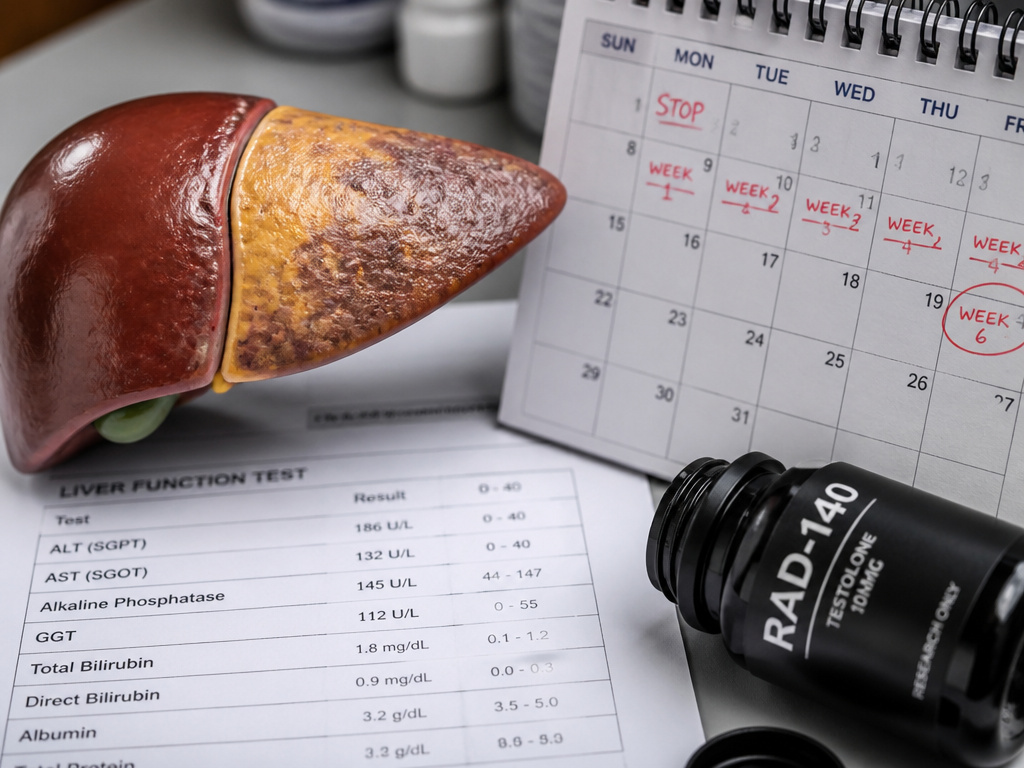
One of the most insidious risks is the timeline. You might take a SARM for a cycle, feel fine, and think you’ve dodged a bullet. The danger can be just beginning.
A 2024 case report documented a patient who used RAD-140 for two months. He stopped a week before seeing his doctor. His liver tests were bad, but then they got dramatically worse. Over the next six weeks, his liver biochemistry significantly deteriorated. His total bilirubin, a marker of liver stress, peaked at 647 μmol/L. The normal range is under 20. It took approximately five months from discontinuation for his levels to return to normal.
This pattern of delayed hepatotoxicity means stopping the drug doesn’t stop the damage. Your liver can continue to fail for weeks after your last dose. This shatters the common user mindset of “I’ll stop if I feel unwell.” By the time you feel the nausea, weakness, or see jaundice (yellowing of the skin), the injury may already be severe and progressing on its own.
Symptoms that demand immediate medical attention:
- Nausea, weakness, or extreme fatigue
- Fever or abdominal pain, especially in the upper right side
- Jaundice (yellowing of the skin or whites of the eyes)
- Dark brown or tea-colored urine
- Chest pain or shortness of breath
If you experience any of these during or after SARM use, tell the healthcare professional exactly what you took. Don’t just say “a supplement.” Name the compound. This information is critical for proper diagnosis and care.
Hormonal Suppression: The Guaranteed Side Effect
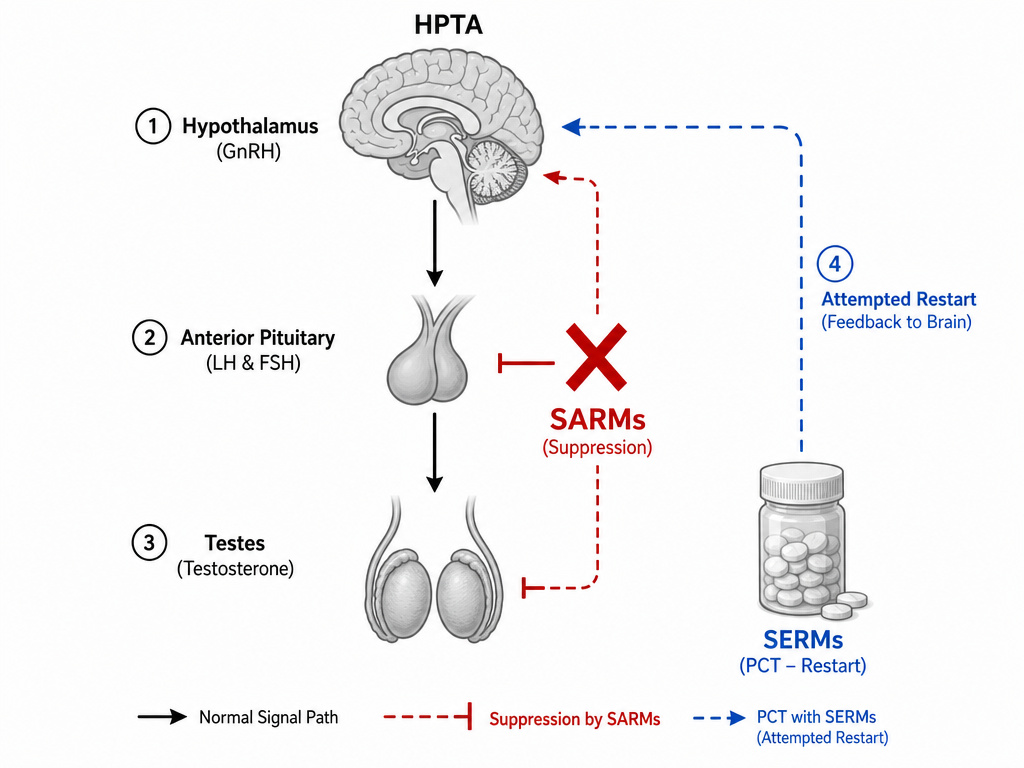
The conversation about SARMs and testosterone isn’t a comparison of benefits; it’s a recognition of shared harm. SARMs are associated with serious hormonal suppression, which can slow or stop the body’s natural testosterone production. The degree varies by compound, dose, and individual, but suppression happens. When you finish a cycle, your natural levels are crashed. This leads to the classic “post-cycle” crash: low energy, lost libido, depression, and loss of the muscle you were trying to build.
The part nobody mentions: Natural recovery is not assured. Some men’s HPTA restarts sluggishly or incompletely, leading to a prolonged low-testosterone state. This is why the concept of PCT after SARMs exists in user circles, an attempt to jumpstart the system with other drugs like SERMs (Selective Estrogen Receptor Modulators). This adds another layer of unregulated drug use and its own set of risks.
The downstream effects are significant. Suppression can cause testicular shrinkage, infertility, and sexual dysfunction. For teenagers whose endocrine systems are still developing, the impact could be long-lasting or permanent. The FDA’s warning specifically highlights this vulnerable group, who are heavily targeted by social media marketing.
What to Do If You’ve Used SARMs or Are Considering It
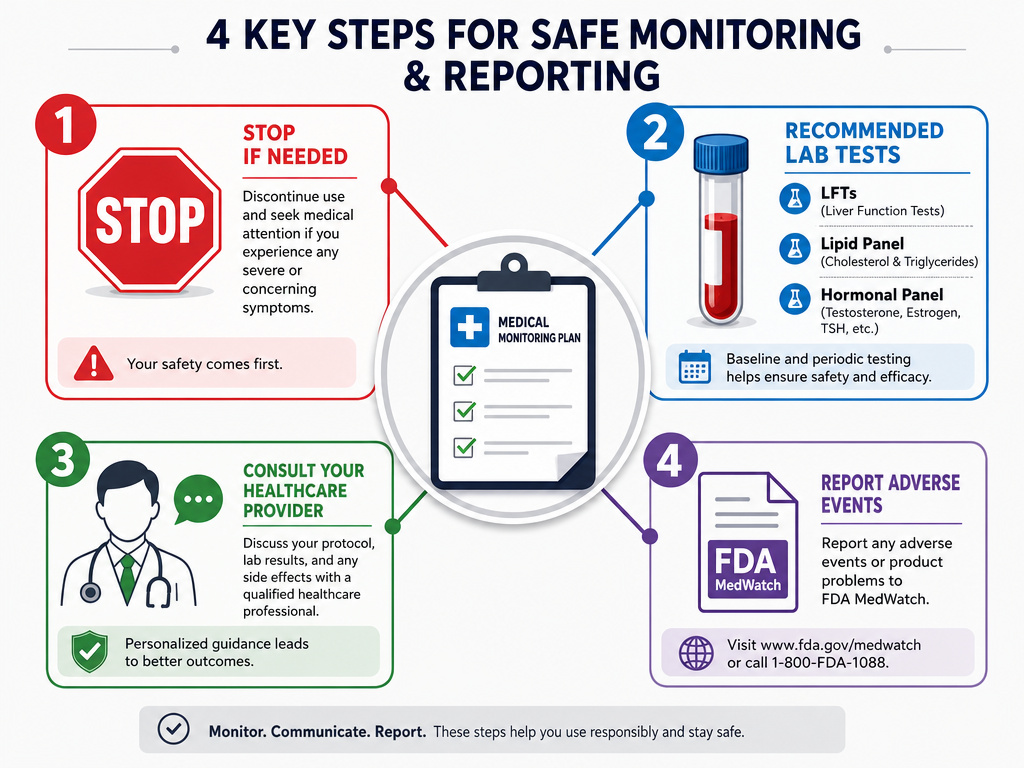
The FDA recommends consumers talk to a health care professional about the use of any products for increasing muscle mass or enhancing athletic performance and advises against using SARMs. Given that some will continue despite warnings, here are harm-reduction steps rooted in the evidence.
First, stop. You must do this if you are currently cycling. Understand that liver issues may not appear immediately.
Get blood work. Don’t guess about your health. A full panel should include: * Liver Function Tests (LFTs): ALT, AST, ALP, Bilirubin. * Lipid Panel: Cholesterol and triglycerides. * Hormonal Panel: Total Testosterone, Free Testosterone, LH, FSH, Estradiol. This gives you a baseline. Blood work can reveal hormonal suppression or liver stress that may not yet cause symptoms.
Disclose everything to your doctor. Hand them the bottle. Tell them the name, the dose you took, and for how long. This isn’t a time for embarrassment; it’s for your safety.
Report adverse events. If you experience a serious side effect, you can file a report with the FDA’s MedWatch program. This is how regulators track these public health risks. The adverse event case analysis that identified 20 reports published since 2020 only exists because adverse events were documented.
Reject the “research chemical” loophole. Labels that say “for research purposes only” or “not for human consumption” are legal disclaimers, not safety features. They are direct-to-consumer products with dosing instructions. The agency has pursued criminal actions against distributors of these products.
SARMs vs. Steroids and “Legal Alternatives”
The comparison is inevitable. Users see SARMs as a middle ground between natural testosterone boosters and hardcore anabolic steroids. This is a false continuum.
| Aspect | Anabolic Steroids | SARMs | Natural Testosterone Boosters |
|---|---|---|---|
| Legal Status | Schedule III controlled substance (U.S.). | Unapproved drug; illegal to market as a supplement. | Legal dietary supplements (if compliant). |
| Primary Risk Profile | Well-documented: severe hormonal disruption, cardiovascular disease, liver toxicity, aggression. | Emerging evidence shows similar severe risks: liver failure, heart attack, stroke, suppression. | Generally low risk; minor GI issues or interactions; effects are subtle. |
| Mechanism | Binds broadly to androgen receptors throughout the body. | Designed to bind more selectively to muscle/bone receptors (theory vs. Practice). | May support natural hormone production via nutrient cofactors or mild plant adaptogens. |
| Regulatory Oversight | High (controlled substance). | Very low (illegal market, frequent contamination). | Moderate (FDA regulates as food, not pre-approved). |
| Doping Status | Banned by all major sports organizations (WADA). | Banned by all major sports organizations (WADA). | Most ingredients are not banned, but some proprietary blends may contain hidden SARMs. |
The critical difference is one of knowledge, not safety. The long-term effects of steroids are terrible, but they are known. Decades of misuse have mapped the damage. With SARMs, we are in the early phase of mapping that damage, and the initial charts show the same treacherous terrain. Calling them a “safer steroid” is like calling a new street drug safer than heroin because less is known about it.
As for “legal steroid” alternatives or prohormones, they often fall into the same dangerous, unregulated category. Many have been banned or are themselves designer drugs that convert to active steroids in the body. The legal label is a marketing term, not a safety certification.
Can SARMs cause liver injury or tendon rupture?
SARMs are directly linked to severe liver damage, known as drug-induced liver injury (DILI). The FDA reports that SARMs cause life-threatening reactions, including liver injuries requiring hospitalization. A specific case report details a patient who used RAD-140 and experienced a dramatic worsening of liver function over weeks after stopping, with recovery taking months. While the fact sheet does not specify tendon rupture, it lists serious health problems associated with SARMs, including liver injury and acute liver failure. Consumers experiencing symptoms like nausea, abdominal pain, or jaundice should consult a health professional immediately. The timeline from use to injury can be unpredictable, and damage may progress even after discontinuation.
Frequently Asked Questions
Does SARMs use shut down natural testosterone production?
Yes, predictably and significantly. SARMs suppress the HPTA, causing your body to reduce or stop producing its own testosterone. The extent and duration of suppression vary, but it is a direct pharmacological effect, not a rare side effect.
Are SARMs safer than anabolic steroids?
There is no reliable evidence to support this claim for off-label, recreational use. A peer-reviewed therapeutic evaluation notes that promises of tissue-selectivity and superior safety over conventional androgens lack head-to-head trial data. The documented severe risks, liver failure, heart attack, stroke, are identical.
Will SARMs make me fail a drug test?
Absolutely. More than 120 SARM products are on the World Anti-Doping Agency (WADA) Prohibited List. They are also banned by the U.S. Department of Defense, the NCAA, and all major professional sports leagues. Tests specifically screen for these compounds.
What is safer, SARMs or peptides?
This compares two categories of unapproved research chemicals. “Peptides” is a broad term for short chains of amino acids; some are investigated for healing, others for growth hormone release. Both operate in unregulated spaces with risks of contamination, unknown long-term effects, and misuse. Neither is safe for casual, unsupervised experimentation.
If I decide to use them, how can I reduce harm?
The only way to reduce harm is to not use them. If you disregard this, at a minimum: get full blood work before, during, and after; source from a lab that provides independent batch testing (recognizing this is no guarantee); start with a minimal dose; limit cycle length; and have a plan for post-cycle blood work and potential medical support. Understand you are conducting an experiment on your own body.
The Bottom Line
The question “are SARMs safe?” has a definitive answer from the available evidence: no. They are unapproved drugs sold in a contaminated market, linked to hospitalizations for liver failure and other life-threatening conditions. The theoretical benefit of selective action remains just that, a theory unsupported by the reality of adverse event reports.
The regulatory stance is unambiguous. The FDA advisory for young adults recommends talking to a healthcare professional about any product for muscle building and advises against SARM use. For athletes, they are unequivocally banned.
Building muscle is a function of consistent training, adequate nutrition, and recovery, not a shortcut from a research chemical. The risks inherent in that shortcut are severe, delayed, and often hidden inside a bottle with a misleading label. Your health is the one thing you can’t afford to experiment with.
