
Androgen Deprivation Therapy Side Effects in Men
This post contains affiliate links. As an Amazon Associate, we earn from qualifying purchases.
Androgen deprivation therapy (ADT) side effects in men range from common vasomotor symptoms like hot flashes to serious long-term risks of bone fracture and cardiovascular disease. ADT causes a 2.5% loss of bone density at the hip and a 4.0% loss at the spine within the first year, and data from over 50,000 men shows a 19% fracture incidence within five years of prostate cancer diagnosis versus 13% for those not on ADT.
The fracture numbers are the part that makes this more than a list of annoyances. They are documented, physical consequences of a treatment that works by removing a key hormonal signal the body uses to maintain structure. That shift in body composition, losing muscle, gaining fat, isn’t just cosmetic. It changes how you move, your risk of falling, and how your metabolism handles sugar and cholesterol. These changes are among the androgen deprivation therapy side effects in men.
What follows is a breakdown of every major androgen deprivation therapy side effects in men, but with a focus on the ones that carry real health stakes. The immediate symptoms you need to manage day-to-day, the intermediate metabolic shifts, and the long-term skeletal and cardiovascular data will be discussed, including where the major medical bodies disagree. You’ll also get a clear comparison of the two main ADT drug types and why that choice matters.
Key Takeaways
- Bone density loss hits hardest in the first year (2.5% at the hip, 4.0% at the spine) but continues with prolonged use, leading to a 19% fracture risk within five years.
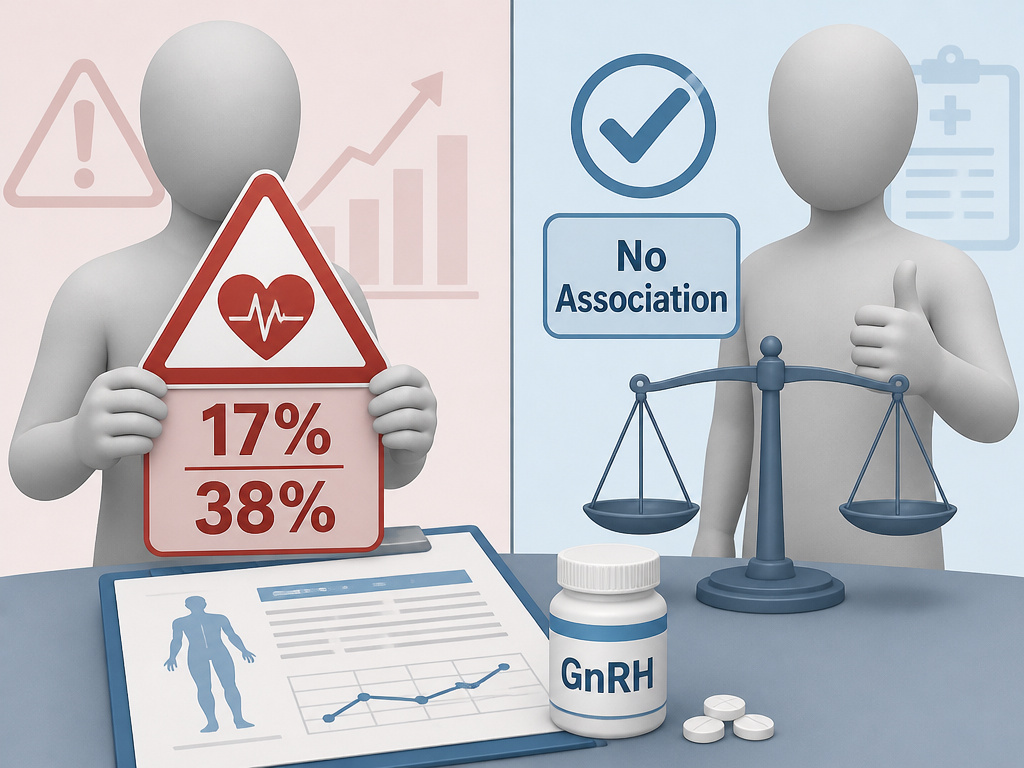
- The cardiovascular risk debate is real: the Zhao et al. Observational meta-analysis found a 17% increased risk of cardiovascular death, while the Nguyen et al. RCT pooled analysis found no association; this conflict means your personal heart health history is critical in planning.
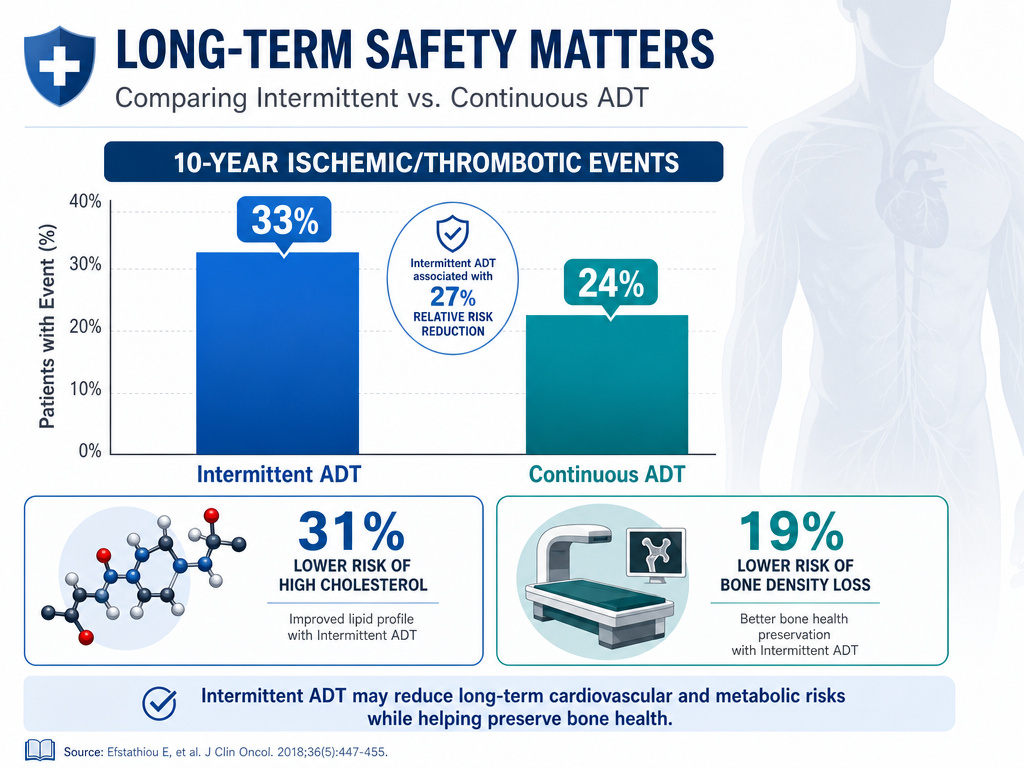
- Intermittent ADT did not reduce long-term side effects in a major 10-year study; it was linked to a 33% incidence of ischemic events versus 24% for continuous therapy in older men with metastatic disease.
- GnRH agonists carry an FDA safety warning for heart and diabetes risk; GnRH antagonists do not, making the drug type a key discussion point with your oncologist.
- Management is essential: targeted resistance training fights muscle and bone loss, while medications like venlafaxine can cut hot flash frequency by over 50%.
The Immediate and Unmistakable: Vasomotor and Sexual Side Effects
You feel these first. They’re the signature symptoms that tell you the treatment is working, and also disrupting your normal state.
Hot flashes are the most reported issue. They aren’t just warmth; they’re a sudden, intense heat that spreads over your chest and face, often followed by drenching sweat and then a chill. For some men, this happens a dozen times a day and through the night, shredding sleep. The mechanism is straightforward: low testosterone destabilizes the body’s internal thermostat in the brain’s hypothalamus.
Sexual side effects are a package deal. Low libido is almost universal, driven by the absence of the primary hormonal driver of sexual desire. Erectile dysfunction follows, because testosterone is essential for the nitric oxide signaling that allows blood vessels in the penis to dilate. This isn’t a matter of arousal; the physical pathway is chemically muted.
Common mistake: Trying to power through severe hot flashes without mentioning them to your care team. Unmanaged, they degrade sleep quality and daily function within weeks, which then amplifies fatigue and mood disturbances.
The good news is these symptoms often have the most direct pharmacological interventions.
- For hot flashes: Low-dose antidepressants like venlafaxine (Effexor) or paroxetine (Paxil) can reduce frequency by 50-60%. Gabapentin is another option, especially for nighttime symptoms.
- For sexual health: Open communication with your partner is step one. Medications like PDE5 inhibitors (sildenafil, tadalafil) may be used to help with erectile function. This is often more about managing expectations and exploring intimacy beyond intercourse.
Body Recomposition: Muscle, Fat, and Metabolic Shifts
The scale might not move dramatically, but what’s inside your body is changing, a core feature of androgen deprivation therapy side effects in men. ADT triggers a systematic swap: lean muscle mass for body fat. Studies using precise DEXA scans show a gain in body fat and a loss in lean mass within the first year. This isn’t about eating less; it’s about your cells being reprogrammed.
You lose muscle because testosterone is a key anabolic signal telling your body to build and maintain protein. Without it, the balance tips toward breakdown. The fat gain, particularly visceral fat around the organs, is more insidious. This type of fat is metabolically active, pumping out inflammatory signals and hormones that worsen insulin resistance.
This metabolic shift is why exercise isn’t optional, it’s prescription. Aerobic activity helps manage weight and heart health, but resistance training is the only lever you have to directly counter muscle loss and stimulate bone. Aim for regular resistance training sessions, focusing on major muscle groups. Even bodyweight exercises done consistently change the trajectory.
The downstream effects are what turn this into a health risk, not just a vanity issue.
- Insulin Resistance: Cells become less responsive to insulin, raising blood sugar. Studies have shown that fasting insulin levels can increase after starting ADT.
- Dyslipidemia: Cholesterol profiles worsen. You often see a drop in protective HDL cholesterol and a rise in triglycerides.
- Metabolic Syndrome: The combination of these factors, increased waist circumference, high blood pressure, high blood sugar, and abnormal cholesterol, meets the definition of metabolic syndrome, which doubles the risk of heart disease.
| Metabolic Parameter | Typical Change with ADT | Primary Management Strategy |
|---|---|---|
| Lean Body Mass | Decrease (2-4%) | Progressive resistance training |
| Body Fat % | Increase (4-6%) | Combined aerobic & resistance exercise |
| Insulin Sensitivity | Decrease | Dietary carbohydrate management, metformin* |
| HDL Cholesterol | Decrease | Aerobic exercise, dietary fiber |
| Triglycerides | Increase | Reduce refined carbs & sugars |
*Metformin should only be considered under a doctor’s supervision.
Skeletal Health: The Silent, Stealing Side Effect
Bone loss is the side effect you can’t feel until it’s too late. There is no ache or warning sign for osteoporosis. A fracture from a minor fall is often the first symptom.
The data from the Canadian Urological Association guideline is specific. ADT results in a 2.5% decrease in bone mineral density at the femoral neck (hip) and a 4.0% decrease at the lumbar spine within the first 12 months. The loss is maximal in that first year but continues steadily with prolonged treatment.
This translates directly to broken bones. In a study of over 50,000 men cited in the same guideline, those on ADT had a 19% fracture incidence within five years of their prostate cancer diagnosis. For men not on ADT, the incidence was 13%. The Number Needed to Harm, a statistic showing how many men need to be treated for one to experience a fracture, was 28 for GnRH agonists.
Where this goes sideways: Skipping the baseline DEXA scan. If you don’t know your starting bone density, you and your doctor are managing in the dark. The scan is a 15-minute, non-invasive test that sets the benchmark for everything that follows.
Management is a three-legged stool:
- Assessment: Get a DEXA scan before or soon after starting ADT. Repeat it every 1-2 years.
- Lifestyle: Weight-bearing and resistance exercise are essential. They provide the mechanical stress that signals bone to rebuild. Ensure adequate calcium and Vitamin D intake, as recommended by your healthcare provider.
- Pharmacology: If you have osteoporosis or very low bone density, medications like alendronate (Fosamax) or zoledronic acid (Reclast) can be highly effective. A newer class of drugs called RANKL inhibitors (e.g., denosumab) is also used specifically for ADT-induced bone loss.
The Cardiovascular Risk Debate: What the Data Actually Says
This is the most contentious area in ADT management. The headlines are scary, but the full picture requires looking at two different types of studies that often contradict each other.
The Observational Data (The Warning Signal):
Large studies that look back at patient records consistently show a link. The Zhao et al. Meta-analysis of observational studies found ADT was associated with a 17% increased risk of cardiovascular mortality (hazard ratio 1.17). Another observational meta-analysis reported a 38% increase in nonfatal cardiovascular disease. Based on this pattern, the U.S. FDA issued a safety warning in 2010 specifically for GnRH agonists regarding increased risk of diabetes, heart attack, and stroke. The American Heart Association has also issued advisory statements.
The Randomized Trial Data (The Counterpoint):
When men are randomly assigned to receive ADT or not in a clinical trial, which controls for other health factors, the risk often disappears. The Nguyen et al. Pooled analysis of eight randomized trials found no association between GnRH agonist use and cardiovascular death. The European Association of Urology states there is no consistent evidence ADT is associated with nonfatal CVD.
So who’s right? Both studies are correct within their limits. Observational studies include real-world, often older, sicker patients with pre-existing conditions. RCTs involve healthier, closely monitored men. The takeaway: Your personal cardiovascular risk profile before starting ADT is the single biggest factor. If you have a history of heart disease, diabetes, or stroke, the observational data likely applies to you.
| Evidence Type | Key Finding on CV Mortality | Key Finding on Nonfatal CVD | Major Proponent/Statement |
|---|---|---|---|
| Observational Studies | 17% increased risk (HR 1.17) | 38% increased risk | FDA Safety Warning (2010) |
| Randomized Controlled Trials | No significant association | Inconsistent evidence | European Association of Urology |
| Clinical Guidance | Assess baseline risk; monitor lipids/glucose | Manage metabolic parameters proactively | American Heart Association Advisory |
GnRH Agonists vs. Antagonists: Does the Drug Type Matter?
This is a critical practical question. The 2010 FDA warning applies specifically to GnRH agonists (like leuprolide, goserelin). There is no such warning for GnRH antagonists (like degarelix, relugolix). The biological rationale is that agonists cause an initial surge in testosterone before suppression, which may destabilize cardiovascular plaques, while antagonists cause immediate suppression.
For men with significant pre-existing cardiovascular disease, discussing a potential switch to an antagonist with your oncologist is a necessary conversation. It is not a guaranteed fix, but it is a risk-mitigation strategy grounded in the regulatory distinction.
The 10-Year Data That Changed the Intermittent ADT Hypothesis
For years, a leading theory was that intermittent ADT, cycling on and off treatment, could reduce long-term side effects by giving the body a “holiday” from hormonal suppression. It made intuitive sense.
The SWOG S9346 trial linked to Medicare claims provided 10-year data that challenged this directly. In older men with metastatic disease, intermittent therapy did not reduce bone, endocrine, or cognitive events. More surprisingly, it was associated with an increased incidence of ischemic/thrombotic events.
The numbers tell the story:
- 10-year cumulative incidence of ischemic/thrombotic events: 33% for intermittent ADT vs. 24% for continuous ADT.
- Hazard Ratio: 0.69 for continuous vs. Intermittent (meaning continuous therapy had a lower risk).
- Most common long-term events: Hypercholesterolemia (31%) and osteoporosis (19%).
This was a landmark finding. It meant that for a specific group, older men with advanced cancer, the treatment break wasn’t protective; it might even be harmful from a cardiovascular perspective. It turned a hopeful hypothesis into a nuanced decision that must be weighed against cancer control efficacy.
Cognitive, Emotional, and Quality of Life Impacts
The term “chemo brain” is used in other cancers; men on ADT often describe a similar mental fog. Research supports this. Some research suggests ADT may be associated with cognitive and emotional side effects, including risks of dementia and depression.
The mechanisms are thought to involve neuroinflammation, reduced brain-derived neurotrophic factor, and the loss of testosterone’s neuroprotective effects. In practice, men report:
- Short-term memory lapses (walking into a room and forgetting why).
- Difficulty concentrating on complex tasks.
- Slower word retrieval and mental processing speed.
The emotional toll is intertwined. Depression and anxiety rates are higher. This isn’t just a reaction to a cancer diagnosis; the hormonal environment directly affects neurotransmitter systems regulating mood. The loss of libido, physical changes, and fatigue create a cascade that can strain even the strongest relationships.
The part nobody mentions: This strain on relationships. Intimacy isn’t just sex. It’s the quiet connection that can erode when one partner is chronically fatigued, emotionally flat, or physically uncomfortable. Addressing this often requires a conscious effort to redefine closeness and, in many cases, seeking couples counseling or sex therapy.
A Realistic Management Framework: What You Can Actually Do
Feeling overwhelmed by the list is normal. The goal isn’t to fight every side effect at once, but to build a layered defense with your care team. Think of it as concentric rings of management.
Layer 1: Foundational Health (Non-Negotiable)
This is the base that every other strategy rests upon. If this layer is weak, medications will be less effective.
- Exercise Protocol: Combine regular moderate aerobic activity with resistance training. The strength training must be progressive, slowly adding weight or reps over time to provide a novel stimulus to muscle and bone.
- Nutritional Focus: Prioritize protein to support muscle, fiber for cholesterol and gut health, and controlled portions of complex carbohydrates. Limit alcohol and processed foods.
- Sleep Hygiene: Manage hot flashes at night with moisture-wicking bedding, a fan, and medication if needed. Poor sleep worsens every other side effect.
Layer 2: Pharmacological Support (Targeted Tools)
Use medications for specific, high-burden symptoms.
- Hot Flashes: Venlafaxine, gabapentin, or clonidine.
- Bone Loss: Calcium/Vitamin D plus a bisphosphonate or denosumab if DEXA shows osteoporosis.
- Metabolic Issues: Statins for cholesterol, metformin for insulin resistance (under doctor’s guidance).
- Mood/Cognition: SSRIs/SNRIs for depression, and cognitive exercises/games.
Layer 3: Monitoring and Vigilance (The Long Game)
Schedule and keep these appointments. They are your early-warning system.
- Baseline and Annual DEXA scan for bone density.
- Regular bloodwork: Lipid panel, fasting glucose/HbA1c, and testosterone/PSA as directed by your oncologist.
- Cardiovascular assessment: Discuss a baseline echocardiogram or stress test if you have risk factors.
- Open communication: Report all side effects to your team, not just the severe ones. There are often solutions.
What causes anemia during androgen deprivation therapy?
Androgen deprivation therapy lowers testosterone, a hormone that signals your bone marrow to produce red blood cells. Without this signal, red blood cell production slows down. This type of anemia is not caused by iron deficiency but by the direct hormonal effect on your bone marrow. The result is that your blood carries less oxygen, which can leave you feeling unusually tired, short of breath, and looking pale. If you experience these symptoms, talk to your doctor. They can check your red blood cell count with a simple blood test and help you manage the fatigue.
Frequently Asked Questions
What is the most serious side effect of androgen deprivation therapy?
The most serious long-term risks are osteoporotic fractures and cardiovascular disease. The fracture risk is well-documented, with a 19% incidence within five years per a large study. The cardiovascular risk is more nuanced, heavily dependent on your pre-existing heart health, but is significant enough to warrant an FDA safety warning for certain ADT drugs.
How long does it take to recover from androgen deprivation therapy?
Physical recovery of testosterone production can take 6-12 months after stopping, but some changes may persist. Muscle mass and strength can be regained with dedicated training. Bone density loss may be partially reversed with medication and exercise, but not always fully. Metabolic changes like increased body fat and insulin resistance can linger for years, emphasizing the need for sustained lifestyle management.
Is androgen deprivation therapy worth it?
This is a deeply personal risk-benefit calculation you make with your oncologist. For men with high-risk or metastatic prostate cancer, the survival benefit of ADT is clear and often outweighs the side effects. For lower-risk scenarios (e.g., adjuvant therapy), the decision is more balanced. The “worth” depends on how effectively you and your team can manage the side effect burden to maintain your quality of life.
What happens when you stop androgen deprivation therapy?
When you stop, your pituitary gland should eventually resume signaling your testes to produce testosterone again. This can take months. Many side effects like hot flashes, low libido, and fatigue will gradually improve as your hormone levels rise. However, some changes, like bone density loss or shifts in body composition, may not completely reverse without active intervention.
Do all types of ADT have the same side effects?
Most side effects are caused by the low-testosterone state, so they are common across all types. However, there are differences. GnRH agonists carry a specific FDA cardiovascular warning that GnRH antagonists do not. Surgical castration (orchiectomy) has the same side effects but eliminates the need for injections and any associated drug-specific risks. The choice of agent can be tailored to your personal health profile.
The Bottom Line
Managing ADT is about stacking the odds in your favor with every tool available, rather than eliminating side effects. The single most important step you can take is to assemble a proactive care team, your oncologist, a primary care doctor attuned to metabolic health, a physical therapist or trainer familiar with cancer rehab, and perhaps a mental health professional.
Start with the baseline tests: the DEXA scan, the lipid panel, the cardiovascular review. That data removes the guesswork. Commit to the foundation of resistance training and protein intake; it’s the most direct counterpunch you have. And finally, understand the drug you’re on. The distinction between an agonist and an antagonist is a documented difference in safety labeling, beyond mere medical jargon, that should inform your conversation with your doctor.
This journey is marathon medicine. The men who fare best are the ones who see themselves as the central managers of their own multidisciplinary plan, not only as patients.
