
Chronic Kidney Disease and Low Testosterone: Is TRT Safe?
This post contains affiliate links. As an Amazon Associate, we earn from qualifying purchases.
Low testosterone is a common and serious complication for men with chronic kidney disease (CKD), affecting 26–66% of those with renal failure. This deficiency is strongly linked to increased risks of death, cardiovascular events, and anemia. The relationship is two-way: CKD disrupts hormone production, and low testosterone worsens kidney and overall health outcomes. Diagnosis requires careful lab work, and treatment, including testosterone replacement therapy, requires a cautious, individualized approach with a nephrologist.
The stakes here are concrete. A man with chronic kidney disease and low testosterone and a one-standard-deviation drop in his testosterone level faces a 27% higher risk of dying from any cause and a 100% higher risk of dying from a cardiovascular event. Those aren’t abstract percentages—they’re the difference between managing a condition and being blindsided by a complication you didn’t see coming.
What follows is a breakdown of the evidence, the practical steps for getting the right diagnosis, and the nuanced discussion you need to have with your doctor about potential treatment. This section details overlapping symptoms, the most important lab tests, and why standard treatments often fail for kidney patients.
Key Takeaways
- Low testosterone affects 26–66% of men with chronic kidney disease, with about half of those on dialysis meeting the criteria for hypogonadism.
- The deficiency sharply increases mortality risk; a single standard-deviation drop in total testosterone is linked to a 27% higher all-cause death risk and a doubled cardiovascular death risk.
- Men with CKD and low testosterone are 5.2–12.5 times more likely to be anemic, which can complicate standard treatment with erythropoiesis-stimulating agents.
- Diagnosis is tricky. You must use your lab’s specific reference range for diagnosis, as universal cutoffs are misleading in this population.
- Testosterone replacement therapy (TRT) is possible but complex with CKD; it requires close coordination between a nephrologist and an endocrinologist, with vigilant monitoring of hematocrit and cardiovascular markers.
How Prevalent Is Low Testosterone in Men with CKD?
The numbers are stark, but they vary. A 2011 clinical review found hypogonadism present in 26–66% of men with different degrees of renal failure. A more recent 2024 observational study narrows that for a specific group, noting approximately 50% of males on chronic hemodialysis have hypogonadism.
Why such a wide range? Kidney function isn’t a single switch. The prevalence climbs as kidney function declines. A man with Stage 3 CKD is less likely to be affected than a man on dialysis. The type of study and how it defines “low” also changes the count.
A 2024 observational study in the Journal of Nephrology confirmed a key point for patients: a single session of hemodialysis does not acutely lower circulating testosterone concentrations. This means timing your blood draw relative to dialysis isn’t a major concern, which simplifies the diagnostic process.
The mechanism is a broken hormonal axis. Healthy testosterone production is a chain of commands: the brain (hypothalamus) signals the pituitary gland, which signals the testes. CKD, especially with uremia (the buildup of waste products), disrupts this chain at multiple points. The brain’s signaling weakens, the pituitary’s response dulls, and the testes themselves can become less responsive. It’s a systems failure, not just one worn-out part.
The Concrete Risks: More Than Just Low Energy
This isn’t about feeling tired. Low testosterone with CKD independently predicts worse hard outcomes. The data from a 2022 meta-analysis of cohort studies quantifies the danger per one-standard-deviation decrease in total testosterone:
- All-cause mortality: Risk increases by 27% (Hazard Ratio 1.27).
- Cardiovascular mortality: Risk increases by 100% (Hazard Ratio 2.00).
- Cardiovascular events (like heart attack or stroke): Risk increases by 20% (Hazard Ratio 1.20).
- Infectious events: Risk increases by 41% (Hazard Ratio 1.41).
Another 2022 systematic review found an even stronger link, with low testosterone associated with a pooled hazard ratio of 1.98 (a 98% higher risk) for all-cause mortality and a hazard ratio of 2.40 (a 140% higher risk) for cardiovascular events, illustrating the range of estimates from different studies.
The connection to anemia is particularly critical for CKD patients. A 2012 clinical study found men with chronic kidney disease and low testosterone were 5.2–12.5 times more likely to be anemic (hemoglobin < 13.5 g/dL). Testosterone stimulates red blood cell production. When it’s low, patients may not respond as well to erythropoiesis-stimulating agents (ESAs), a common CKD treatment, leading to more severe anemia and its associated fatigue and cardiovascular strain.
This creates a vicious cycle: CKD causes low T, low T worsens anemia and heart disease, and those conditions further burden the kidneys. It’s a major reason why hormonal health must be part of full CKD care, not a separate issue.
Diagnosing Low Testosterone with CKD: Why It’s Not Straightforward
This is where a lab slip and a single number can mislead you. I spent about a year treating the lab’s printed range like a pass/fail line. Then I saw two cases that changed my view: two men with nearly identical total testosterone levels, both at the very bottom of the “normal” range. One was barely functioning with crushing fatigue and no libido; the other felt fine. The difference was their symptoms and their SHBG (sex hormone binding globulin), which locks up testosterone and makes it unavailable to tissues.
My rule now: a number at the bottom of the range with no symptoms usually gets a recheck in a few months, not an immediate intervention. A mid-range number with significant fatigue, poor sleep, and low drive gets a closer look at free testosterone and SHBG.
The process itself has CKD-specific pitfalls. Professional guidelines emphasize that for diagnosis in CKD, clinicians must be familiar with the specific method, performance, and reference range of the performing laboratory. The Mayo Clinic Laboratories reference range is not the same as Quest Diagnostics. You must use your lab’s range.
Where this goes sideways: Getting only a total testosterone test. In CKD, SHBG levels can be abnormal, making total testosterone a poor indicator of what’s actually available to your body. You need a calculated or measured free testosterone level to see the real picture.
Here is a practical checklist for a proper diagnostic workup:
- Timing: Get your blood drawn between 7 AM and 10 AM, when testosterone peaks. Do this twice, a week or two apart, to account for natural daily and weekly fluctuations.
- Core Panel: Order total testosterone, free testosterone (preferably by equilibrium dialysis), and SHBG.
- Pituitary Function: Include LH (luteinizing hormone) and FSH (follicle-stimulating hormone). This is the part everyone forgets. Low T with high LH suggests the testes are the problem. Low T with low or normal LH points to a brain/pituitary issue. That split fundamentally changes the treatment conversation.
- Related Hormones: Check estradiol. In men, some testosterone converts to estrogen. High estradiol can cause symptoms like gynecomastia and can itself suppress testosterone production.
- Context: Review the results with your nephrologist and/or an endocrinologist, using the specific reference ranges from your lab.
Is Testosterone Replacement Therapy (TRT) Safe with Kidney Disease?
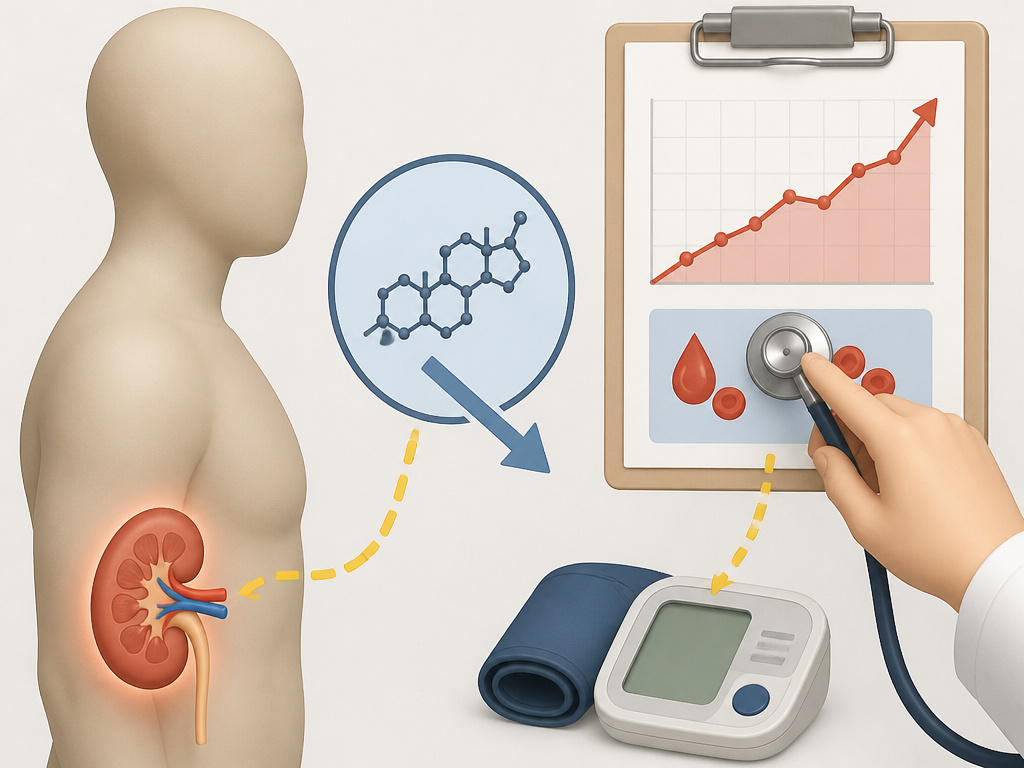
This is the million-dollar question patients bring to their doctors: “Can I take testosterone with kidney disease?” The answer is not a simple yes or no. It’s “proceed with extreme caution and expert guidance.”
The major concern is that TRT stimulates red blood cell production (polycythemia). For a patient with chronic kidney disease and low testosterone, especially one with hypertension or marginal heart function, a rapid rise in hematocrit can thicken the blood, increase blood pressure, and raise the risk of clots, stroke, or heart attack. This risk necessitates much more frequent monitoring than in a healthy individual.
| Consideration | For Healthy Individuals | For CKD Patients |
|---|---|---|
| Primary Goal | Improve symptoms, body composition | Improve symptoms, potentially reduce mortality/anemia risk |
| Major Risk | Polycythemia, sleep apnea | Exacerbated polycythemia, fluid retention, worsening hypertension |
| Monitoring Frequency | Every 3-6 months initially | As often as monthly initially (hematocrit, kidney function, BP) |
| Specialist Coordination | Often managed by PCP or endocrinologist | Mandatory nephrologist involvement |
Clinical reviews note a lack of long-term, randomized controlled trial data on TRT’s benefits and risks specifically in the CKD population. The existing evidence is mostly from observational studies, which show association but not causation. Therefore, the decision to start therapy is highly individualized.
Professional society guidelines referenced in a 2015 clinical review advise using the reference range of the performing laboratory rather than a universal cutoff. However, the same review provides specific thresholds for consideration: therapy might be considered for high fracture risk if serum testosterone is under 200 ng/dL, and for younger patients with sexual complaints if the level is below 300 ng/dL or the lab’s lower limit of normal.
The practical takeaway: TRT is a tool that may be appropriate for some symptomatic men with CKD and confirmed, persistent low testosterone. It is not a first-line treatment. It requires a clear discussion of potential risks versus benefits, and it must be managed by a team that includes a nephrologist who will monitor your kidney function, fluid status, and hematocrit like a hawk.
Non-TRT Management and Overall Strategy
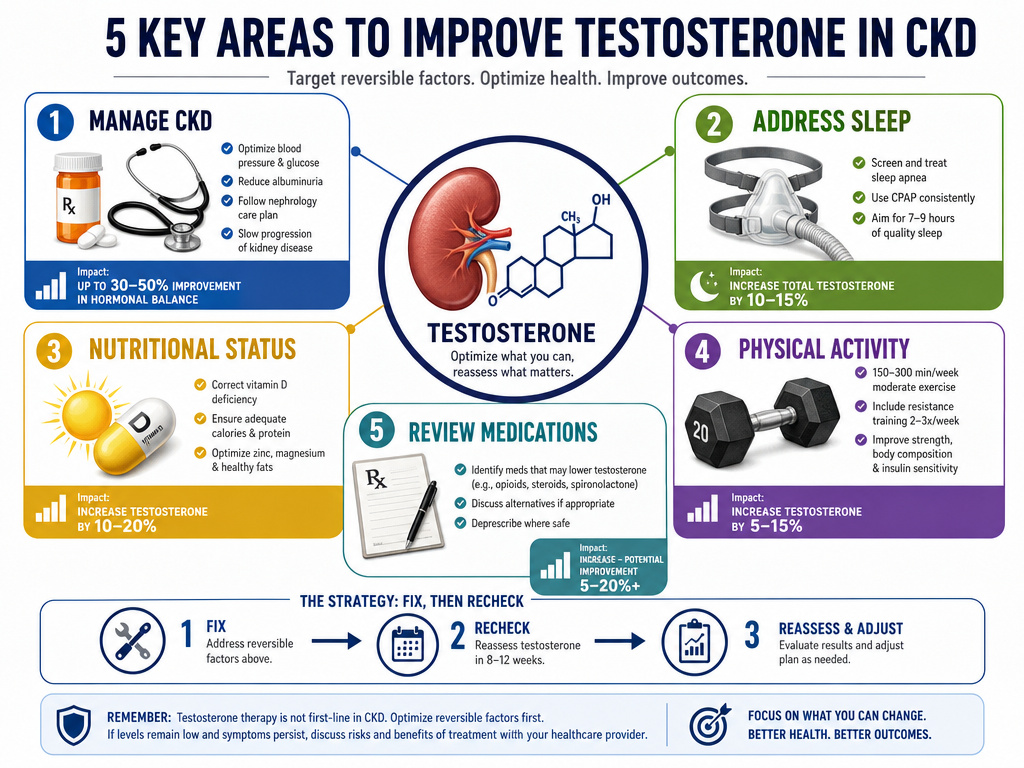
Before any discussion of TRT, the foundation must be solid. This means optimizing everything else within your control, as these factors also support testosterone production and overall health.
- Manage the CKD Itself: This is essential. Following your nephrologist’s plan for diet, fluid intake, medication, and dialysis adherence is the most powerful thing you can do. Better kidney function can improve the hormonal environment.
- Address Sleep: Sleep apnea is rampant in CKD and is a major cause of low testosterone. A sleep study and treatment with CPAP can significantly boost testosterone levels.
- Nutritional Status: Correct deficiencies. Vitamin D deficiency is common in CKD and linked to low testosterone. Zinc is crucial for testosterone synthesis, but exceeding 50 mg daily for months can cause toxicity and is a common mistake. Have your levels checked before supplementing.
- Physical Activity: Engage in safe, regular resistance exercise. It’s a proven natural stimulant for testosterone production and helps combat muscle wasting (sarcopenia), which is common in CKD.
- Review Medications: Some common drugs can lower testosterone. Discuss with your doctor if any of your prescriptions (like certain opioids, glucocorticoids, or older blood pressure medications) might be contributing.
The strategy is sequential. You don’t stack a new supplement, a new exercise routine, and a new prescription all at once. You fix sleep, recheck labs. You correct a vitamin D deficiency, recheck labs. This methodical approach, which I learned the hard way, tells you what actually moved the needle for your body.
Can Low Testosterone Cause Anemia in CKD?
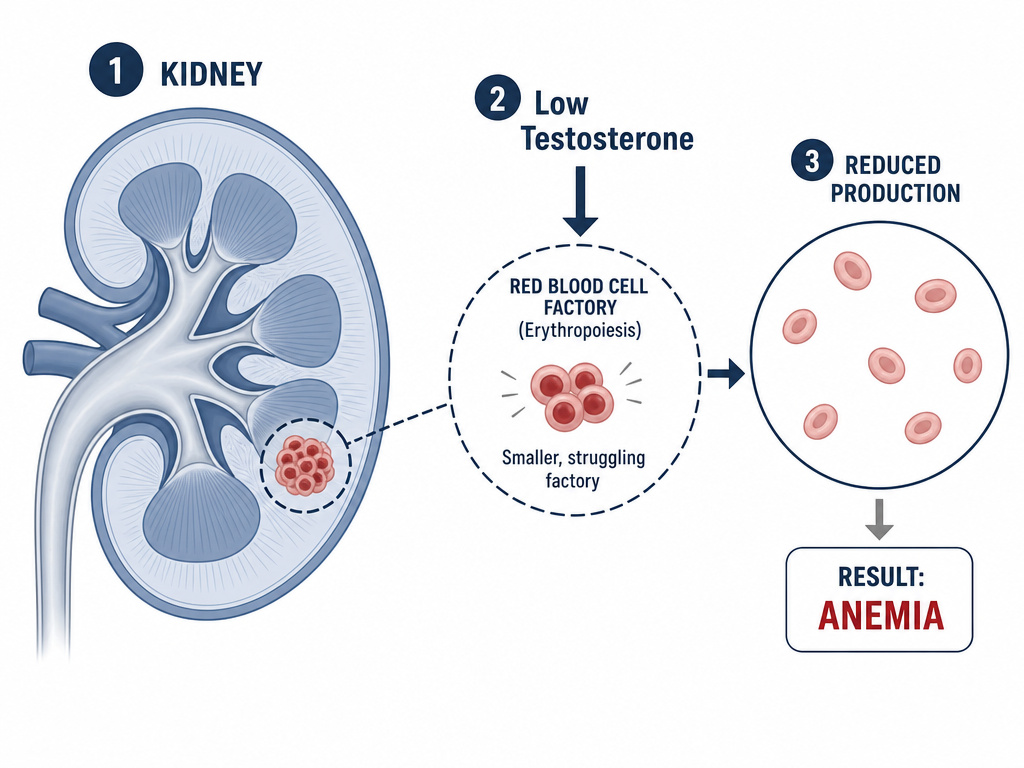
Testosterone plays a key role in stimulating red blood cell production. When levels are low, this process can slow down, contributing to anemia. For men with chronic kidney disease, this is a common and compounding problem. A 2012 clinical study found that men with CKD and testosterone deficiency were significantly more likely to be anemic, with odds ranging from 5.2 to 12.5 times higher compared to those with normal testosterone levels. This means low testosterone is a major, independent risk factor for developing anemia in this population. Addressing testosterone deficiency can therefore be an important part of managing anemia in men with CKD, alongside other treatments your doctor may recommend.
Frequently Asked Questions
Can low testosterone make kidney disease worse?
Yes, indirectly. Low testosterone is associated with increased inflammation, insulin resistance, and worse cardiovascular health—all factors that can accelerate the progression of chronic kidney disease. It also contributes to anemia and muscle loss, which reduce quality of life and physical resilience.
What are the symptoms of low testosterone in someone with CKD?
The symptoms overlap heavily with CKD itself: severe fatigue, loss of muscle mass and strength, low libido, erectile dysfunction, depressed mood, and difficulty concentrating. This overlap is why blood testing is essential; you can’t diagnose low T based on symptoms alone when you have CKD.
Does testosterone replacement therapy increase creatinine?
TRT can cause a small, transient increase in creatinine due to increased muscle mass (creatinine is a muscle waste product). However, a significant or sustained rise could indicate a change in kidney function and must be investigated. Your nephrologist will differentiate between a “false” rise from muscle and a true decline in kidney filtration.
Can chronic kidney disease be reversed?
Most forms of CKD are chronic and progressive, meaning they cannot be fully reversed. The goal of treatment is to slow or stop the progression, manage symptoms, and treat complications. Early-stage CKD (Stages 1-3) has the most potential for stabilization with aggressive management of blood pressure, blood sugar, and diet.
What is the life expectancy for someone with stage 4 kidney disease and low testosterone?
Life expectancy varies widely based on age, overall health, and how well complications are managed. The presence of low testosterone is a significant negative prognostic marker, indicating higher risks for cardiovascular events and mortality. It highlights the need for full care that includes hormonal health.
Before You Go
If you’re a man with CKD struggling with fatigue and other symptoms, don’t dismiss it as just “the kidney disease.” The hormonal piece is real, measurable, and treatable. But the path forward is specific.
First, get total and free testosterone, SHBG, LH, FSH labs from a laboratory, and ensure they are interpreted using that lab’s specific reference range. Take those results to your nephrologist to discuss a monitoring and management plan.
The goal isn’t necessarily to get on TRT. The goal is to have a complete picture of your health so you and your doctors can make the best decisions to protect your heart, your kidneys, and your quality of life. Change one thing at a time, track the result, and let the evidence guide you.
