
Does Dietary Fat Increase Testosterone? What Studies Show
This post contains affiliate links. As an Amazon Associate, we earn from qualifying purchases.
Does dietary fat increase testosterone? The science shows a nuanced picture. A chronic high-fat diet (around 40% of calories) may support higher baseline testosterone compared to a very low-fat diet (under 20%), with some studies showing a 13-15% increase. However, a single, extremely high-fat meal can cause a rapid 22% drop in testosterone that lasts for hours. The type of fat also matters, but research is conflicting, with no clear independent link between fat quality and testosterone levels in well-controlled studies.
The relationship hinges on a critical distinction most guides miss: acute suppression versus chronic adaptation. Your body reacts differently to a single fatty meal than it does to a month of a high-fat eating pattern. The studies that find benefits are looking at sustained diets. The ones that find drops are often measuring right after eating.
What follows is a breakdown of the key studies, including where they flat-out disagree, and a framework for applying this to your own diet without getting lost in the noise.
Key Takeaways
- Chronic very low-fat diets (under 20% of calories) are linked to lower testosterone in several studies, but newer, larger analyses, such as a 2024 meta-analysis, find no significant effect when comparing standard low-fat (≤30%) to high-fat diets.
- A single, very high-fat meal (over 80% fat) can suppress testosterone by about 22% for up to 8 hours, a fact often omitted from simplified “fat is good” advice.
- Research on specific fat types (saturated, monounsaturated, polyunsaturated) is highly conflicting, with different studies finding opposite associations. No single fat is a magic bullet.
- Total calorie and protein intake are major confounders. Running a aggressive calorie deficit or skimping on protein likely hurts testosterone more than adjusting fat percentage.
- Fix the basics first: ensure adequate calories, protein, and micronutrients from whole foods before fine-tuning fat intake for hormonal optimization.
The Short Answer: It’s Complicated
The link between dietary fat and testosterone isn’t a simple on/off switch, which is why the does dietary fat increase testosterone question persists. It’s a dial with at least three settings: how much fat you eat over time, what you eat it with, and when you measure.
A 1996 controlled feeding study is the classic citation. It put 43 men on two diets: one high-fat (41% of calories from fat) and one low-fat (18.8% fat). On the high-fat diet, total testosterone was 13% higher, SHBG-bound testosterone was 15% higher, and urinary testosterone excretion was 13% higher. This study fuels the standard “eat more fat” advice.
But a 2024 meta-analysis of 11 randomized controlled trials with 888 participants tells a different story. It found no significant difference in serum testosterone between men on low-fat (≤30% of calories from fat) and high-fat diets. The weighted mean difference was a negligible -0.49 ng/dL.
Where this goes sideways: Believing one extreme study is the whole truth. The 1996 study compared very low fat to high fat. The 2024 analysis looked at more moderate comparisons. The effect likely diminishes as the low-fat threshold becomes less extreme.
So, does dietary fat increase testosterone? For men eating very low-fat diets (under 20% of calories), increasing fat intake may help. For men already eating a moderate amount of fat (say, 25-35% of calories), tweaking the percentage probably won’t move the needle much on its own. The rest of the article explains why and what actually matters.
The Science: What the Studies Actually Say
We will examine the evidence. This isn’t about picking a side; it’s about understanding the landscape so you can make sense of any new headline.
The Case For Higher Fat Intake
The argument that higher fat supports testosterone rests on a few key pieces of evidence.
The 1996 study we mentioned is foundational. The 13% increase it found is real for that specific context, a switch from a very low-fiber, low-fat diet to a high-fat one. A 2021 systematic review and meta-analysis supported the link, concluding that low-fat diets significantly decreased total testosterone, free testosterone, and urinary testosterone compared to high-fat diets. However, other analyses disagree.
Some observational data points in the same direction. A large cross-sectional study of 3128 men found that those on low-fat or Mediterranean diets had modestly lower serum testosterone than those on a non-restricted diet. Other smaller studies, like one with 39 middle-aged men, found that 8 weeks on a low-fat diet (14% of calories from fat) lowered testosterone concentrations.
The Case For “It Depends” or “No Effect”
This is where the plot thickens. A 2024 meta-analysis of 11 RCTs found no significant difference in serum testosterone between low-fat and high-fat diets, representing one side of the ongoing scientific discussion. Its analysis of 11 RCTs is a direct counterpoint to the 2021 review. Why the discrepancy? The 2024 review included more and larger studies, and its definition of “low-fat” was more lenient (≤30% of calories), which may reflect more realistic dietary patterns.
A 2023 cross-sectional study of 2546 middle-aged men adds another layer. After fully adjusting for confounders like age, BMI, and physical activity, it found no independent association between the quality of dietary fat (saturated, monounsaturated, polyunsaturated, trans fatty acids) and testosterone levels. However, its models suggested that replacing dietary protein with saturated fat might be linked to higher testosterone. This hints that the problem might not be fat itself, but what you’re not eating when you focus on it.
Common mistake: Isolating fat intake from total diet context. A high-fat diet that displaces protein or creates a calorie deficit can backfire, as the 2023 study’s substitution model implies.
Finally, not all intervention studies show an effect. One study of 55 men aged 19-35 years found no changes in androgen levels after 12 weeks on either a high-fat (40%) or low-fat (22%) diet. This suggests that in healthy, young populations, dietary fat percentage within a normal range may be less influential.
The Wild Card: Acute vs. Chronic Effects
This is the crucial detail. Your testosterone level isn’t a fixed number. It fluctuates throughout the day, especially after you eat.
A 2001 meal-response study demonstrated this powerfully. It gave men a single, massive high-fat meal (86% fat, 1300 kcal). The result? A rapid 22% drop in total testosterone and a 23% drop in free testosterone, with suppression lasting a full 8 hours. This effect happened even in men who had been on a high-fat diet for 8 weeks beforehand.
This is not a contradiction to the chronic studies; it’s a different physiological phenomenon. The chronic studies measure fasting, baseline levels, your hormonal set point. The meal study measures a postprandial (after-eating) response. Both are true.
| Effect Type | What It Measures | Typical Finding | Practical Implication |
|---|---|---|---|
| Chronic | Fasting, baseline hormone levels after weeks/months of a diet. | Very low-fat diets may lower baseline; moderate differences may have little effect. | Your everyday diet sets your baseline. Don’t chronically undershoot fat. |
| Acute | Hormone levels in the hours immediately following a single meal. | A very high-fat meal can cause significant short-term suppression. | Meal composition matters for short-term peaks and valleys. A balanced meal may avoid the crash. |
The takeaway? If you get your blood drawn for a testosterone test shortly after a big, greasy breakfast, you might see a artificially low number. Most guidelines recommend testing in the morning, in a fasted state, to get a clearer picture of your baseline.
Breaking Down the Fat Types: SFA, MUFA, PUFA
Once you move past total fat percentage, the next question is: does the type of fat matter? The research here is a mess of conflicting signals. It’s the perfect example of why you shouldn’t latch onto one small study.
The table below summarizes the contradictions found in observational studies, as compiled in a 2023 review in the European Journal of Clinical Nutrition.
| Fat Type | Study Finding (Higher Intake Associated With…) | Study Population |
|---|---|---|
| PUFA | Lower Testosterone | 12 strength-trained men |
| PUFA | Lower Testosterone | 69 men (aged 43–88) |
| PUFA | Higher Testosterone | 108 men (mean age 41) |
| MUFA | Higher Testosterone | 12 strength-trained men |
| MUFA | Lower Testosterone | 209 men (aged 18–23) |
| SFA | Higher Testosterone | 12 strength-trained men |
As you can see, for almost every fat type, there’s a study finding one thing and another finding the opposite. The dietary fat quality research concludes that, after adjusting for other factors, there is no consistent independent link. Your total diet and lifestyle are louder signals.
The Omega-3 Exception?
While the observational data on polyunsaturated fats (PUFAs) is mixed, one specific type has shown promise in an intervention trial. A 2020 randomized controlled trial gave overweight and obese men a daily supplement of 860 mg DHA and 120 mg EPA (the omega-3s in fish oil) for 12 weeks. Compared to a corn oil control group, the men taking fish oil showed increased circulating testosterone levels.
This suggests that for certain populations, particularly those with excess weight, increasing specific long-chain omega-3 fats may be beneficial. It’s not a blanket endorsement of all PUFAs, but a targeted finding for DHA/EPA.
Practical Takeaways: What Should You Actually Do?
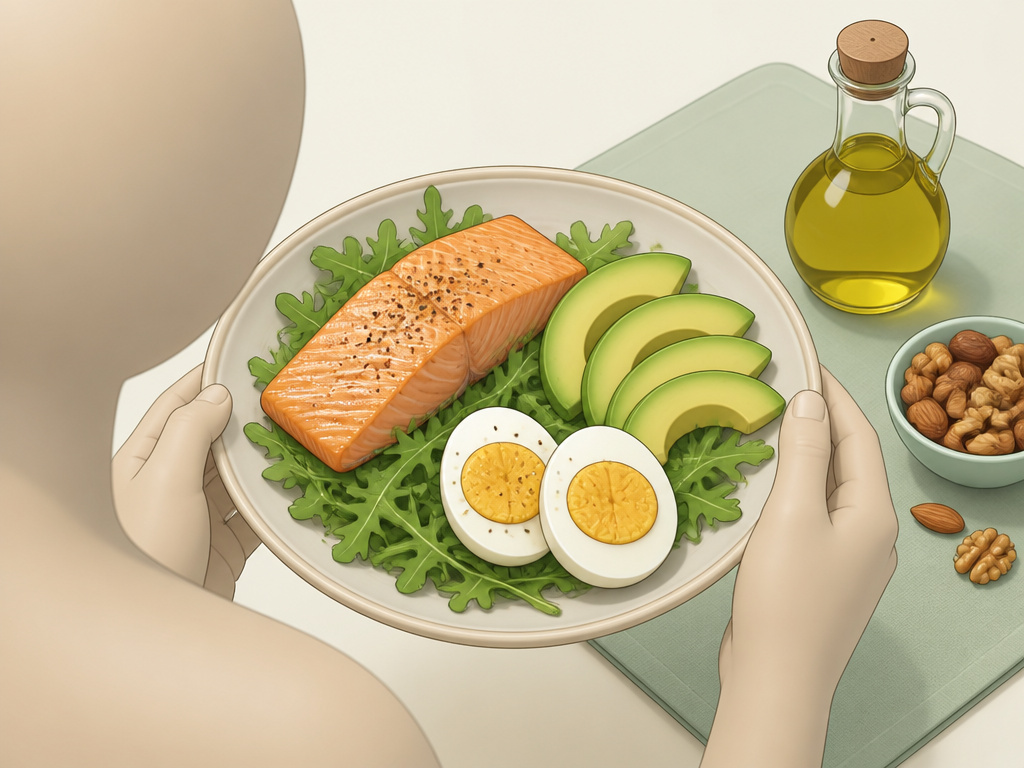
You didn’t come here for a PhD in conflicting study design. You came for actionable advice. Here it is, stripped of the hype.
1. Don’t Fear Fat, But Don’t Worship It Either
Aiming for a very low-fat diet (under 20% of calories) is a bad strategy for hormonal health for most men. It’s unnecessary and, based on the older controlled studies, potentially counterproductive. Your body needs fat for hormone production, cell membranes, and absorbing fat-soluble vitamins. A moderate intake of fat, avoiding very low extremes (under 20%), is a sensible approach given the evidence.
2. Prioritize Protein and Total Calories
This is the most underrated point. The relationship between carbs and testosterone and protein is crucial. The 2023 study’s finding that replacing dietary protein with saturated fat may be associated with higher total testosterone highlights the importance of overall diet context. It implies that a low-protein, high-fat diet could be problematic. Adequate protein is essential for muscle maintenance, satiety, and overall metabolic function. Similarly, a severe calorie deficit is one of the most reliable ways to crash your testosterone.
3. Get Your Fats from Whole Foods First
Instead of fixating on grams of saturated vs. Monounsaturated fat, focus on food sources. This approach automatically improves diet quality and covers your micronutrient bases.
- Include red meat and eggs: They provide saturated fat, cholesterol, and critical nutrients like zinc, iron, and B12.
- Use olive oil: A staple of healthy diets, it’s a great source of monounsaturated fats.
- Eat fatty fish: Salmon, mackerel, and sardines provide those beneficial EPA and DHA omega-3s.
- Add nuts, seeds, and avocados: These provide a mix of fats, fiber, and minerals.
Building a diet around these testosterone-boosting foods is a more robust strategy than trying to hit a specific fat ratio.
4. Be Smart About Meal Timing and Testing
Remember the acute suppression effect. A more balanced meal with protein, carbs, and a moderate amount of fat is likely a better choice.
This standard protocol helps minimize the acute effects of your last meal and gives a clearer picture of your baseline.
What is the optimal fat intake percentage for testosterone?

Research does not point to a single optimal percentage, but studies show that diets with very low fat percentages (e.g., under 20%) may be associated with lower testosterone compared to higher-fat diets. A 1996 study found a diet with 41% of calories from fat resulted in 13% higher total testosterone compared to an 18.8% fat diet. Another study of 35 Finnish middle-aged men found switching from a 40% fat diet to a 25% fat diet reduced testosterone. However, a 2024 meta-analysis of 11 trials found no significant difference in testosterone between low-fat (≤30% of calories) and high-fat diets. A study with 55 men also showed no change after 12 weeks on 40% versus 22% fat diets. Some evidence suggests avoiding very low-fat intakes, but a precise optimal percentage is not established, and other studies find no significant effect for moderate differences.
What are the risks of a high-fat diet for testosterone?

While some studies link higher fat intake to increased testosterone, there are potential trade-offs. The type of fat matters, but findings are mixed. Sources disagree: some studies associate higher saturated and monounsaturated fat intake with higher testosterone, while others link higher monounsaturated or polyunsaturated fat intake to lower levels. One significant risk is the acute effect of a single, very high-fat meal. A study found a meal with 86% fat caused a rapid 22% drop in total testosterone that lasted for 8 hours.
Frequently Asked Questions
Does a keto diet increase testosterone?
The keto diet is a very high-fat, very low-carb diet. However, long-term adherence to such a restrictive diet can be stressful, and the severe carbohydrate restriction may eventually negatively impact hormones like leptin and thyroid, which can secondarily affect testosterone. It’s not a sustainable or recommended long-term strategy for hormonal health for most men.
Do seed oils lower testosterone?
Seed oils (like soybean, corn, canola oil) are high in omega-6 polyunsaturated fats (PUFAs). The observational data on PUFAs and testosterone is conflicting, as shown earlier. There is no consistent evidence that seed oils, in the context of a normal diet, directly “lower” testosterone. Prioritizing whole foods naturally limits refined seed oil intake.
What is the #1 testosterone killer?
There isn’t a single “killer,” but the most reliable ways to suppress testosterone are: 1) Chronic, severe calorie restriction, 2) Consistently poor sleep, and 3) Long-term, unmanaged stress. These factors create a catabolic, high-cortisol state that directly opposes testosterone production. Before worrying about fat percentages, address these fundamentals.
Should I take a cholesterol supplement?
No. Dietary cholesterol from foods like eggs and meat is used by your body as a building block for hormones, including testosterone. However, simply eating more cholesterol does not directly translate to higher testosterone if your body’s production is already maxed out or limited by other factors (like low LDL receptors or enzyme issues). Your body manufactures most of its own cholesterol. Focus on the overall diet and health factors that support efficient hormone production, not on supplementing a single precursor.
Before You Go
Here’s the bottom line you can walk away with. The relationship between fat and testosterone is real, but it’s not the lever most people think it is.
You’re likely below the threshold where it becomes a limiting factor. But if you’re already eating a balanced diet with a normal amount of fat from mixed sources, obsessively adding more butter or oil probably won’t change your hormone panel.
The larger, more impactful levers are almost always elsewhere: getting enough sleep, managing stress, lifting weights, eating sufficient protein and total calories, and maintaining a healthy body weight. Once those are in place, then you can fine-tune. Consider using an app like Cronometer for two weeks. You might find, as I did, that a few servings of red meat and some eggs close more nutrient gaps (zinc, B12, choline) than a cabinet full of supplements.
Don’t let the perfect be the enemy of the good. A sustainable, nutrient-dense diet that you can stick with beats any rigid, study-chasing testosterone diet plan every time. Start with the basics, be consistent, and let the results, both in how you feel and what your labs show, guide you from there.
