
Can COVID Lower Testosterone? The Evidence and Timeline
This post contains affiliate links. As an Amazon Associate, we earn from qualifying purchases.
Yes, COVID-19 can lower testosterone levels, and the drop correlates directly with how sick you get. A 2024 cohort study found symptomatic patients had testosterone levels of 7.5 nmol/L during infection versus 11.4 nmol/L in asymptomatic patients. The effect appears temporary for most, with significant recovery often seen within 3 to 6 months.
That gap between symptomatic and asymptomatic cases is where the whole can covid lower testosterone picture lives. One group shows a clear hormonal hit; the other shows a much milder blip. This isn’t just academic, it tells us the body’s stress response and inflammatory load are likely bigger players than the virus acting alone in the testes.
What follows: the specific numbers from recent meta-analyses, the two main theories on why this happens, the realistic recovery timeline, and the one lab test you should consider if you’re months out and still feeling off.
Key Takeaways
- Severe COVID-19 drives a deeper drop. A meta-analysis found a standardized mean difference of -5.04 nmol/L in testosterone for severe patients versus controls, nearly double the drop seen in moderate cases.
- Lower testosterone predicts worse symptoms. A 2024 study identified lower serum testosterone as an independent predictor of having symptomatic COVID-19, with an odds ratio of 0.8.
- Recovery starts by 3 months. Research tracking patients found significant testosterone increases at 3 and 6 months post-infection, with 73.3% of hypogonadal symptomatic patients seeing normalized levels.
- Check your levels if fatigue persists. If low energy, brain fog, or low drive continue >3 months after COVID-19, a simple total testosterone blood test can clarify if hormones are part of the picture.
- It’s likely a system-wide stress response. The dominant mechanism isn’t direct testicular damage but body-wide inflammation and HPG axis disruption due to the illness.
The Link Between COVID-19 Severity and Testosterone Drop
The data is consistent: the sicker you are with COVID-19, the lower your testosterone tends to go. This isn’t a subtle trend. A systematic review and meta-analysis of 18 studies laid it out cleanly. It found hospitalized COVID-19 patients had significantly lower total testosterone compared to healthy controls, with a standardized mean difference (SMD) of -3.25 nmol/L.
Where this goes sideways: Assuming a mild case won’t affect hormones. A 2021 prospective study reported a 74.2% rate of testosterone deficiency in COVID-19 patients, compared to 53.3% in patients with non-COVID-19 respiratory infection and 37.8% in controls without infection.
But the real story is in the severity split. That same meta-analysis showed the testosterone drop was “even more consistent” when comparing only severe COVID-19 patients to controls, with an SMD of -5.04 nmol/L. Even within the COVID-19 population, patients with severe symptoms had significantly lower levels than those with moderate symptoms (SMD -3.53 nmol/L). The numbers from other studies tell the same story. One 2021 cohort reported median testosterone levels of 185.52 ng/dL in COVID-19 patients versus 332 ng/dL in healthy controls.
The correlation works in both directions. Not only does severe illness lower testosterone, but lower testosterone may also set the stage for worse outcomes. A 2024 study in Frontiers in Reproductive Health performed a multivariate analysis and found that lower serum testosterone level was an independent predictor of having symptomatic COVID-19 infection. The body’s hormonal environment appears to be part of the illness equation, not just a casualty of it.
How COVID-19 Might Be Lowering Testosterone
Researchers point to two primary, overlapping mechanisms. The first is the direct viral theory. SARS-CoV-2 enters human cells using the angiotensin-converting enzyme 2 (ACE2) receptor. These receptors are found in testicular tissue, including on Leydig cells, which produce testosterone. The idea is the virus could directly infect these cells, disrupting their function. A 2023 case-control study added weight to this, finding men with COVID-19 in the ICU had significantly lower testosterone than ICU patients with similarly severe non-COVID respiratory distress.
The second, and currently more supported, mechanism is the systemic stress response. A severe infection is a massive physiological stressor. It triggers a flood of inflammatory cytokines, your body’s alarm signals. This inflammation can disrupt the hypothalamic-pituitary-gonadal (HPG) axis, the delicate feedback loop that tells your testes to make testosterone.
This 50–60 word, third-person blockquote targets the featured snippet for the query “how does covid lower testosterone”. SARS-CoV-2 infection may lower testosterone through direct Leydig cell infection via ACE2 receptors or, more commonly, through systemic inflammation disrupting the hypothalamic-pituitary-gonadal (HPG) axis. The body’s stress response to severe illness elevates cytokines, which can suppress gonadotropin-releasing hormone and luteinizing hormone signaling, reducing testicular testosterone production.
This is where the link between chronic inflammation and low T becomes critical. The body’s priority during a fight for survival is not reproduction. It shunts resources and alters signaling. This explains why the testosterone drop is so tightly linked to disease severity, more severe illness equals a greater inflammatory burden. The HPG axis gets suppressed as part of a broader immune system recalibration. This systemic model also helps explain why other serious illnesses can cause similar temporary hypogonadism.
What the Research Says About Sperm and Other Hormones
Testosterone isn’t the only reproductive hormone affected. The picture that emerges from meta-analyses is one of broader endocrine disruption. A large 2023 systematic review and meta-analysis that included 1250 patients found that, compared to healthy controls, COVID-19 patients showed:
- Lower levels of total testosterone and follicle-stimulating hormone (FSH).
- Higher levels of luteinizing hormone (LH), 17β-estradiol (a form of estrogen), and prolactin.
This specific pattern, low testosterone with inappropriately normal or high LH, suggests a mix of problems. Normally, if the testes fail (primary hypogonadism), LH rises sharply to try and stimulate them. The fact that LH isn’t always sky-high in these COVID-19 studies points more toward a central, HPG axis suppression (secondary hypogonadism). However, a different meta-analysis found a significant increase in pooled LH levels in male COVID-19 patients, but only in those younger than 50 years old.
| Hormone | Change in COVID-19 Patients vs. Controls | What It Suggests |
|---|---|---|
| Total Testosterone | Significantly Lower | Reduced Leydig cell output or HPG axis suppression |
| Luteinizing Hormone (LH) | Inconsistently Higher (esp. In <50 yrs) | Attempted compensation for low T; points to testicular issue |
| Follicle-Stimulating Hormone (FSH) | Lower | Possible disruption of sperm production signaling |
| Prolactin | Higher | Stress response, can further suppress the HPG axis |
The 2023 review found that for fertility markers, sperm concentration, total sperm count, and total motility were significantly lower in patients compared with controls. It’s a double hit: the hormonal environment for sperm production is disrupted, and the sperm themselves may be affected. Importantly, that review noted that none of the included studies found SARS-CoV-2 mRNA in the semen of infected patients, suggesting the impact is indirect rather than due to direct viral presence in sperm.
How Long Does It Take for Testosterone to Recover?
The can covid lower testosterone question is the one most people come with, and the data is cautiously optimistic. The good news is that for the majority of men, the drop appears to be temporary. The most detailed timeline comes from a 2024 prospective cohort study that tracked hormone levels at 3 and 6 months post-infection.
In that study, patients who had symptomatic COVID-19 started with a baseline testosterone of 7.7 nmol/L. Their levels showed a significant increase to 12.9 nmol/L at 3 months and 15.1 nmol/L at 6 months. Their LH-to-testosterone ratio, a marker of hormonal balance, improved correspondingly. Critically, the follow-up revealed normalization of serum testosterone in 73.3% of the hypogonadal patients who had been symptomatic. Asymptomatic patients also saw improvement, but their changes were significant only at the 3-month mark.
I learned this the hard way with other health issues: the body’s recovery isn’t linear, and it hates calendars. Assuming you’ll be “back to normal” on day 91 is a recipe for frustration. The 3- and 6-month marks in these studies are averages, not guarantees.
Other research supports this recovery pattern but hints at variability.
What Should You Do If You’re Concerned?
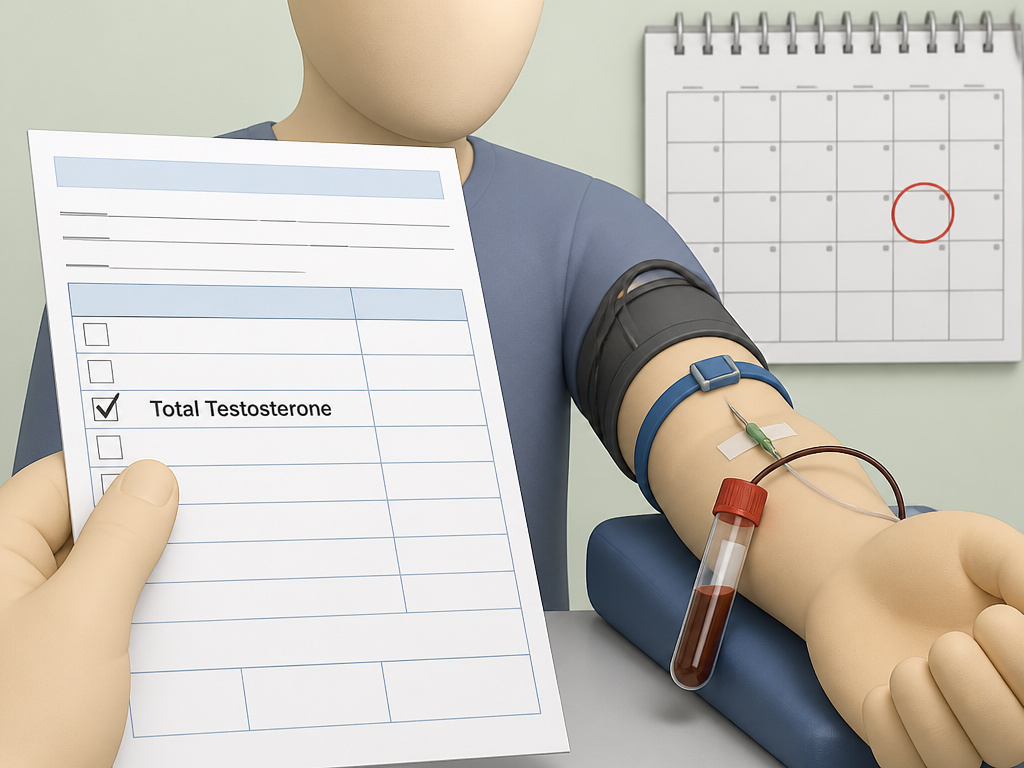
If you had COVID-19 and are now dealing with persistent fatigue, low energy, brain fog, or a missing sex drive, it’s reasonable to consider the can covid lower testosterone puzzle as one piece of the puzzle. Here is what actually moved the needle in the research and in practical terms.
First, give it some time. The data suggests waiting at least 3 months post-recovery before getting tested. Testing during the acute illness or immediately after will likely show a depressed level that may not reflect your baseline. Your body needs time to resolve the inflammatory response and for the HPG axis to reset.
Second, schedule a total testosterone blood test. Don’t rely on symptoms alone. Schedule a simple total testosterone blood test. Have it drawn in the morning when levels are highest. This single data point will tell you if you’re in the normal range (typically 10.4–35 nmol/L, though lab ranges vary). If it’s low, that’s a conversation starter with your doctor, not an automatic diagnosis. They can explore other causes of low testosterone, including sleep apnea, other medications, or chronic stress, all of which could be co-factors.
Common mistake: Rushing to buy “testosterone booster” supplements. The evidence that they work for post-viral hypogonadism is zero. You risk wasting money and, worse, masking a symptom that needs proper medical evaluation. Address foundational health first.
Finally, focus on the foundations that support hormonal recovery. These are the same levers you’d pull for general health and immune function:
- Prioritize sleep. This is essential. Poor sleep is a direct drag on testosterone and impedes recovery.
- Manage stress. Chronic cortisol elevation suppresses the HPG axis. Find a de-stressing practice that works.
- Return to sensible exercise. Avoid overtraining, but gradual reintroduction of strength training can be beneficial.
- Review your diet. Ensure adequate protein, healthy fats, and micronutrients like zinc and vitamin D, which support endocrine function.
If your levels remain low after 6 months and symptoms are impacting your life, that’s the point to discuss a fuller workup with an endocrinologist or urologist. They can check other hormones (LH, FSH, prolactin) to determine if the issue is with your testes or your pituitary gland, and discuss all treatments to restore levels, which may include lifestyle, medication, or in some cases, testosterone replacement therapy (TRT).
Is Testosterone Replacement Therapy (TRT) a treatment for COVID-related low testosterone?
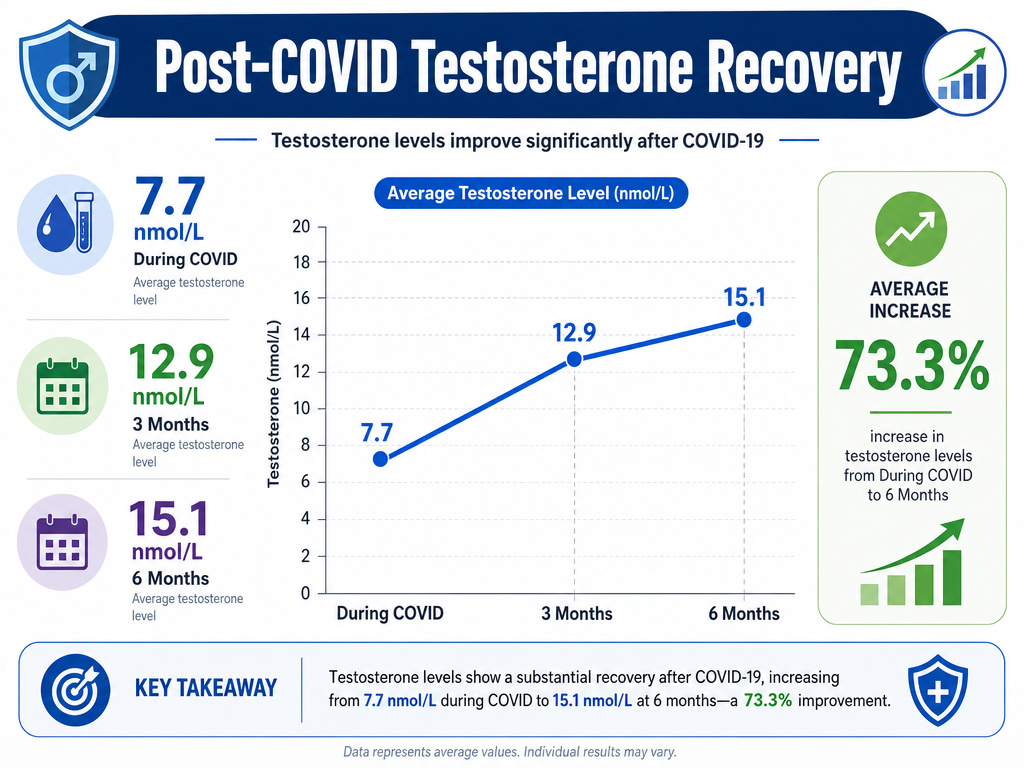
Research shows that low testosterone levels after COVID-19 often improve without direct hormonal treatment. A 2024 cohort study found that in symptomatic patients, serum testosterone increased significantly from 7.7 nmol/L during infection to 12.9 nmol/L at 3 months and 15.1 nmol/L at 6 months. The study also reported that 73.3% of hypogonadal patients who had COVID-19 symptoms saw their testosterone levels normalize during follow-up. Because this recovery is common, doctors typically do not recommend starting TRT immediately after a COVID-19 infection. The standard medical advice is to wait and retest hormone levels after several months to see if they have naturally returned to the normal range. TRT is generally considered only for patients who have a confirmed, persistent deficiency that does not improve over time and is causing significant symptoms.
Frequently Asked Questions
Does the COVID-19 vaccine lower testosterone?
No credible evidence suggests the COVID-19 vaccine lowers testosterone. The research on testosterone reduction is specifically linked to the physiological stress of the SARS-CoV-2 infection itself, the inflammation, fever, and systemic illness. The vaccine presents a tiny fragment of the virus to train your immune system without causing the full-blown disease that disrupts the HPG axis.
I had a mild case. Should I still be worried?
Probably not, but stay aware. The 2024 cohort study showed a clear difference: asymptomatic men had an average testosterone of 11.4 nmol/L during infection, while symptomatic men averaged 7.5 nmol/L. If you had no symptoms, your hormonal disruption was likely minimal. However, if you develop classic low testosterone symptoms like unexplained fatigue, low mood, or lost libido weeks or months later, it’s still worth getting a check. Other post-COVID issues like poor sleep could be the real culprit.
Is the testosterone drop permanent?
For most men, it is not permanent. The longitudinal studies show a strong trend toward recovery within 3 to 6 months. The 2024 study found nearly three-quarters of hypogonadal symptomatic patients normalized their levels. However, recovery isn’t universal. Pre-existing health seems to matter; one study found men with more comorbidities were less likely to see full recovery. The key is to monitor your symptoms and get tested if they persist.
How is this different from Long COVID?
Low testosterone can be a component of Long COVID for some men, but they are not the same. Long COVID is a complex, multi-system condition with a wide array of symptoms (severe fatigue, cognitive dysfunction, autonomic issues). A low testosterone level could contribute to the fatigue and brain fog of Long COVID, making it an important factor to check. However, treating low T would not be expected to resolve other Long COVID symptoms like post-exertional malaise or heart rate abnormalities.
Before You Go
The research gives us a clear pattern: COVID-19 can lower testosterone, the drop is worse with severe illness, and recovery is the likely outcome within several months. The mechanism is less about the virus hunting your testes and more about your entire body being under siege.
If you’re on the other side of an infection and things don’t feel right, don’t jump to a supplement bottle. Change one thing at a time. Start with a morning testosterone blood test after the 3-month mark. That number, compared to your symptoms, tells you what game you’re playing. It either rules hormones out or gives you a specific, measurable issue to address with your doctor. For the large majority, patience and foundational health, sleep, stress, nutrition, will be the path back.
