
Can Low Testosterone Cause Brain Fog? Action Plan First
This post contains affiliate links. As an Amazon Associate, we earn from qualifying purchases.
Yes, low testosterone can cause brain fog, but it’s not a simple switch. Observational studies link higher testosterone to better cognitive scores in older men, but clinical trials show testosterone replacement therapy (TRT) often fails to improve memory or thinking. The disconnect lies in three things: baseline hormone levels, the definition of “low,” and whether the fog comes from testosterone itself or the conditions that lower it, like poor sleep.
That gap between association and treatment is where most guides stop. They’ll tell you low T might cause brain fog and TRT might help, then send you to a clinic. A key question is: can low testosterone cause brain fog? That’s not helpful.
What follows: the three research conflicts that explain the confusion, the one threshold that changes everything, and the practical steps to take before you even consider a prescription.
Key Takeaways
- Brain fog from low testosterone is more likely when levels are low, but the evidence for TRT improving physical symptoms like sexual function and body composition is observed only when baseline T levels are below 12 nM (≈346 ng/dL).
- Major medical guidelines, including a 2020 American College of Physicians recommendation, advise against starting TRT solely to improve cognition due to low-certainty evidence.
- An indirect link is also being researched: low testosterone may interact with poor sleep to worsen cognitive impairment, and a 2025 PubMed abstract highlights research into these interactive effects.
- Self-diagnosis is risky because hypothyroidism, depression, and sleep apnea share identical mental fatigue symptoms; proper bloodwork is the only starting point.
- If you pursue TRT for other symptoms, don’t expect overnight mental clarity; the largest RCT found no cognitive improvement after one year of treatment in older men.
How Low Testosterone Could Lead to Brain Fog
The theory behind the can low testosterone cause brain fog question is solid. Testosterone crosses the blood-brain barrier and binds to receptors throughout the brain, particularly in regions involved in memory, attention, and executive function like the hippocampus and prefrontal cortex. It acts as a neurosteroid, influencing neuron growth, synaptic plasticity, and energy production in brain cells. It also helps regulate neurotransmitters like dopamine and serotonin, which govern focus and mood.
When levels drop, that support system weakens. The brain’s energy metabolism can become less efficient, neural connections may not fire as crisply, and the background hum of motivation and clarity fades. You’re left with that familiar feeling: thoughts are sluggish, words are harder to find, and focusing on a task feels like wading through mud.
The technical snippet: Testosterone exerts its effects on cognition through androgen receptors in key brain regions like the hippocampus and prefrontal cortex. It influences neurogenesis, synaptic plasticity, and mitochondrial function. A decline may reduce neural resilience and efficiency, manifesting as slower processing speed, poor working memory, and the subjective experience of brain fog.
But many people overlook this when asking if low testosterone causes brain fog: it’s a biochemical possibility. It doesn’t mean every man with low T gets brain fog, or that raising T will fix it. My own early thinking was too linear. I saw a low number and assumed fixing the number fixed the symptom. It’s more like a car engine running rough because it’s low on oil and has a dirty air filter. The oil (testosterone) matters, but you have to check the filter (sleep, stress, thyroid) too.
The 3 Research Conflicts That Confuse Everyone
If you’ve googled this before, you’ve found articles saying studies are “mixed.” That’s a polite way of saying scientists are actively debating it. The confusion isn’t random noise; it stems from three specific, documented disagreements in the literature. Getting this right is the difference between chasing a treatment that works and wasting your time.
Conflict 1: Association vs. Causation
This is the big one. Observational studies that measure testosterone in healthy men often find a correlation.
- The 2021 Frontiers in Aging Neuroscience study analyzed data from older men and found higher serum testosterone was associated with better scores on cognitive tests like the CERAD and DSST. The odds of poor performance were lower in men with higher T (odds ratios of 0.51 and 0.54 for total testosterone on the CERAD and DSST tests, respectively).
- The 2010 NIH PMC study concluded that significant change in sex hormone status, including complete hypogonadism, does not modify cognition in men.
So which is it? Both. The first study shows that in the real world, men with naturally higher T tend to have sharper minds. The second suggests that artificially manipulating the hormone in the short term doesn’t automatically change cognitive wiring. The association might be due to a lifetime of better health, not a direct lever you can pull today.
Conflict 2: Does Testosterone Treatment Actually Work for Cognition?
This is the million-dollar question for anyone considering TRT. The answers are all over the map.
| Study / Guideline | Finding on TRT for Cognition | Key Detail |
|---|---|---|
| Meta-analysis (2024) | Improvements in executive function & verbal memory | Looked specifically at men with hypogonadism |
| JAMA RCT (2017) | No improvement in memory or other functions after 1 year | 788 older men with low T & age-associated memory impairment |
| PLOS ONE Review (2016) | No support from randomized clinical trials | Called out the lack of evidence for cognitive claims |
| ACP Guideline (2020) | Recommends against initiating TRT for cognition | Conditional recommendation based on low-certainty evidence |
Sources disagree on whether testosterone treatment improves cognitive function. A 2024 meta-analysis found improvements in hypogonadal men, while a 2017 JAMA RCT found no improvement in older men with low T and age-associated memory impairment, and a 2016 systematic review and 2020 ACP guideline found no support or recommend against such treatment.
Conflict 3: Is There an Optimal Level? (The U-Shaped Curve)
We talk about “low” testosterone as if it’s a simple deficit. A 2016 systematic review in NIH PMC suggests it might be more nuanced, proposing a U-shaped relationship for certain cognitive skills like visuospatial ability. The idea is that both very low and very high levels might be suboptimal, with a sweet spot in the middle. This could explain why super-physiological doses from abuse don’t make people smarter and why simply pushing a number higher doesn’t guarantee a clearer head.
The Critical Threshold: When “Low” Actually Means Something
Much of the noise in the research comes from mixing different groups of men. A study that includes men with mild, age-related declines alongside men with true hypogonadism will get muddy results. The data suggests a line in the sand.
Where this goes sideways: Assuming any “low” number on a lab report is the cause of your brain fog. The evidence for TRT improving physical symptoms like sexual function and body composition kicks in only when baseline levels are below 12 nM (about 346 ng/dL), according to a 2020 PMC review. It’s reasonable to think the same threshold may apply to cognitive benefits. If your total testosterone is well above the threshold for hypogonadism (e.g., 12 nM or ~346 ng/dL), your brain fog may have a different primary driver.
This is why I shifted from treating the lab range to treating the person. I spent a year looking at the printed range as a pass/fail line. Then I saw two guys with nearly identical total testosterone levels, one was struggling with fatigue and fog, the other was fine. The difference was their symptoms and their SHBG (which affects free testosterone), not the cutoff. A number at the bottom of the range with no symptoms now gets a recheck from me, not a fix. A mid-range number with real fatigue and fog gets a closer look at free T and SHBG.
It’s Not Just Testosterone: Other Causes of Brain Fog You Must Rule Out
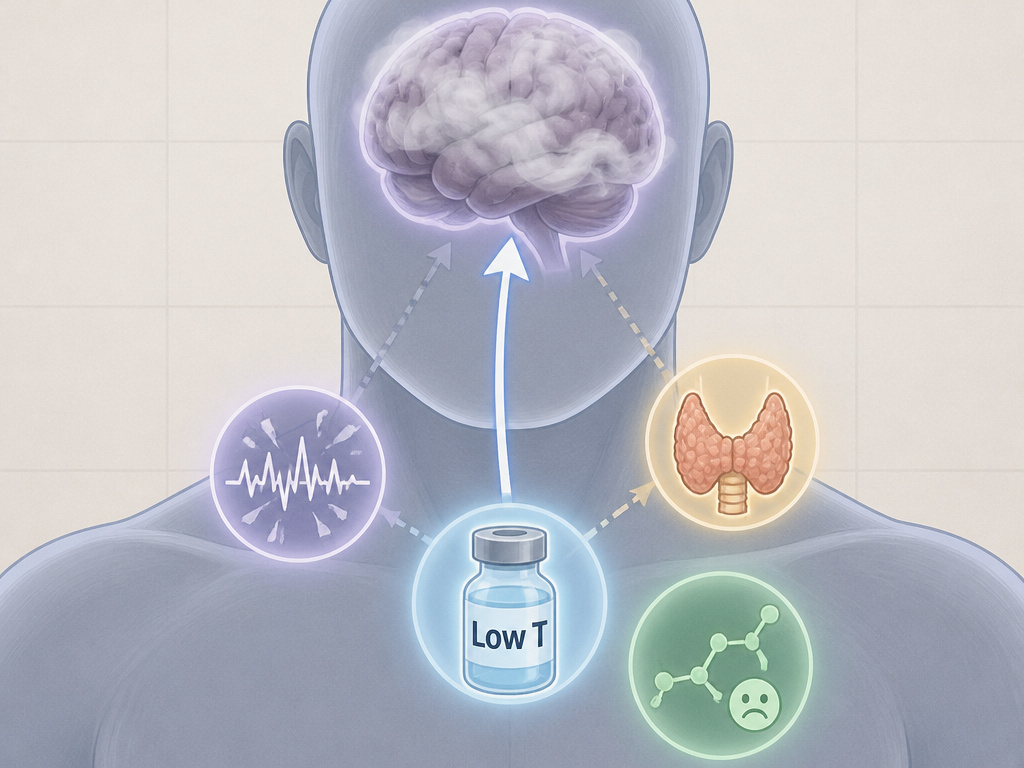
This is the most practical advice I can give you. Jumping to low testosterone as the culprit for mental fatigue is a classic first move. I’ve done it. It’s often wrong. Your brain doesn’t know why it’s tired; it just signals fatigue. Here are the usual suspects, and they love to travel in packs.
- Sleep Apnea & Chronic Sleep Deprivation: This is public enemy number one. Poor sleep fragments deep sleep cycles, prevents cerebrospinal fluid from flushing metabolic waste from the brain, and tanks cognitive performance. A 2025 PubMed abstract specifically highlights research into the interactive effects of low testosterone and sleep insufficiency on cognitive impairment. They make each other worse.
- Hypothyroidism: An underactive thyroid slows your entire metabolic engine, including your brain. The resulting fatigue, forgetfulness, and slowed thinking are indistinguishable from low-T brain fog. You must check TSH and Free T4.
- Major Depression & Anxiety: These are not just “feeling sad.” They are physiological states that alter brain chemistry, inflammation, and cortisol rhythms, directly impairing concentration and memory.
- Nutrient Deficiencies: Severe deficiencies in B12, Vitamin D, or iron can directly cause neurological symptoms and fatigue.
- Medication Side Effects: Common culprits include antihistamines, blood pressure meds, antidepressants, and proton-pump inhibitors.
Easy to miss: The interaction with sleep. Low testosterone can reduce sleep quality, and poor sleep further suppresses testosterone production. It’s a vicious cycle where treating just one might not break the loop. You have to tackle both.
A comprehensive medical workup for persistent brain fog should screen for all of these. It’s not as sexy as a testosterone prescription, but it’s how you find the real problem.
What to Do First: A Step-by-Step Action Plan (Before Considering TRT)
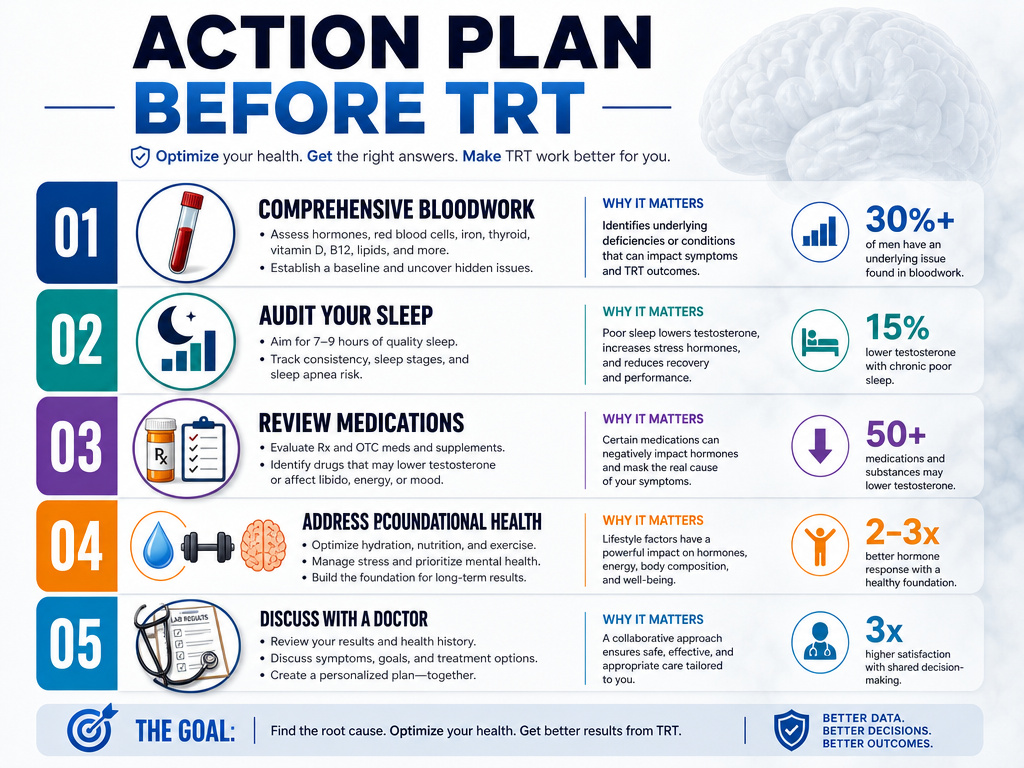
If you’re struggling with brain fog, this is your playbook. The goal is to move from confused to systematic.
- Get Comprehensive Bloodwork. This step is essential. You need more than just total testosterone. Get two morning draws, 1-2 weeks apart, to account for natural fluctuation. I learned this the hard way, early on, I’d skip straight to the “what do I take” question. Now I know the numbers have to come first.
- Audit Your Sleep for One Week. Use a tracker or simply log: bedtime, wake time, estimated hours, and how you feel upon waking. Look for signs of sleep apnea (snoring, gasping, daytime sleepiness). Prioritize 7-8 hours of quality, uninterrupted sleep. This single step has cleared more mental fog for more people than any supplement I’ve tested.
- Review Medications and Supplements with a Pharmacist. List everything you take. Ask if any are known to cause drowsiness or cognitive blunting as a side effect.
- Address Foundational Health. This is the boring, powerful stuff. Ensure you’re hydrated, manage chronic stress (meditation, walking), and engage in regular, moderate exercise, both cardio and strength training. Don’t overlook these basics while searching for a complex hormonal answer.
- Discuss Findings with a Doctor. Take your bloodwork and sleep log to a physician. An endocrinologist or a urologist with hormone expertise is ideal. Discuss the pattern of your results, not just single numbers. For example, low T with high LH suggests a testicular issue, while low T with low/normal LH points to a pituitary problem, that split changes the entire conversation about treatment options.
Do other hormone imbalances cause brain fog?
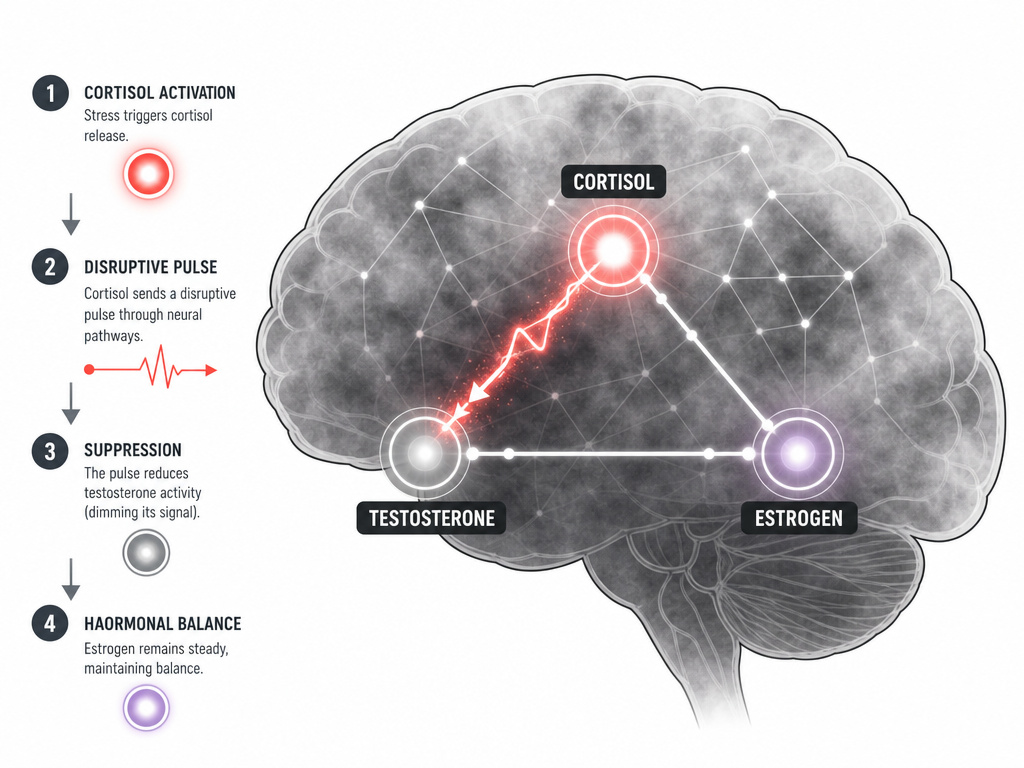
While low testosterone is often discussed, brain fog can be a symptom of a broader hormonal imbalance. The body’s hormone system works like an interconnected network; when one key player is off, others often follow. For instance, chronic stress can elevate cortisol, which may disrupt the balance of sex hormones like testosterone and estrogen. This can create a cycle where poor sleep from high cortisol further worsens hormonal harmony and cognitive clarity. It’s rarely one single hormone acting alone. Practical guidance involves looking at lifestyle factors that affect your entire endocrine system, such as managing stress, prioritizing consistent sleep, and maintaining a balanced diet, rather than focusing on a single lab value.
Frequently Asked Questions
What are the symptoms of extremely low testosterone?
Beyond brain fog, classic symptoms include severe fatigue, loss of muscle mass, increased body fat (especially around the abdomen), very low libido, erectile dysfunction, hot flashes, and loss of body hair. Mood changes like increased irritability, depression, and a loss of motivation are also common. It’s the cluster of these symptoms alongside consistently low lab values that defines hypogonadism.
Which hormone is responsible for brain fog?
No single hormone is solely responsible. Brain fog is a final common pathway for several imbalances. While low testosterone is a candidate, thyroid hormone (T3/T4) deficiency is a more direct and common cause. Chronically high cortisol from stress and dysregulated insulin from poor diet are also major contributors. It’s usually a systems failure, not a single broken part.
Can taking testosterone help with brain fog?
Maybe, but don’t count on it. The clinical evidence is weak. While some men on TRT for other reasons report improved mental clarity, the largest and most rigorous randomized trial, published in JAMA, found no cognitive benefit after one year of treatment in older men. Major guidelines recommend against using TRT for this purpose. It should not be your first or primary strategy.
What is the #1 testosterone killer?
Chronic stress is arguably the most pervasive modern factor. High, sustained cortisol levels directly signal the hypothalamus and pituitary to reduce production of LH and FSH, which in turn tells the testes to make less testosterone. Other major factors include obesity (fat tissue converts testosterone to estrogen), excessive alcohol consumption, chronic sleep deprivation, and certain medications like opioids and steroids.
Can women get brain fog from low testosterone?
Yes, absolutely. While women have much lower levels, testosterone still plays a crucial role in female energy, mood, and cognitive function. A decline, often seen during perimenopause and menopause, can contribute to fuzzy thinking, fatigue, and low motivation. The research, like the Frontiers aging neuroscience study, shows the cognitive link exists across sexes, though the mechanisms and optimal levels differ.
Before You Go
The link between low testosterone and brain fog is real, but it’s a corridor, not a door. Walking down it requires a map.
If you take one thing from this, let it be this sequence: test, don’t guess. Get the full panel of bloodwork. Investigate your sleep like it’s the main suspect, because it often is. Rule out thyroid issues and nutrient deficiencies. These steps will give you more actionable answers than any online quiz.
If you then find your testosterone is genuinely low, consistently below that 346 ng/dL threshold, and other causes are addressed, you can have a informed talk with your doctor about TRT. Go in with realistic expectations. Hope for improvements in energy and body composition, but understand that the cognitive effects of testosterone therapy are uncertain and not guaranteed. Your clearest path to a sharper mind likely starts with the quality of your last night’s sleep, not a prescription vial.
