
Does Boron Increase Testosterone?
This post contains affiliate links. As an Amazon Associate, we earn from qualifying purchases.
Boron supplementation can increase testosterone and estradiol in boron-deficient or sedentary individuals, but high-quality studies in athletes show no effect on strength or hormone levels. The 1994 Nielsen deprivation studies found 3 mg/day for 48 days raised hormones in postmenopausal women after a low-boron diet, while a 1993 study in bodybuilders using 2.5 mg/day for 7 weeks found no benefit. The evidence is population-dependent and contradictory.
The gap between those two outcomes is the whole story. One set of findings applies to people who aren’t getting enough boron from their diet. The other set applies to trained athletes who already eat enough.
What follows is a breakdown of the three key human studies, the mechanism that might explain the split, and a practical guide to deciding if a boron supplement fits your goals.
Key Takeaways
- The strongest evidence for boron raising testosterone comes from deficiency correction in older or sedentary people, not from boosting already-adequate levels in athletes.
- Two pivotal studies disagree: one in bodybuilders (2.5 mg/day for 7 weeks) found no effect on testosterone or strength, while one in sedentary men (10 mg/day for 4 weeks) showed a significant rise in estradiol.
- Boron likely influences hormones by affecting Sex Hormone-Binding Globulin (SHBG), potentially increasing the amount of free, active testosterone and estrogen in circulation.
- An effective boron dosage in studies ranges from 3 to 10 mg daily, with 3-6 mg being a common and sensible starting point for general health.
- If your goal is muscle building or athletic performance, the current clinical evidence suggests boron is a low-priority supplement compared to fundamentals like sleep, diet, and proven testosterone supplements.
The Conflicting Evidence: Bodybuilders vs. Sedentary Men
You can’t answer “does boron increase testosterone” without naming the study and the people in it. The research splits cleanly down the middle.
The 1993 study by Ferrando & Green is the one every skeptic points to. They gave 19 male bodybuilders either 2.5 mg of boron or a placebo daily for seven weeks during training. Plasma boron levels went up, confirming the supplement was absorbed. But total testosterone, free testosterone, lean body mass, and strength? No significant difference between the groups. Both groups got stronger from training, the boron didn’t add anything. This peer-reviewed boron clinical trial is why the Natural Medicines Database concludes there’s “fair negative evidence” for boron as a bodybuilding aid.
Now look at the other side. The 1997 study by Naghii & Samman gave 10 healthy but sedentary males 10 mg of boron daily for four weeks. They recorded a significant increase in plasma estradiol (a form of estrogen). A later analysis by Naghii et al. (cited in a 2021 review) reported a statistically significant jump in free testosterone (from 11.8 pg/mL to 15.2 pg/mL) after just one week at that 10 mg dose. This healthy male subject supplementation trial is the bedrock of the “boron boosts T” claim.
The Ferrando & Green (1993) study on bodybuilders found that 2.5 mg/day of boron for 7 weeks had no significant effect on total testosterone, free testosterone, lean body mass, or strength compared to placebo. The Naghii & Samman (1997) study on sedentary men found 10 mg/day for 4 weeks significantly increased estradiol and showed a trend for increased testosterone, while a later analysis by Naghii et al. Found a statistically significant increase in free testosterone after one week at that dose.
The table below lays the conflict bare.
| Study (Year) | Subjects | Dosage & Duration | Effect on Testosterone | Effect on Estradiol (E2) |
|---|---|---|---|---|
| Ferrando & Green (1993) | Male Bodybuilders | 2.5 mg/day for 7 weeks | No significant change | Not measured |
| Naghii & Samman (1997) | Healthy Sedentary Males | 10 mg/day for 4 weeks | Trend toward increase | Significant increase (51.9 to 73.9 pmol/L) |
| Nielsen et al. (1994) | Postmenopausal Women | 3 mg/day for 48 days (after deprivation) | Serum concentration increased | Serum concentration increased |
The takeaway is that the studies examined different groups of people. One group was young, training hard, and likely not deficient. The other was sedentary. This population difference is the master key.
How Boron Might Work (And Why the Population Matters)
Boron is a trace mineral that appears to modify the system managing hormones, specifically Sex Hormone-Binding Globulin (SHBG).
SHBG is a transport protein that binds to sex hormones like testosterone and estrogen, making them inactive while they’re carried in the blood. Only the “free” fraction that isn’t bound to SHBG is biologically active. The theory, and it’s still a theory, is that boron might lower SHBG levels. If you lower the number of transport ships, you increase the amount of free cargo available to dock at cells.
This mechanism would explain two things. First, it could explain why some studies see a rise in both free testosterone and estradiol. Lowering SHBG would free up both hormones. Second, it explains the population gap. Someone with already-optimal hormone regulation and SHBG levels (like a healthy, training athlete) might have little room for boron to improve things. Someone with suboptimal regulation or a dietary boron deficiency might see a shift.
The 1994 review by Nielsen on the biochemical physiology of boron supports this deficiency idea. In postmenopausal women first fed a boron-low diet (about 0.25 mg per day) and then given 3 mg/day, supplementation increased serum estradiol and testosterone. The effect was a repletion response, correcting a lack. This is a world away from a pharmacological boost.
If your goal is to lower SHBG naturally, boron is one of several tools discussed, but its effect here is still mechanistic, not conclusively proven in all populations.
Boron for Bodybuilding and Athletic Performance
We should be direct. If you’re buying boron because a fitness influencer said it’s a secret muscle-building weapon, the clinical evidence isn’t on your side.
The Ferrando & Green study is the only one we have that directly tests boron in a training population. The result was null. The 2021 systematic review by Piskorska et al., which looked at all “testosterone booster” ingredients, stated the conclusion clearly: “conflicting data found that… Boron [does] not appear to increase testosterone levels” and that “at the moment there are no unambiguous data.” This endocrine journal review article places boron in the category of ingredients with weak or conflicting evidence for athletes.
Where this goes sideways: Expecting a boron supplement to overcome poor training, sleep, or diet. In the bodybuilder study, both the boron and placebo groups gained strength because they were training, the supplement added zero extra benefit.
This doesn’t mean boron is useless. It means its potential role is foundational, not performance-enhancing. Think of it like fixing a vitamin D deficiency; you feel better because you’re no longer broken, not because you’ve been supercharged. If you’re already eating plenty of boron-rich foods (avocados, nuts, legumes) and are a trained individual, adding a pill is unlikely to move the needle for your lifts or your physique.
The market for testosterone boosters is full of ingredients with flashier claims than evidence, and the does boron increase testosterone story is a cautionary tale about extrapolating from one population to another.
Dosage, Safety, and How to Take It
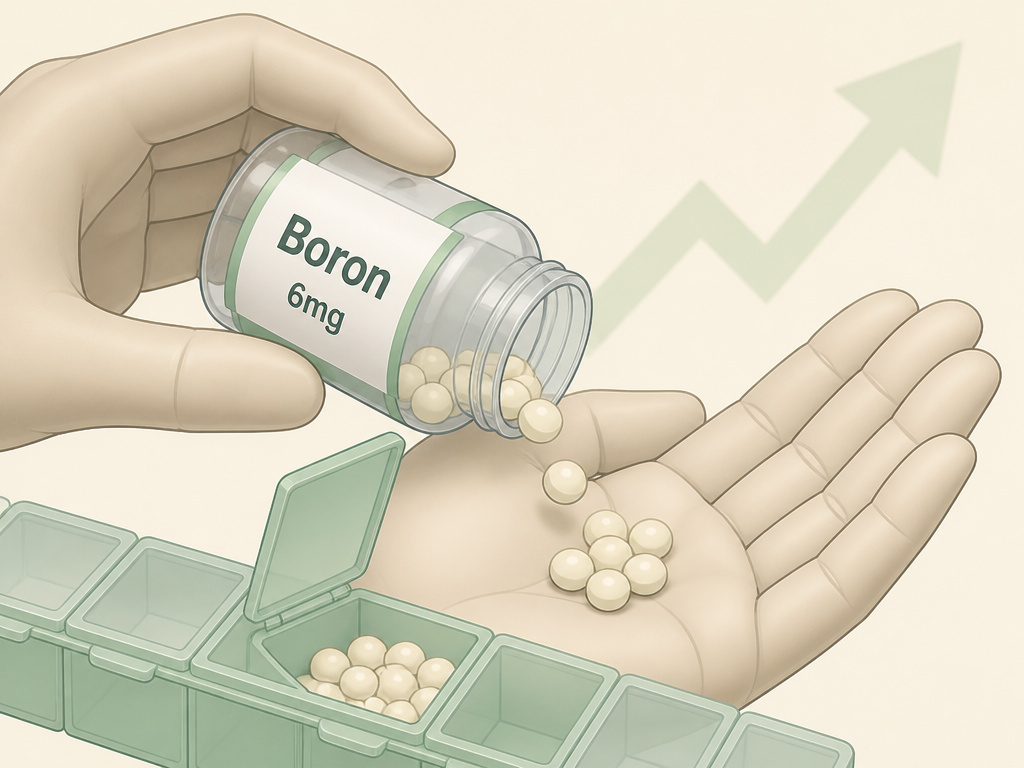
If you decide to try boron, the studies give us a clear dosage range. The effective doses in human trials are between 3 mg and 10 mg per day.
For general health or experimentation, starting at the lower end is wise. A common protocol is 3 mg to 6 mg daily. The Tolerable Upper Intake Level (UL) for adults is set at 20 mg per day, so staying under that is crucial. The studies showing effects used supplementation periods from 48 days to 7 weeks, suggesting it’s not an acute fix but something that needs consistent use.
| Goal | Suggested Dosage | Duration from Studies | Important Note |
|---|---|---|---|
| General Health / Experimentation | 3 – 6 mg daily | N/A | Start at the lower end of the range. |
| Based on Repletion Studies (Nielsen, 1994) | 3 mg daily | 48 days | Studied in boron-deprived postmenopausal women. |
| Based on Sedentary Male Study (Naghii & Samman, 1997) | 10 mg daily | 4 weeks | Also significantly increased estradiol. |
As for timing, there’s no strong research pointing to morning vs. Night. Taking it with a meal may improve tolerance and absorption, as is the case with many minerals. The boron dosage guide on this site digs deeper into cycling and long-term use.
Safety-wise, boron is generally well-tolerated at supplemental doses. The most common side effect is stomach upset, which taking it with food can mitigate. High doses (above the 20 mg UL) can cause nausea, vomiting, and other issues. Long-term safety data is limited, so periodic breaks are a sensible precaution.
It’s also worth considering the different boron types. The most common forms in supplements are boron citrate, boron glycinate, and boron aspartate. The research doesn’t conclusively favor one over another for bioavailability, but boron glycinate is often touted for better absorption.
Dietary Sources and the Deficiency Question
You can get boron from food. The idea of supplementing always begs the question: am I already getting enough?
Boron-rich foods include avocados, nuts (especially almonds and peanuts), legumes, prunes, raisins, and certain vegetables like broccoli. A varied diet that includes these items likely provides a small but adequate amount.
This brings us back to the deficiency hypothesis. The Nielsen studies placed people on extremely low-boron diets, about 0.25 mg per 2000 kcal for 119 days or 0.23 mg per 2000 kcal for 63 days, to induce depletion. That’s a tough level to hit with a modern, varied diet. True clinical boron deficiency is probably rare in the general population. However, “suboptimal” intake is a grayer area. Someone eating a highly processed diet with few whole plant foods might be on the lower end.
I learned this nutrient-density lesson the hard way with other minerals. When I tracked my diet meticulously for two weeks, a weekly serving of beef liver closed more zinc and iron gaps than the handful of supplements I was taking. It was a humbling reminder that food first is usually the right move.
If you suspect your diet is low in boron-rich foods, adding some avocado or a handful of almonds is a better first step than buying a pill. Supplementation makes the most sense when you’re targeting a specific, study-backed effect and have ruled out simple dietary fixes.
Can boron help with erectile dysfunction?
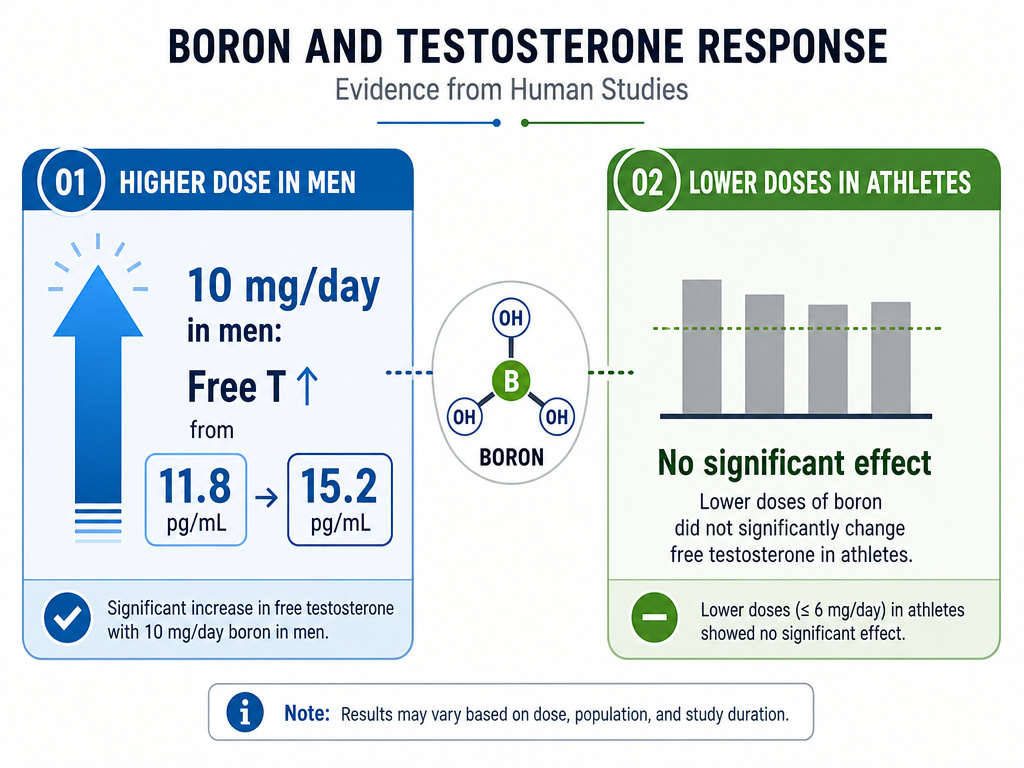
Direct research on boron for erectile dysfunction is lacking. The connection is theoretical, based on boron’s observed effects on sex hormones in some studies. For example, one study in postmenopausal women found that 3 mg per day of boron for 48 days elevated serum testosterone. Another study in men using 10 mg per day reported a significant increase in free testosterone (from 11.8 pg/mL to 15.2 pg/mL) after one week. Since low testosterone can be a contributing factor to ED, this hormonal influence is the basis for the speculation. However, studies in athletes using lower doses found no significant effect on testosterone. There is no clinical evidence that boron supplementation directly improves erectile function. If considering boron for this purpose, it should be viewed as a general support for hormone metabolism rather than a targeted treatment.
Frequently Asked Questions
How much does boron increase testosterone by?
The reported increases are modest and inconsistent. In a later analysis by Naghii et al. (cited in a 2021 review), a rise in free testosterone from 11.8 to 15.2 pg/mL was reported after one week of 10 mg/day boron. In the 1994 Nielsen repletion studies in deficient women, serum testosterone increased. There is no reliable percentage or set amount, as the effect depends entirely on your baseline status and population.
What are the other health benefits of boron?
Research suggests boron plays a role in bone health by aiding calcium and magnesium metabolism, may support joint health, and could have anti-inflammatory effects. The hormone-modulating effect is just one of its potential roles in the body.
Does boron increase estrogen?
Yes, this is one of the more consistent findings. The Naghii & Samman (1997) study found a significant increase in plasma estradiol. The Nielsen (1994) repletion studies also found increased serum estradiol in postmenopausal women. Boron appears to influence both sex hormones, not just testosterone.
Can women take boron for testosterone?
The studies in women (the Nielsen research) looked at postmenopausal women and showed boron repletion increased both estradiol and testosterone. The context was correcting a deficiency. Women considering boron for hormonal balance should be aware of its dual effect on estrogen and testosterone and consult with a healthcare provider, as individual needs vary greatly.
What is the best time to take boron?
There is no specific research on timing. A common-sense approach is to take your daily dose with a meal to minimize any potential stomach upset. Whether that’s breakfast or dinner likely doesn’t matter for its overall effect.
Before You Go
The boron story is a perfect case study in how supplement claims get born and distorted. A real effect in a specific, deficient population gets generalized into a universal performance booster. The evidence-based ingredients for athletic performance are few and far between.
Here’s my stance: if you’re a sedentary individual or older adult looking for general hormonal and bone health support, and your diet is lacking, a low-dose boron supplement (3-6 mg/day) might be a reasonable experiment based on the repletion data. Track how you feel.
If you’re a training athlete or bodybuilder looking for a direct strength or muscle-building edge, the 1993 study is your answer. Save your money. Put it toward better food, a sleep tracker, or a research-backed supplement with a clearer record. In that context, boron serves as a lesson in carefully examining the study participants.
