
Does Fenugreek Increase Testosterone? What the Data Says
This post contains affiliate links. As an Amazon Associate, we earn from qualifying purchases.
Oral fenugreek supplements may be linked to a small statistical increase in total testosterone, but the clinical evidence is very uncertain and does not support a stable, meaningful boost in bioavailable free testosterone. The most recent and complete meta-analysis, published in Frontiers in Nutrition in 2026, concluded current evidence does not support commercial testosterone-boosting claims.
That’s the headline from a systematic review that included 13 studies. The key finding is a Standardized Mean Difference (SMD) of 0.25 for total testosterone. For free testosterone, the SMD was 0.08, a result so imprecise and varied between studies that it crosses zero. The reviewers graded the certainty of this evidence as “very low.” In plain terms, the statistical whisper for total testosterone is too faint and inconsistent to translate into a reliable, body-changing effect for most men.
The rest of this guide walks through those numbers, the specific extracts studied, and where even experts reviewing the same data land in completely different places on the does fenugreek increase testosterone question. Expert recommendations are split: some reviews see potential, while others, citing methodological flaws, advise against using fenugreek for testosterone. For example, a 2022 review in Androgens: Clinical Research and Therapeutics states use ‘should be discouraged,’ while other reviews present data on specific extracts. By the end, you’ll be able to read any fenugreek product label and know exactly which claims are backed by data and which are riding on hope.
Key Takeaways
- The 2026 meta-analysis found a small statistical signal for total testosterone (SMD 0.25) but no stable benefit for free testosterone (SMD 0.08).
- The certainty of evidence for both outcomes was graded “very low” due to study design concerns and inconsistent results.
- Most positive studies used standardized extracts like Testofen® or Trigozim R at 500–600 mg daily for 8–12 weeks.
- Improvements in body composition and symptoms (like the Aging Males’ Symptoms score) were noted in some studies, but these are not direct proof of a testosterone increase.
- Expert recommendations are split: some reviews see potential, while others, citing methodological flaws, advise against using fenugreek for testosterone.
The Numbers: What the 2026 Meta-Analysis Actually Found
Specific numbers are essential, as “may increase” is a vague claim without them. The Frontiers in Nutrition review is the most recent and thorough analysis, examining 13 randomized, placebo-controlled trials. Of those, eight studies with 637 men provided primary hormone data.
The total testosterone analysis pooled six of those studies, covering 385 participants. The result was a Standardized Mean Difference (SMD) of 0.25. The confidence interval (0.02 to 0.48) and the p-value of 0.037 indicate statistical significance.
For total testosterone, six studies showed a small favorable association with fenugreek (SMD: 0.25, 95% CI: 0.02, 0.48). For free testosterone, five studies showed an imprecise and heterogeneous pooled estimate (SMD: 0.08, 95% CI: −0.48, 0.63). The certainty of evidence for both outcomes was very low.
For free testosterone, the meta-analysis of five studies (334 men) found an SMD of 0.08, with a confidence interval from -0.48 to 0.63. The heterogeneity for free testosterone was I² = 66.7%.
Why does free testosterone matter more? Total testosterone includes hormone bound to proteins like SHBG, which isn’t readily available for your body to use. Free testosterone is the bioavailable, active fraction. A change in total testosterone without a corresponding rise in free testosterone often has little clinical impact. This disconnect is a major reason the review authors state the evidence doesn’t support testosterone boosting claims.
The Devil in the Details: Extracts, Doses, and Populations
Not all fenugreek is studied equally. The trials in the meta-analysis almost exclusively used specific, standardized extracts, not raw seed powder. You’ll see names like Testofen® (a Gencor Pacific extract), Trigozim R, and Furosap®. Doses were typically 500–600 mg per day of these extracts, taken for 8 to 12 weeks.
One study (Lee-Ødegård et al.) evaluated three dose levels of 600, 1,200, and 1,800 mg/day. This highlights another layer of complexity: the method of measurement matters. The study authors suggested saliva testosterone “may be the preferred way to monitor free testosterone.”
The populations in these studies weren’t uniform, which feeds into the “very low” certainty rating. Participants included resistance-trained men, healthy aging males, and even men with benign prostatic hyperplasia (BPH). Excluding the BPH study from the total testosterone analysis increased the pooled effect to SMD: 0.34 (95% CI: 0.17, 0.52).
Where this goes sideways: Assuming raw fenugreek seed powder will deliver the same results as a patented, standardized extract. The clinical trials are built on specific products with known concentrations of active saponins like protodioscin.
If you’re considering a fenugreek supplement, this is the first filter: does the label specify a studied extract and dose? If it just says “fenugreek seed powder,” you’re in uncharted territory. For a closer look at vetted options, our guide on the best fenugreek supplements breaks down products that actually match the research specs.
Where the Evidence Splits: Total T, Free T, and Real-World Effects
Here’s the frustrating knot at the center of the fenugreek vs testosterone question. The data shows a split personality: a faint heartbeat for total testosterone, flatline for free testosterone, but some interesting movement on secondary markers.
The 2026 review pooled data on other outcomes. It found fenugreek favored improvements in the Aging Males’ Symptoms (AMS) total score (MD: -4.56) and the Derogatis Interview for Sexual Function (DISF) total score (MD: 16.97). It also showed a mean difference of -1.37 percentage points in body fat and a +4.86 kg increase in bench press one-repetition maximum.
But here’s the critical distinction: these improvements do not prove they were caused by increased testosterone. They could be the result of other compounds in fenugreek influencing metabolism, recovery, or mood directly. This is why experts who are skeptical, like those writing in the journal Androgens, focus on the hormone data. They see the methodological flaws in the primary studies and the lack of a stable free testosterone signal and conclude the ingredients backed by research for directly raising testosterone are elsewhere.
| Outcome | Pooled Result | What It Means |
|---|---|---|
| Total Testosterone | SMD 0.25 (CI: 0.02, 0.48) | A small, statistically significant signal. Very low certainty. |
| Free Testosterone | SMD 0.08 (CI: -0.48, 0.63) | No stable benefit. Results are inconsistent and imprecise. |
| Body Fat % | MD -1.37 percentage points | A meaningful improvement in body composition. |
| Bench Press 1RM | MD +4.86 kg | A measurable increase in strength. |
| AMS Total Score | MD -4.56 points | Improvement in symptoms like low energy and mood. |
The takeaway? Fenugreek might be a useful supplement for body composition, strength, and managing symptoms of aging, with a possible, minor assist to total testosterone. But if your primary goal is to directly and reliably increase your bioavailable androgen levels, the evidence here is too shaky to stand on. The broader question of do testosterone boosters actually work often comes down to this type of split outcome.
The Expert Divide: Why Reviews Can’t Agree
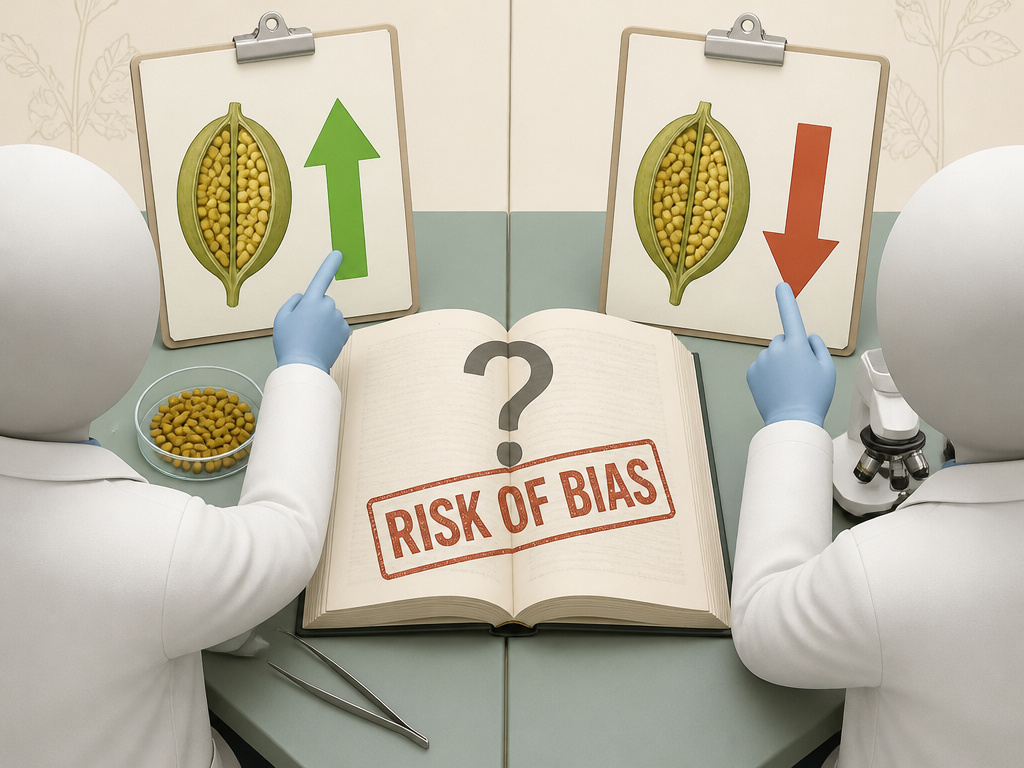
Open two different academic reviews on fenugreek and you might think they’re describing two different substances. This isn’t dishonesty; it’s a difference in interpretation and weighting of the same limited evidence.
On one side, you have reviews like the 2022 paper in Advances in Nutrition that catalog the studies on extracts like Testofen and Furosap, presenting their findings on testosterone and sexual function. The tone is neutral-to-positive, outlining the potential. On the other side, the 2022 review in Androgens: Clinical Research and Therapeutics is blunt. It states that due to “important methodological deficiencies” in the literature, the use of fenugreek for testosterone “should be discouraged.”
The 2026 Frontiers meta-analysis tries to bridge this gap on the does fenugreek increase testosterone debate. It acknowledges the small statistical signal but slaps it with a “very low” GRADE certainty rating. Why? The Cochrane RoB 2 assessment of the 13 included studies is damning: 11 had “some concerns,” 2 had “high risk” of bias, and none were judged as low risk overall.
Common mistake: Citing a single positive study on a proprietary extract as proof that “fenugreek boosts testosterone.” The totality of evidence, when graded for certainty, tells a much more cautious story.
This expert disagreement is why you need to be a skeptical consumer. A marketer will cite the single positive study. An honest assessment requires looking at the systematic review of fenugreek effects, which weighs all the evidence together and accounts for quality. When you do that, the confident claims evaporate, replaced by a “maybe, but probably not enough to matter” for direct testosterone elevation.
Safety, Side Effects, and Who Should Be Cautious
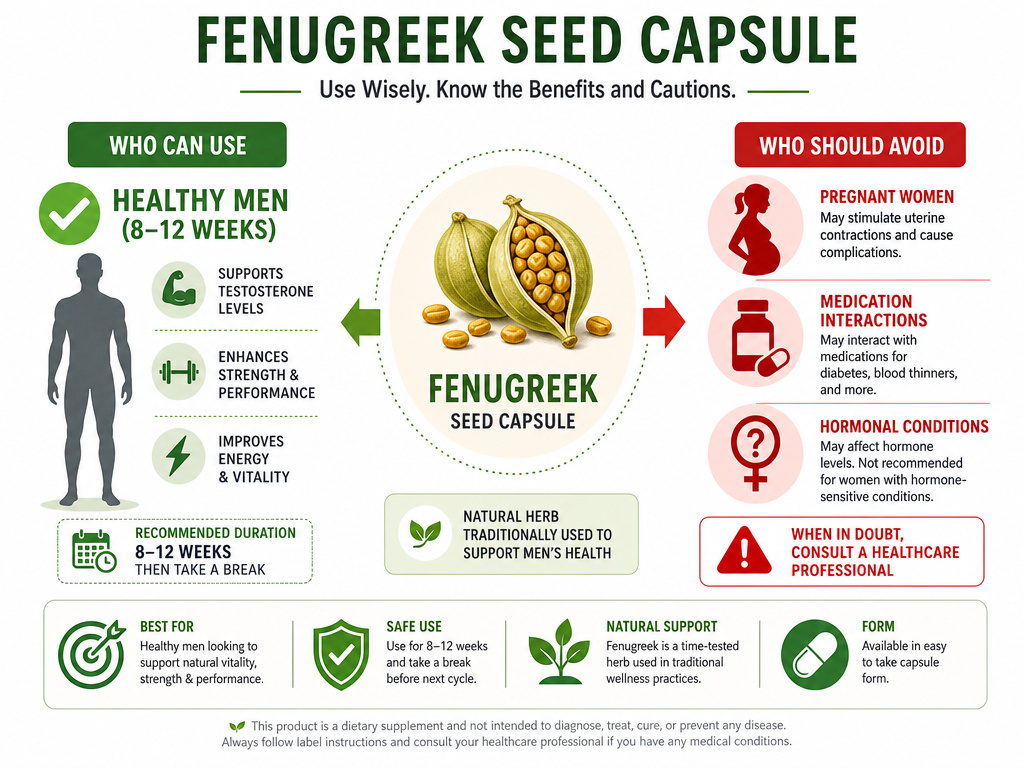
The safety profile in the short-term studies showed no serious adverse events attributable to fenugreek. The 2026 review noted that among the eight studies reporting safety data, no serious adverse events were attributed to fenugreek.
There are specific groups who should exercise extra caution or avoid fenugreek:
- People on Diabetes Medication: Fenugreek can lower blood sugar. Combining it with insulin or drugs like metformin could risk hypoglycemia.
- People on Blood Thinners:
- Those with Peanut or Chickpea Allergies: Fenugreek is a legume and may trigger cross-reactivity.
- Pregnant Women: It is traditionally used to stimulate uterine contractions and should be avoided.
The “start low and go slow” principle applies here. If you decide to try a standardized fenugreek extract, begin at the lower end of the studied dose (e.g., 500 mg) and monitor how you feel. This is not a supplement to mega-dose in hopes of stronger effects.
Fenugreek vs. Other Herbs: How Does It Stack Up?
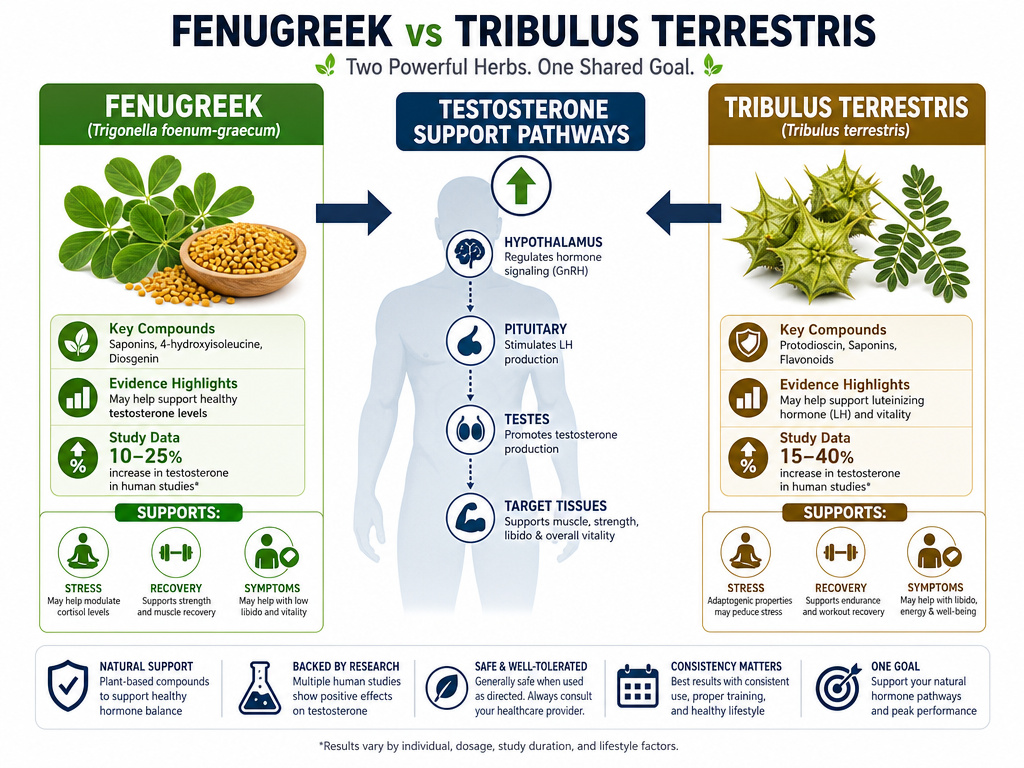
In the world of natural male health supplements, fenugreek is just one player. How does it compare to something like tribulus terrestris, another herb plastered over “T-booster” labels?
These herbs often work on pathways related to testosterone, not by directly stimulating its production like a pharmaceutical might.
This is where the nuance lies. If you’re looking for a broad-spectrum supplement for testosterone support that addresses stress, recovery, and mild symptoms, a combination approach might make sense. But if your latest blood test shows clinically low free testosterone, no over-the-counter herb, including fenugreek, is a reliable solution. That’s a conversation for a doctor.
Practical Takeaways: Should You Try Fenugreek?
So, does fenugreek increase testosterone? The most accurate answer is: the current evidence is very uncertain and does not support clinical or commercial testosterone-boosting claims.
Who might consider it?
- You’re looking for a potential edge in body composition or strength, as some studies reported improvements in body fat percentage and bench press strength.
- You’re experiencing symptoms measured by scales like the Aging Males’ Symptoms (AMS) score and want to try a supplement with some supporting data.
- You understand you’re experimenting with a “very low” certainty evidence base and you’re using a clinically studied ingredient from a brand.
Who should skip it?
- Your primary, singular goal is to significantly raise your free testosterone levels. The evidence here is too weak.
- You have low testosterone diagnosed by a doctor. This is not a treatment.
- You’re expecting a miracle from a cheap, unstandardized powder. The effects, if any, are tied to specific extracts.
My approach has always been to let the evidence lead, not the label. With fenugreek, the evidence leads to a murky clearing, not a destination. It points to a better supplement for overall well-being and body comp than a direct testosterone agent. If you do try it, consider a product that uses an oral fenugreek-derived preparation at daily doses of 500–600 mg over 8–12 weeks, as used in most studies.
How is fenugreek supposed to work for testosterone?
Proposed mechanisms for fenugreek’s potential effects on male hormones often focus on plant compounds like saponins, including protodioscin. The theory is that these compounds might influence the activity of enzymes involved in testosterone production or metabolism. However, the most current systematic review from 2026, which analyzed data from eight primary studies, found the overall evidence for a stable testosterone benefit to be very uncertain. While some studies using specific extracts have reported positive outcomes on symptoms or body composition, the review concluded that the certainty of evidence for testosterone-axis outcomes is very low. This means the proposed biological mechanisms, while plausible in theory, are not strongly supported by consistent, high-quality clinical evidence in humans regarding a direct and reliable increase in testosterone levels.
Frequently Asked Questions
How much does fenugreek raise testosterone?
Based on the 2026 meta-analysis, the average effect on total testosterone is a Standardized Mean Difference of 0.25, which is a small statistical increase. It does not reliably raise free testosterone. This effect is not a guaranteed or clinically significant boost for any individual.
Why do bodybuilders take fenugreek?
Bodybuilders and athletes may use fenugreek for its potential benefits to body composition and strength, which are supported by some studies more than the testosterone data. The meta-analysis found it could reduce body fat percentage and increase bench press strength, which are direct performance goals.
What is the most powerful herb for testosterone?
There is no over-the-counter herb that is “powerful” for directly increasing testosterone in a reliable, clinically significant way for most men. Some, like tongkat ali and ashwagandha, have better evidence for supporting libido and reducing stress, which can benefit testosterone if those were limiting factors. Fenugreek’s evidence is weaker and inconsistent.
What will happen if I take fenugreek every day?
In the short term (8-12 weeks), you may experience minor digestive issues or a maple-like body odor. You might see small improvements in body fat, strength, or energy levels based on the secondary outcome data. It is very unlikely you will see a dramatic, measurable increase in your free testosterone levels. Long-term effects are unknown.
Before You Go
One rule that clears the fog: if your free testosterone is genuinely low (confirmed by blood tests), no fenugreek supplement is the answer. That’s a medical discussion. Where fenugreek sits is in the gray area of mild support—for the guy who’s 90% optimized and wondering about the last 10%. The data suggests it’s better filed under “general wellness and body comp” than under “testosterone solution.” Prioritize sleep, nutrition, resistance training, and managing stress first. Those are the levers with the greatest and most certain impact. After that, if you want to experiment with a testosterone boosting supplement like a standardized fenugreek extract, do it with clear eyes, knowing you’re testing a faint signal, not flipping a switch.
