
Does L Carnitine Increase Testosterone? Clinical Verdict
This post contains affiliate links. As an Amazon Associate, we earn from qualifying purchases.
L-carnitine does not reliably increase testosterone levels in healthy men or athletes, but it can significantly improve sperm motility and morphology in men diagnosed with idiopathic infertility. The evidence for a direct testosterone boost is conflicting and weak, while the data for improving specific sperm parameters is consistent and strong.
That distinction matters. If you’re taking it for general hormonal support or gym performance, you’re likely chasing a mechanism that hasn’t panned out in human trials. If you’re using it under a doctor’s guidance for a diagnosed fertility issue, the data supports a real benefit for sperm quality.
What follows: a walk through the fertility studies, the conflicting testosterone data, the important differences between L-carnitine and acetyl-L-carnitine, and the one mechanism, affecting androgen receptors, that might explain why some men report feeling better on it even without a serum testosterone bump.
Key Takeaways
- Clinical reviews show carnitine significantly improves sperm motility and morphology in men with idiopathic infertility, but has no effect on sperm concentration or proven impact on pregnancy rates.
- For raising serum testosterone, the evidence is conflicting and inconclusive; major reviews of studies in athletes and infertile men find no consistent, significant effect.
- The form matters: L-carnitine L-tartrate (LCLT) is used in exercise studies, while combinations of L-carnitine and L-acetylcarnitine are common in fertility research.
- A potential indirect benefit involves androgen receptor density, where carnitine may help the body use existing testosterone more effectively, a key point for men on TRT or with low receptor sensitivity.
- Long-term daily use carries a potential TMAO risk; mitigating it involves supporting gut health with nutrients like calcium D-glucarate and ensuring adequate choline and B-vitamin status.
Does L-Carnitine Increase Testosterone? The Clinical Verdict
You’ll find two sets of studies, and they point in different directions. For testosterone levels in otherwise healthy men, the answer tilts toward no.
A systematic review from 2021 that analyzed 15 substances marketed to athletes concluded the data on L-carnitine was conflicting and it “does not appear to increase testosterone levels.” This review noted two trials by the same research group: an early one showed a post-exercise testosterone increase with L-carnitine L-tartrate (LCLT), but a later, more controlled study found no differences.
The 2003 study often cited for LCLT’s hormonal effects in athletes found it increased IGFBP-3 but stated clearly: “No other direct effects of LCLT supplementation were observed on the absolute concentrations of the hormones examined,” including testosterone.
The picture in infertile populations is murkier when you ask does l carnitine increase testosterone. One 2022 randomized controlled trial reported that serum testosterone levels significantly increased in infertile men taking L-carnitine, while a larger 2021 meta-analysis found no significant difference in serum testosterone. However, a larger 2021 meta-analysis focusing on similar populations found no significant difference in serum testosterone (or LH and FSH) between supplement and control groups.
However, the evidence tells a different story. When you see a single positive study against a backdrop of neutral or negative ones, it’s a signal to pause. The weight of evidence, especially in healthy populations, doesn’t support L-carnitine as a reliable testosterone booster for the does l carnitine increase testosterone query. Your money and effort are likely better spent on research-backed testosterone ingredients with more consistent data.
The Fertility Evidence Is Stronger and More Specific
This is where L-carnitine’s reputation is earned. For men with a specific diagnosis, idiopathic asthenozoospermia (low sperm motility with no known cause), the data is compelling.
A 2022 systematic review and meta-analysis in the journal Reproduction and Fertility aggregated results from eight randomized trials. The conclusions were clear: carnitine supplementation significantly improves total sperm motility, progressive sperm motility, and sperm morphology. The mean difference for progressive motility was a notable 9.82 (95% CI 2.01, 17.62). The same analysis found it had no effect on sperm concentration and no demonstrable effect on clinical pregnancy rates in the studies that measured it.
The mechanism isn’t magic. Sperm are energy-intensive, swimming long distances on mitochondrial power. L-carnitine’s primary job in the body is shuttling fatty acids into mitochondria to be burned for energy. It’s also a potent antioxidant in the form of L-acetylcarnitine, protecting sperm cells from oxidative damage. Infertile men often have lower levels of carnitine in reproductive tissues, so supplementation in this context is a targeted deficiency correction.
Where this goes sideways: Assuming fertility benefits translate to hormonal benefits. The studies showing improved sperm parameters specifically enrolled men with idiopathic infertility. If you have normal sperm counts and are taking carnitine for a “T-boost,” you’re applying evidence from a different population with a different problem.
This is a classic case of a compound working for a specific thing in a specific group. It’s not a general male health panacea. For a deeper look at the clinical protocols used in these studies, our review of acetyl-L-carnitine breaks down the typical doses and combinations.
L-Carnitine vs. Acetyl-L-Carnitine: Which Form for Which Goal?
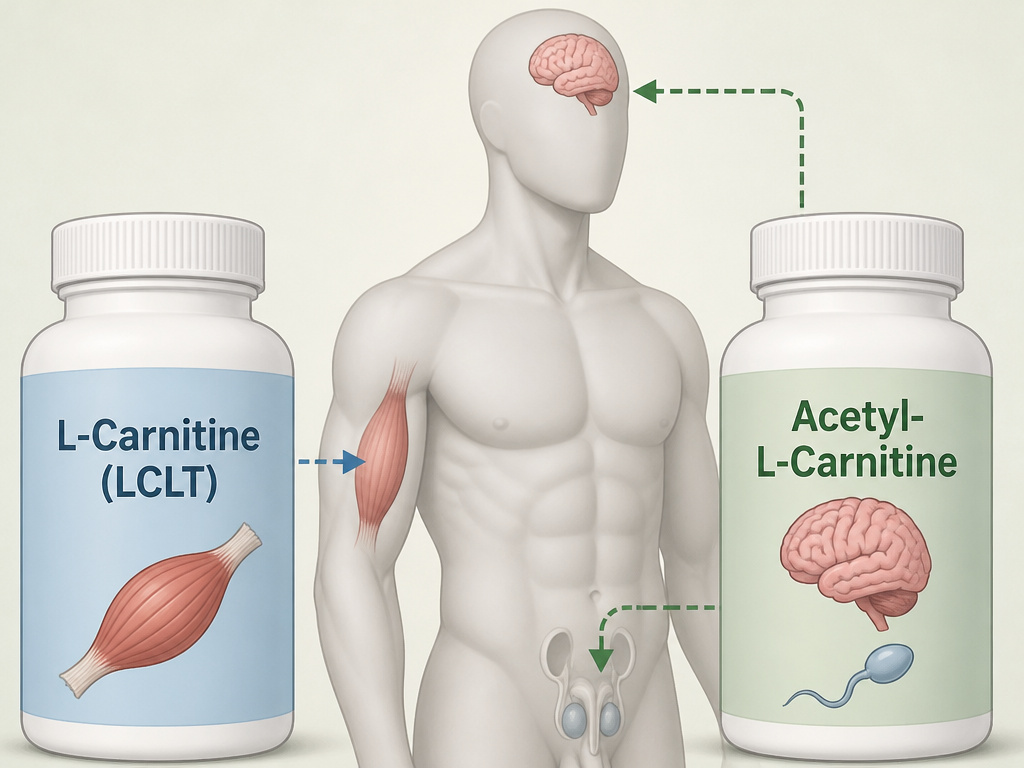
Not all carnitines are the same in research. The form used dictates the outcome you can reasonably expect.
| Form | Primary Research Context | Typical Dose in Studies | Mechanistic Focus |
|---|---|---|---|
| L-carnitine L-tartrate (LCLT) | Exercise performance & recovery in athletes | 2 g daily for 3+ weeks | Muscle soreness, metabolic recovery, hormonal response |
| L-carnitine + L-acetylcarnitine | Idiopathic male infertility | 2,000 mg LC + 1,000 mg LAC daily for 3-6 months | Sperm energy metabolism, antioxidant protection |
| Acetyl-L-carnitine (ALCAR) alone | Cognitive support, neurohealth; sometimes infertility | 500-1,500 mg daily | Brain energy, neurotransmitter support, antioxidant |
If your goal is general wellness or cognitive sharpness, ALCAR is the form that crosses the blood-brain barrier most readily. For fertility, the combined protocol is the one with the most human data. The plain L-carnitine base (often as L-carnitine fumarate or tartrate) handles the systemic energy shuttle, while the acetylated form offers targeted antioxidant protection for sperm.
I see people make the mistake of buying a basic L-carnitine supplement and expecting the fertility benefits outlined for the combined protocol. Check the label. If it only contains L-carnitine, you’re missing half the equation that the successful studies used.
The Androgen Receptor Angle: Making Existing Testosterone Work Harder
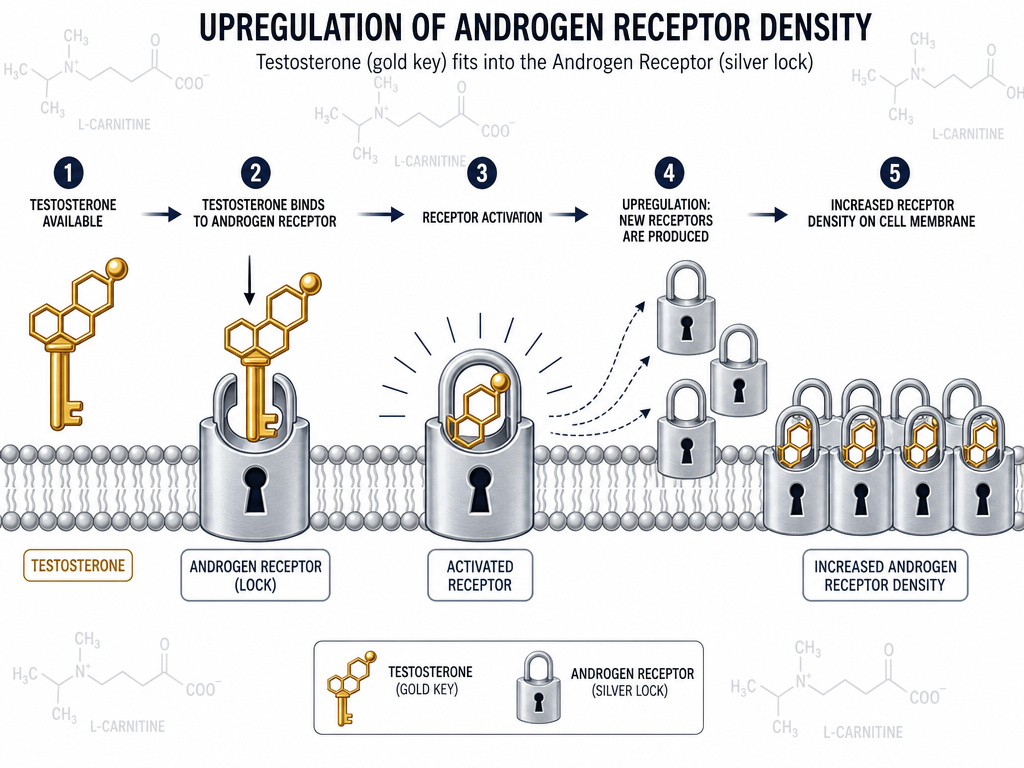
Here’s a non-commodity insight most articles miss: L-carnitine might influence how your body uses testosterone, not just how much it makes.
Some preclinical and clinical data suggests L-carnitine, particularly in the acetylated form, can upregulate androgen receptor density in certain tissues. Think of testosterone as the key and the androgen receptor as the lock. More locks mean each key can open more doors. If you’re on testosterone replacement therapy (TRT) or have issues with receptor sensitivity, this is a potentially significant mechanism. It could explain anecdotal reports of improved libido or vigor without a corresponding rise in blood serum levels.
This is a frontier area, not settled science. But it’s a plausible reason why the subjective experience of some men doesn’t match the bland “no change in serum T” conclusion of many studies. It shifts the question from “Does it boost production?” to “Does it improve utilization?”
This receptor effect also ties into the broader conversation about what makes testosterone supplements effective. A product that only aims to stimulate production is fighting an upstream battle if downstream receptor sensitivity is the real bottleneck.
Potential Risks and the TMAO Question
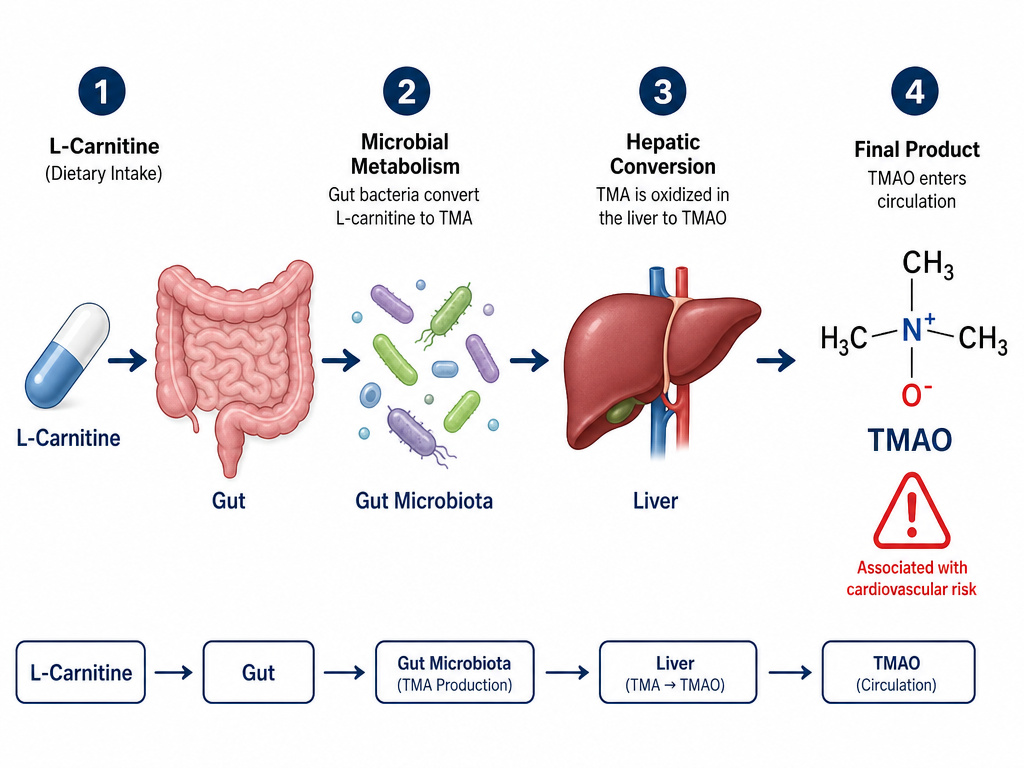
Taking anything daily for months requires a safety check. For carnitine, the main discussed risk is TMAO (trimethylamine N-oxide).
Gut bacteria metabolize L-carnitine into trimethylamine (TMA), which your liver then converts to TMAO. Elevated TMAO levels are associated with an increased risk of cardiovascular events in some epidemiological studies. It’s not a guaranteed cause-and-effect, but it’s a reason for caution with high-dose, long-term use.
You can mitigate this.
- Don’t megadose. Stick to the studied ranges (1-3 grams daily).
- Support phase II liver detox. Nutrients like calcium D-glucarate can help support the conjugation pathways that clear compounds like excess estrogen and TMAO precursors.
- Consider your gut health. A diverse microbiome may process carnitine differently. Regular fiber intake and probiotic foods support that diversity.
- Cycle it. There’s no need to take it year-round unless you’re using it for a specific, time-bound fertility protocol.
The 2006 double-blind placebo-controlled fertility study that found no benefit for sperm motility also reported carnitine was well-tolerated with few side effects, which is reassuring for shorter-term use. But for someone considering it as a permanent addition to their stack, the TMAO conversation is worth having with a doctor.
How L-Carnitine Compares to Other Fertility Supplements
In a fertility clinic’s toolkit, carnitine isn’t used alone. It’s often compared or combined with other antioxidants like CoQ10 and Vitamin E.
Both interventions improved sperm parameters, but the L-carnitine group also saw a significant rise in serum testosterone, a finding that contrasts with other analyses showing no consistent effect. This study is a notable outlier in the testosterone data, but it reinforces that for sperm quality, several antioxidant pathways can be effective.
Carnitine’s role is fuel delivery. They’re complementary.
| Supplement | Primary Role in Sperm Health | Typical Clinical Dose | Notes |
|---|---|---|---|
| L-carnitine + L-acetylcarnitine | Fatty acid transport for energy; antioxidant | 2,000 mg + 1,000 mg daily | Strongest evidence for motility/morphology. |
Bottom line: for a diagnosed fertility issue, carnitine is a first-line evidence-based option, often used in a stack. For general hormonal support, its position is much weaker.
Does L-carnitine affect LH or FSH?
The available research on L-carnitine’s direct effects on key reproductive hormones like luteinizing hormone (LH) and follicle-stimulating hormone (FSH) is limited. The fact sheet does not provide specific data on changes to these hormones. LH and FSH are crucial signals from the brain that instruct the testes to produce testosterone and sperm. While studies show L-carnitine can improve sperm motility and morphology in cases of idiopathic male infertility, the mechanism may not involve altering these upstream hormonal signals. For men considering L-carnitine primarily for hormonal regulation, the current evidence does not support a significant impact on LH or FSH levels.
How does L-carnitine work in the body?
L-carnitine’s primary role is in cellular energy production, shuttling fatty acids into mitochondria to be burned for fuel. In the context of male fertility and testosterone, its mechanism is thought to be supportive rather than directly stimulatory. It may help protect the cells responsible for sperm production and testosterone synthesis from oxidative damage. By improving the energy environment within the testes, it could support the natural steroidogenesis pathway, which is the process of making testosterone. This protective, energy-supporting role might explain improvements in sperm quality seen in some studies, even in the absence of a clear, consistent rise in measured serum testosterone levels.
Frequently Asked Questions
What is the best supplement for testosterone?
The “best” supplement depends on the cause of low testosterone and your specific goals. It’s more effective to target a known deficiency or blocker than to take a general “booster” blend.
Does L-carnitine increase sperm?
Yes, for men with idiopathic asthenozoospermia (poor sperm motility), L-carnitine supplementation, especially combined with acetyl-L-carnitine, has been shown in multiple clinical reviews to significantly improve sperm motility and morphology. It does not appear to increase sperm concentration (count).
Why is L-carnitine good for men?
Its primary researched benefit for men is in supporting sperm quality by providing energy substrate and antioxidant protection. Outside of fertility, some evidence suggests it may support exercise recovery and cognitive function. Its direct benefits for increasing testosterone levels are not well-supported by consistent clinical evidence on the does l carnitine increase testosterone topic.
What happens if you take L-carnitine daily?
At common supplemental doses (1-3 grams), most people tolerate it well. Potential benefits over months may include improved sperm parameters (if that’s a concern) or subtle support for energy metabolism. The main long-term consideration is a potential rise in TMAO levels, a biomarker associated with cardiovascular risk. Mitigating strategies include not megadosing, supporting liver and gut health, and considering cyclical use.
Before You Go
The L-carnitine story is a lesson in precision. It’s not a testosterone booster. It’s a fertility-support compound with a clear mechanism and a defined target population.
If you’re looking at it for the gym, the hormonal response to resistance exercise study and subsequent research should temper your expectations. If you’re considering it for fertility, the PMC article on carnitine for male infertility provides a solid evidence base, just know it’s a marathon, not a sprint, requiring months of consistent use at clinical doses.
Start with the basics. Get a semen analysis if fertility is the concern, and a full hormone panel if low T is the issue. Those moves are almost always higher-value than reaching for a bottle of liquid carnitine on a hope. Match the tool to the job, and let the evidence, not the marketing, dictate the choice.
