
How a Sedentary Lifestyle Lowers Testosterone?
This post contains affiliate links. As an Amazon Associate, we earn from qualifying purchases.
A sedentary lifestyle lowers testosterone primarily by promoting weight gain, especially visceral fat, which converts testosterone to estrogen, and by disrupting sleep and elevating cortisol. Clinical low testosterone is defined as serum total testosterone < 300 ng/dL. Research pinpoints a significant increase in risk when daily sedentary time exceeds 4.5 hours.
That 4.5-hour mark is the actionable line. It’s not about being a couch potato all day; it’s the point where the statistical risk for deficiency takes a non-linear jump. The mechanisms, including fat, stress, and sleep, form a feedback loop that’s hard to break without moving the needle on that daily sitting time, which is a key part of how a sedentary lifestyle lowers testosterone.
What follows is a breakdown of that 4.5-hour threshold, the specific type of exercise shown to raise total testosterone by about 17% in sedentary older men, and a phased plan to transition out of the sedentary cycle without overhauling your life in a week.
Key Takeaways
- The risk of testosterone deficiency sees a significant, non-linear increase when daily sedentary time exceeds 4.5 hours.
- High-Intensity Interval Training (HIIT) after a preconditioning period raised total testosterone by ~17% in lifelong sedentary older men, while low-frequency moderate exercise showed no significant change.
- Visceral fat doesn’t just store energy; its aromatase enzyme actively converts testosterone into estrogen, directly lowering circulating T.
- Chronic, unmanaged stress elevates cortisol, which directly suppresses the hypothalamic-pituitary-gonadal (HPG) axis and testosterone production.
- For a natural reset, focus on one habit change at a time: measure your waist, track sedentary hours, or implement a sleep cutoff before adding exercise.
The 4.5-Hour Daily Threshold
You don’t need to be motionless for eight hours. The data shows the trouble starts earlier. A study analyzing national health data identified a specific threshold: the likelihood of testosterone deficiency increases significantly when total daily sedentary time surpasses 4.5 hours.
This isn’t a gentle slope. The association shows a non-linear increase, think of it as a risk curve that bends upward more sharply after that 4.5-hour mark. It’s the difference between a manageable risk and a statistically significant one.
This matters because it reframes the goal. You’re not trying to become an athlete overnight. You’re trying to interrupt blocks of sitting before they accumulate past that line. An office job that involves a one-hour commute, eight hours at a desk, and an evening on the sofa easily crosses it. The goal is to break that total into segments, standing for five minutes every hour, a walk at lunch, to keep the cumulative number under the threshold.
The mechanisms triggered by crossing this line are physical and measurable, central to how a sedentary lifestyle lowers testosterone.
How Sitting Fuels a Hormonal Downturn
When you stay seated, three primary systems work against your testosterone levels: your fat tissue, your stress response, and your sleep quality. They connect.
First, weight gain, particularly around the abdomen (visceral fat), is a direct driver. This fat is hormonally active. It secretes inflammatory markers and contains high levels of an enzyme called aromatase. Aromatase’s job is to convert testosterone into estrogen. More belly fat means more conversion, leaving less free testosterone in your bloodstream. This creates a vicious cycle where low T can make it harder to lose fat, which further lowers T. It’s one reason the link between obesity and low hormones is so strong.
Second, sedentary behavior is often linked with higher perceived stress and poorer stress management. Chronic stress keeps cortisol elevated. Cortisol and testosterone are made from the same precursor hormone (pregnenolone). Under chronic stress, the body prioritizes cortisol production in a “shunt” known as the pregnenolone steal. Cortisol also directly suppresses the hypothalamic-pituitary-gonadal (HPG) axis, which signals your testes to produce less. The relationship between cortisol and testosterone is fundamentally antagonistic.
Third, inactivity ruins sleep. It reduces sleep drive (adenosine buildup) and can dysregulate your circadian rhythm. Poor sleep, in turn, raises cortisol and lowers growth hormone, both of which further disrupt testosterone production. You can’t fix one without addressing the others.
The Exercise That Actually Works (And What Doesn’t)
If the problem is not moving, the solution seems obvious. But the research reveals a critical nuance: not all exercise impacts testosterone equally, especially if you’re starting from a sedentary baseline.
A pivotal PMC study on lifelong sedentary men provides the blueprint. Researchers took lifelong sedentary older men (average age 62) and put them through a specific protocol:
- A 6-week preconditioning phase of moderate aerobic exercise.
- Followed by a High-Intensity Interval Training (HIIT) phase.
The results were clear. Total testosterone increased by ~17% after the complete protocol. Importantly, most of that gain (~10%) happened during the preconditioning phase. Free testosterone, the bioactive form, saw a smaller but significant increase of ~4.5% specifically after the HIIT phase. Cortisol levels remained unchanged.
Where this goes sideways: Jumping straight into intense exercise without a conditioning period. The study required six weeks of moderate work first. Going from zero to HIIT risks injury, excessive cortisol spike, and burnout, the opposite of what you want.
Conversely, another study highlights what doesn’t work. Young sedentary men who performed 50 minutes of cycling at 60% max effort, once per week for 12 weeks, showed no significant change in resting testosterone. The takeaway? Low frequency and moderate intensity alone may not be a strong enough stimulus to perturb the hormonal system in a sedentary population.
This disagreement in the literature, some studies show benefit, others show none, often comes down to exercise modality, intensity, and the population’s starting point. A PubMed meta-analysis on exercise training in insufficiently active, hormonally normal men concluded exercise had a negligible effect on resting T. However, other studies, such as one on HIIT in sedentary older men, show significant increases, indicating the effect depends on the population and protocol. The significant gains appear when taking truly sedentary men through a structured, progressive protocol.
| Protocol | Population | Frequency/Intensity | Result on Testosterone |
|---|---|---|---|
| Preconditioning + HIIT | Lifelong sedentary older men | Progressive over 12+ weeks | ~17% increase in total T |
| Moderate Endurance | Sedentary young men | 50 min, once/week, 60% effort | No significant change |
| General Exercise Training | Insufficiently active men | Varied, ≥4 METs for 4+ weeks | Negligible effect (per meta-analysis) |
The message isn’t that exercise is futile. It’s that the type and structure matter immensely. For a sedentary person, the winning formula appears to be: start moderate, build a base, then introduce intensity.
Breaking the Sedentary Cycle: A Phased Plan
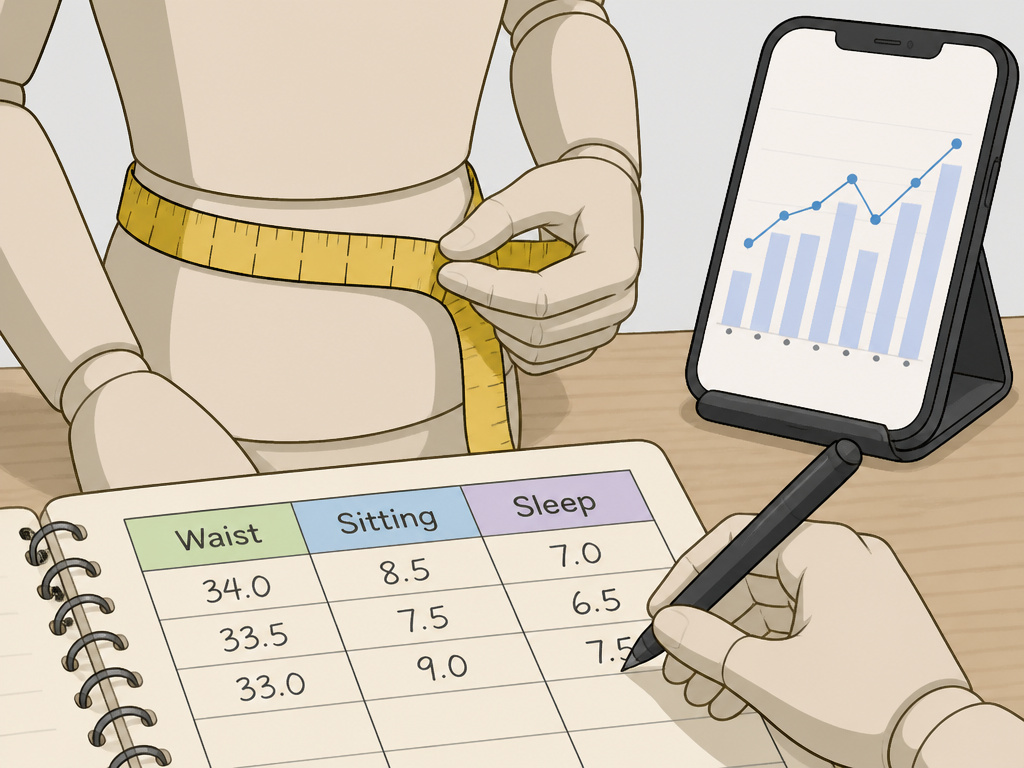
Overhauling everything at once is a recipe for failure. The goal is sustainable change, not a three-week frenzy. This phased approach helps you build momentum.
Phase 1: Measure and Observe (Weeks 1-2)
Don’t change anything yet. Just track.
- Waist: Measure at the navel once a week. Write it down.
- Sitting Time: Use your phone or watch to get a baseline. How many hours are you above that 4.5-hour line?
- Sleep: Note your bedtime and wake time. No judgment, just data. This phase removes guilt and provides a factual starting point. I learned this tracking my own waist. Dropping about two inches over three months did more for my follow-up bloodwork than any supplement I’d tried.
Phase 2: Modify One Keystone Habit (Weeks 3-6)
Pick ONE of these to implement based on your Phase 1 data.
- If sleep was poor: Set a firm device shutdown time 1 hour before bed.
- If sitting time was high: Schedule two 5-minute standing/walking breaks during your longest sitting block.
- If diet is erratic: Add one serving of vegetables to your largest meal. The power of one habit is that it’s achievable. It also often creates positive ripple effects, better sleep lowers cortisol, which can reduce cravings.
Phase 3: Introduce Structured Movement (Week 7+)
Only after a habit is automatic, consider adding exercise. Follow the research-backed sequence:
- Weeks 7-12: Preconditioning. Walk briskly, cycle, or swim for 30 minutes, 3 times a week. You should be able to talk, but not sing.
- Week 13 onward: Add Intensity. After 6 weeks, introduce one weekly HIIT session. Example: After a warm-up, alternate 30 seconds of hard effort (sprinting, kettlebell swings) with 90 seconds of rest, repeat 6-8 times.
This phased approach aligns with the successful study protocol and prevents the common mistake of doing too much too soon. It turns the overwhelming goal of “get fit” into a series of manageable, evidence-based steps.
When Lifestyle Might Not Be Enough
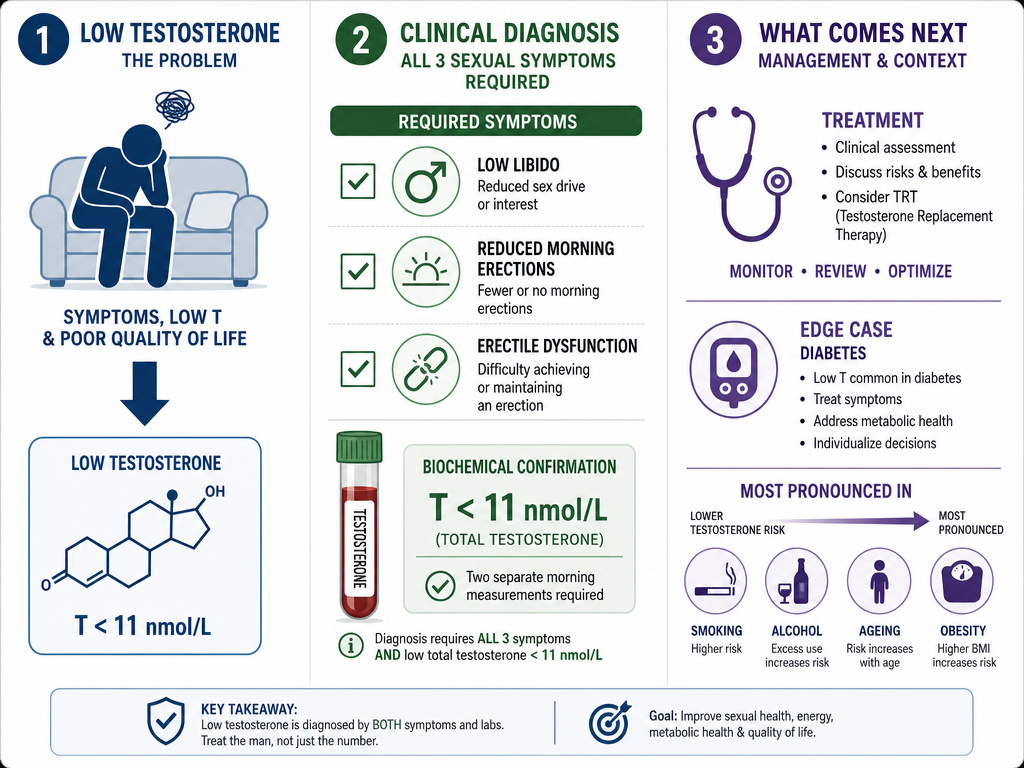
Lifestyle is the foundation, but it has limits. Clinical late-onset hypogonadism is defined by the presence of three sexual symptoms (low libido, few morning erections, erectile dysfunction) plus a total testosterone level below 11 nmol/L and a low free testosterone.
This is where professional evaluation is crucial. A doctor can rule out other causes and discuss options like Testosterone Replacement Therapy (TRT).
Furthermore, be aware of edge cases. Research suggests the strong link between sedentary time and low T loses significance in individuals with diabetes, where metabolic factors may be the dominant driver. The association is also most pronounced in certain demographics like Non-Hispanic Whites, current smokers, and drinkers.
How does age affect testosterone levels?
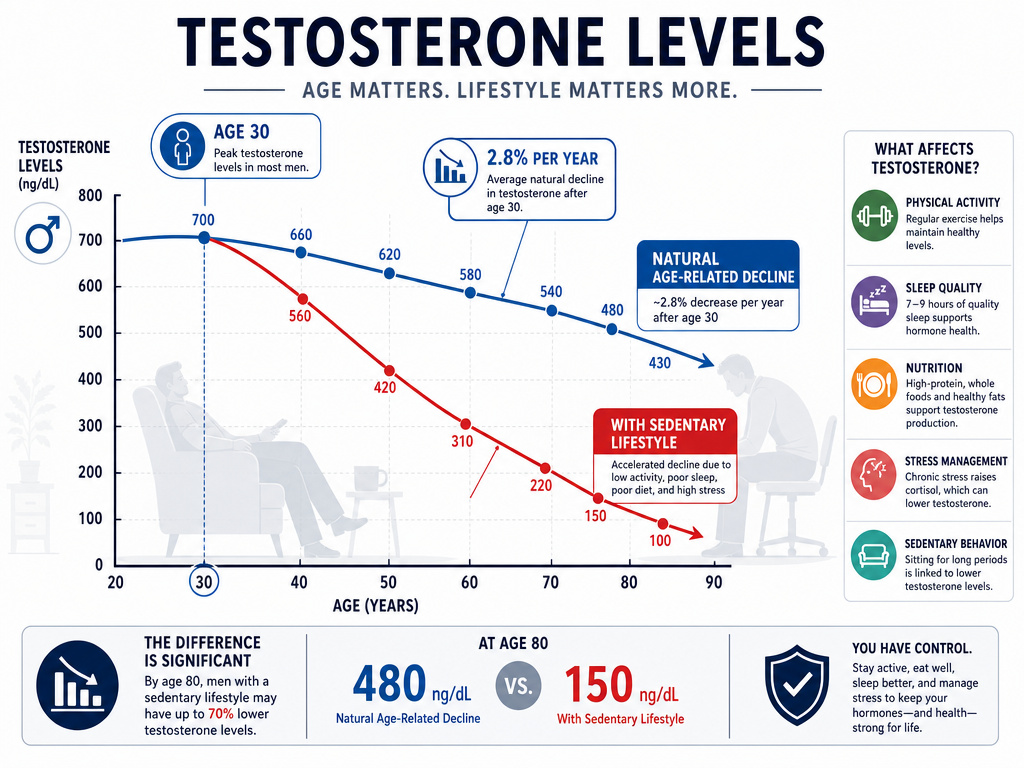
Testosterone levels in men begin a natural decline around 30 to 40 years of age. This decrease happens at an average rate of about 2.8% per year. While this age-related decline is normal, a sedentary lifestyle can accelerate the process.
Frequently Asked Questions
Does being sedentary decrease testosterone?
Yes, definitively. Prolonged sedentary behavior lowers testosterone through multiple proven pathways: increased visceral fat (which converts T to estrogen), elevated cortisol levels, and disrupted sleep cycles. A specific PubMed study on sedentary behavior thresholds identified 4.5 hours of daily sitting as a threshold for significantly increased risk.
What is the #1 testosterone killer?
It’s hormonally active, promotes inflammation, and houses the aromatase enzyme that permanently converts testosterone into estrogen.
Does not ejaculating for 7 days increase testosterone?
The evidence for this is weak and inconsistent.
Does walking 10,000 steps a day increase testosterone?
It can help, but indirectly. Walking 10,000 steps is excellent for general health, reducing visceral fat, improving insulin sensitivity, and lowering stress, all of which support healthier testosterone levels.
Before You Go
The most important number to remember is 4.5. That’s the daily sedentary hour threshold where your risk starts to climb in earnest.
