
How Testosterone Affects Athletic Performance?
This post contains affiliate links. As an Amazon Associate, we earn from qualifying purchases.
Testosterone affects athletic performance by increasing lean muscle mass, enhancing endurance capacity, and providing a competitive advantage, particularly in power and sprint events. The hormone’s ergogenic effects are most pronounced when levels are raised above an individual’s natural baseline, as demonstrated in controlled studies where women given testosterone improved running time to exhaustion by 8.5% and gained over 900g of lean mass in 10 weeks.
That 8.5% endurance boost is the headline, but it’s the how that reframes the whole conversation. For decades, the story was simple: more testosterone equals more muscle, more red blood cells, more strength. The latest evidence points to a more nuanced mechanism deep inside the muscle cell itself, showing how testosterone affects athletic performance.
What follows is a walk through the proven advantages, the contested data, and the specific physiological changes, like the 8% increase in a muscle’s capillary network, that turn a hormone into a performance edge. We’ll also cover why this science sits at the center of sports’ most heated eligibility debates.
Key Takeaways
- A 10-week intervention raising women’s testosterone to 4.3 nmol/L increased running time to exhaustion by 21.17 seconds (8.5%) and added 923g of lean mass.
- The endurance gain is linked to an 8% increase in the capillary-to-fiber ratio and enhanced mitochondrial function in muscle, not just more red blood cells or oxygen capacity.
- In elite female athletes, higher natural testosterone levels confer a 2.73% to 4.53% advantage in events like the 400m, 800m, and hammer throw.
- Research on elite men shows a discrepancy: a study of championship-level data found no clear performance advantage linked to higher natural testosterone levels, while another study on young professional athletes found men with higher testosterone were faster in short sprints.
- Exogenous testosterone has been banned from Olympic competition since 1976 and is a controlled substance, but natural hyperandrogenic conditions in women remain a major regulatory challenge.
The Primary Performance Advantages: Strength, Muscle, and Endurance
The most direct evidence for how testosterone affects athletic performance comes from a gold-standard study published in the British Journal of Sports Medicine. Researchers took 48 healthy, active women and gave half a daily 10 mg dose of testosterone cream (Andro-Feme®) for 10 weeks, while the other half used a placebo. It was double-blinded and randomized, neither the subjects nor the scientists knew who got what until the end.
The results were concrete. Serum testosterone in the treatment group jumped from 0.9 nmol/L to 4.3 nmol/L, lifting them well above the typical female range but still far below the male average.
A 10-week intervention with 10 mg of testosterone cream daily in women raised serum testosterone from 0.9 nmol/L to 4.3 nmol/L, increased running time to exhaustion by 21.17 seconds (8.5%), and increased total lean mass by 923 g (vs. 135 g in placebo). This double-blind, randomized, placebo-controlled trial was conducted between May 2017 and June 2018.
The lean mass gain of 923 g wasn’t just overall weight. It was specifically 398g in the lower limbs, the engine room for running. This aligns with what we know about testosterone and muscle growth: the hormone signals the body to prioritize protein synthesis and inhibits breakdown.
However, the story took a different turn: even with more muscle, tests for pure strength and power (like counter-movement jumps and knee extension torque) showed no significant improvement. The benefit was almost entirely in endurance. The women could run longer before exhaustion, not jump higher in a single burst.
That finding sent researchers looking for a new explanation. The old model pointed to testosterone’s known effect on red blood cell production, thinking better oxygen delivery was the key. A follow-up study, published in Frontiers in Physiology, tested that directly.
They measured hemoglobin mass, blood volume, and VO2 max. None had changed meaningfully. The secret was in the muscle biopsy.
The testosterone group showed an 8% increase in the capillary-to-fiber (C/F) ratio. More capillaries surrounding each muscle fiber mean a larger surface area for oxygen and fuel delivery and a longer transit time for red blood cells to offload their cargo. At the same time, the isolated mitochondria from their muscle tissue showed a significant boost in oxidative capacity, their cellular engines became more efficient at burning fuel.
The performance boost involves upgrading the refinery at the endpoint to use every drop more effectively, beyond just building a bigger engine (muscle) or improving the fuel lines (blood). This testosterone impact on muscle physiology is a more precise target than previously understood.
The Real-World Data: Advantages in Elite Competition
Controlled trials are one thing. What happens in the heat of world championship competition? A massive observational study analyzed 2,127 blood samples from athletes during the 2011 and 2013 IAAF World Championships. Using mass spectrometry, the most accurate testing method, they plotted testosterone levels against actual race results and throws.
The pattern for women was clear and statistically significant. Female athletes in the highest third of free testosterone (fT) outperformed those in the lowest third by notable margins:
| Event | Performance Advantage for High-fT Women |
|---|---|
| 400m | 2.73% |
| 400m Hurdles | 2.78% |
| 800m | 1.78% |
| Hammer Throw | 4.53% |
| Pole Vault | 2.94% |
These figures represent the difference between a medal and fourth place at the highest level of sport. The study concluded that higher androgen levels provide a “significant competitive advantage” in these events. The advantage spans endurance and some power events, but the primary mechanism in the controlled trial was linked to endurance via muscular adaptations, not pure strength or power.
For men, the data told a completely different story. The researchers found no pattern where men in the highest testosterone tertile performed better in any event. Male sprinters did have higher average fT than male athletes in other events, but that didn’t translate to a relative advantage against other sprinters with lower levels.
This creates a fascinating contradiction. One study on young professional athletes did find that men with higher testosterone were faster in short sprints (20m, 30m). Yet the larger, championship-level dataset says otherwise. Why the discrepancy?
The leading theory is the saturation effect. Male testosterone levels, even at the “low” end of the normal range, are already so high that they may be sufficient to fully activate androgen receptors in muscle tissue. Adding more on top of an already-high baseline might not move the needle for performance, whereas in women, moving from a very low baseline into a moderately higher range crosses a critical threshold for activating those same pathways.
Where the Science Gets Murky: Male Performance and the “Winner Effect”
The lack of a clear testosterone-performance link in elite men is one of the most under-discussed findings in sports endocrinology. It directly challenges the simplistic “more T equals better athlete” assumption.
If you only read the headlines, you’d think every male champion is chemically supercharged. The data from actual champions suggests their natural variation in testosterone doesn’t predict their podium position. This has huge implications for how we think about natural talent and training.
Where this goes sideways: Assuming a top male sprinter’s victory is due to superior natural testosterone. The championship data shows his levels might be no different from the guy in last place.
Complicating the picture further is the “winner-loser” effect. Testosterone isn’t a static trait; it’s dynamic and responsive to social cues. A robust body of research, confirmed by a meta-analysis, shows that testosterone concentrations tend to rise in winners and fall in losers following a competition.
This creates a feedback loop. A win boosts testosterone, which may enhance recovery, aggression, and motivation for the next bout, potentially leading to more wins. A loss can trigger the opposite. This psychological and hormonal interplay is a layer on top of the baseline physiology. It means an athlete’s level on any given day is a product of both biology and recent experience, a nuance explored in our look at how competition affects testosterone.
The Rules, Bans, and Enduring Controversy
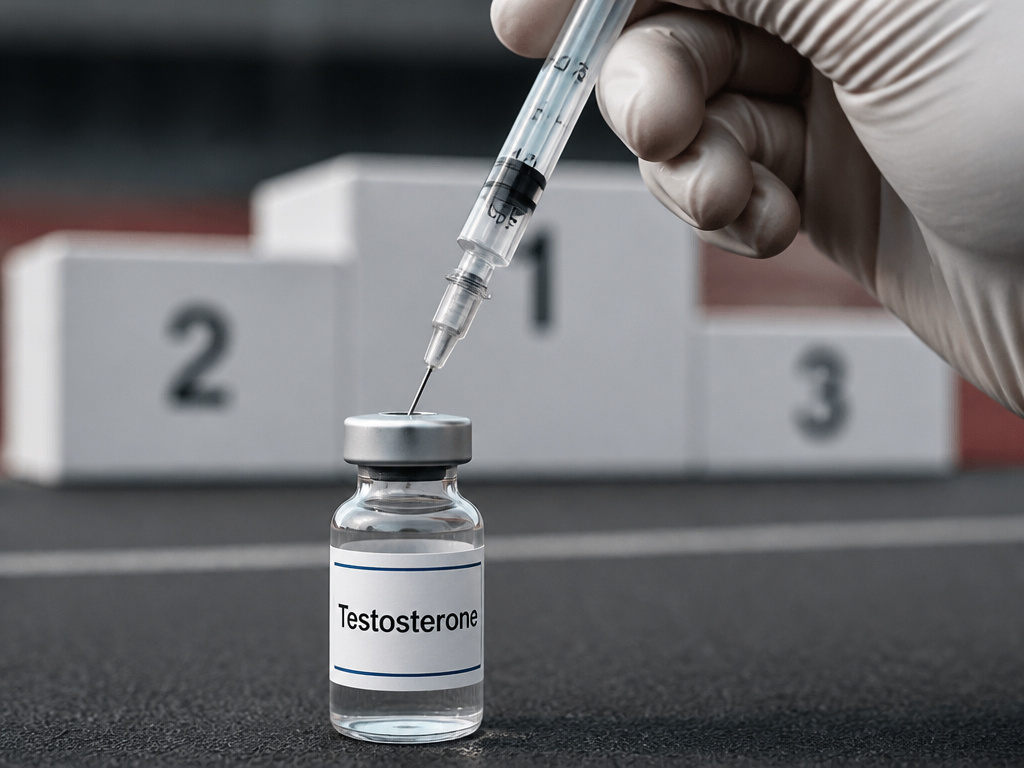
Given the proven advantage, it’s no surprise that synthetic testosterone is one of the most banned substances in athletics. The PMC current sports science review notes that exogenous testosterone has been prohibited in Olympic competition since 1976. In the United States, it was classified as a controlled substance by the Anabolic Steroid Control Act of 1990.
The challenge for regulators involves defining the line between natural and unnatural, beyond just catching cheaters who inject testosterone. Women with conditions like Polycystic Ovary Syndrome (PCOS) or Congenital Adrenal Hyperplasia (CAH) produce testosterone naturally at levels that can reach into the male range. Under current policies, these women are generally allowed to compete in the female category.
This is the heart of the hyperandrogenism debate in sports like track and field, centering on how testosterone affects athletic performance. If a woman has a natural DSD (Difference of Sexual Development) that gives her a testosterone level typical of a man, does she have an unfair advantage? Sporting bodies like World Athletics have grappled with this, at times proposing eligibility thresholds (e.g., testosterone < 5.0 nmol/L) for female events. These policies are intensely controversial, sitting at the intersection of science, ethics, and human rights.
The core scientific rationale, as outlined in consensus statements like the American College of Sports Medicine consensus statement, is that testosterone is the primary driver of the sex-based performance gap. Men’s higher levels account for a significant performance advantage across most athletic disciplines. Therefore, a female athlete with male-typical testosterone levels is seen as negating the foundational reason for having a separate women’s category.
Testosterone, Training, and Natural Optimization
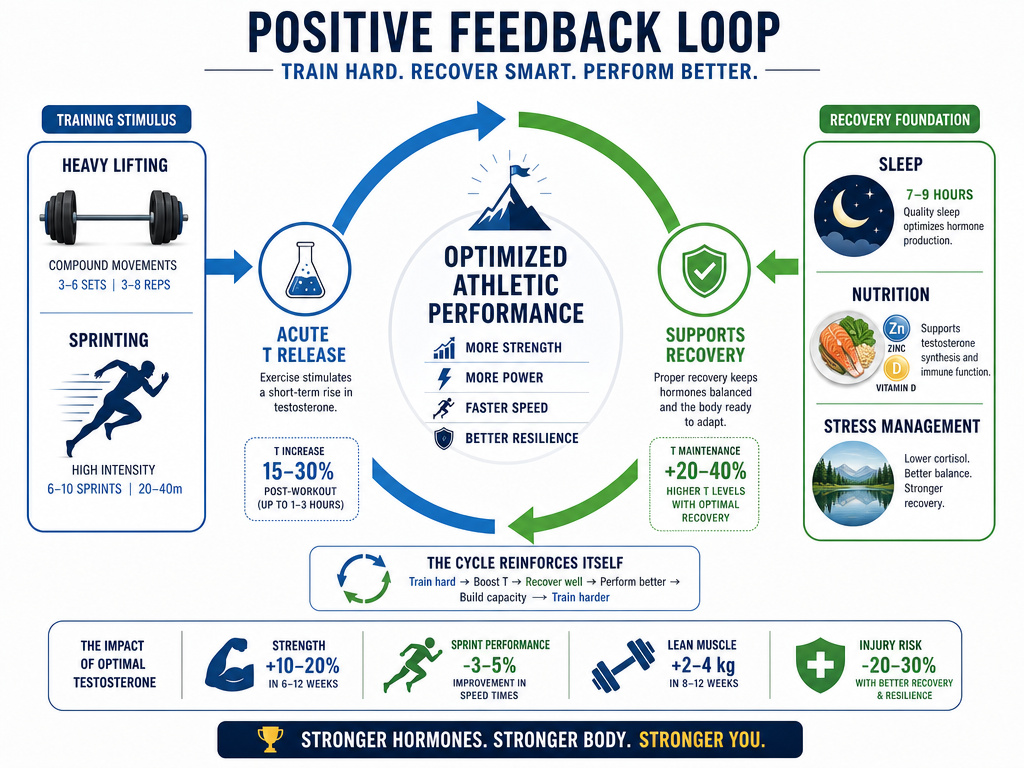
For athletes competing within the rules, the focus shifts to how training influences natural testosterone production and how to support healthy levels. This is where the science of testosterone and metabolism intersects with practical programming.
Not all training is equal. Heavy, compound lifting weights, squats, deadlifts, presses, creates a potent acute stimulus for testosterone release. The key is intensity and volume. Sessions that challenge major muscle groups with heavy loads and sufficient volume are most effective.
Similarly, high-intensity sprint training can trigger a sharp hormonal response. The metabolic stress and powerful neural drive of all-out efforts signal the body to release anabolic hormones. This is different from the chronic, moderate-intensity “cardio” that can sometimes suppress testosterone if overdone.
However, the body is a system of checks and balances. This hormonal spike from training is temporary and meant to aid repair. If you don’t support recovery with adequate sleep, nutrition, and stress management, you can easily flip into a catabolic state where cortisol rises and testosterone drops. Overtraining is a fast track to suppressed levels.
This is why the basics are non-negotiable:
- Get sufficient sleep nightly. Testosterone production is intimately tied to sleep quality and circadian rhythm.
- Manage chronic stress. Elevated cortisol directly antagonizes testosterone synthesis.
- Ensure sufficient calories and nutrients. Severe calorie restriction or deficiencies in zinc, vitamin D, and magnesium will tank levels.
- Maintain healthy body composition. Excess body fat, particularly visceral fat, promotes the conversion of testosterone to estrogen.
These factors influence how testosterone affects motivation and drive, creating a cycle. Better levels support better training recovery and intensity, which can further support healthy hormone function. It’s a feedback loop you want to keep positive.
Testosterone Replacement Therapy (TRT) for athletes
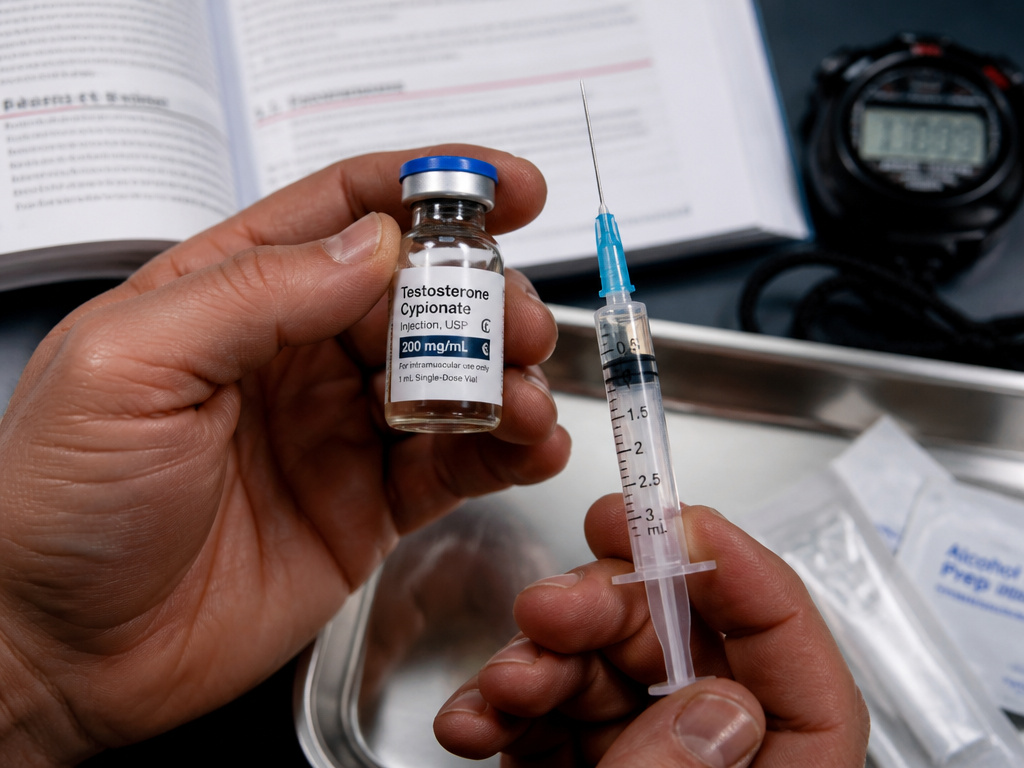
TRT involves using prescribed exogenous testosterone to restore levels to a normal physiological range. For athletes, its use is strictly controlled and often banned in competition. Exogenous testosterone has been prohibited in Olympic sports since 1976 and is classified as a controlled substance. Its performance-enhancing effects are well-documented, including increased lean muscle mass and endurance. However, its therapeutic use for athletes with clinically diagnosed hypogonadism exists within a complex framework of sports regulations. Athletes considering TRT must navigate stringent anti-doping rules and obtain therapeutic use exemptions, as unauthorized use constitutes doping.
Effects on fertility and sexual health
Exogenous testosterone supplementation can significantly impact reproductive health. In men, introducing external testosterone signals the body to reduce its own natural production of the hormone, which includes slowing or halting sperm production. This can lead to reduced fertility or infertility, which may or may not be reversible after stopping treatment. For athletes using testosterone, this is a critical consideration beyond performance. Practical guidance involves consulting a healthcare professional before starting any regimen to understand these risks and to explore options for preserving fertility if future family planning is a goal.
Age-related decline and athletic performance
Testosterone levels naturally decrease with age in men, a process sometimes called andropause. This decline is associated with reductions in lean muscle mass, strength, and recovery capacity, which can directly impact athletic performance and training adaptations. The apparent sex-based differences in athletic performance are largely attributed to the much higher circulating levels of testosterone in men than in women. For aging athletes, this natural decline presents challenges. While some seek TRT to counteract these effects, it is crucial to distinguish between a normal age-related decrease and clinically low levels that constitute a medical diagnosis, as treatment guidelines and sports regulations differ.
Frequently Asked Questions
Does testosterone make you a better athlete?
Yes, but the mechanism and magnitude depend heavily on context. Raising testosterone above an individual’s natural baseline, as seen in clinical studies, reliably increases lean mass and endurance capacity. In elite female competition, higher natural testosterone levels correlate with significantly better performance. For elite men, the data does not show that those with naturally higher testosterone outperform their peers with lower levels.
How much of an advantage does testosterone give?
The advantage is quantifiable. In women, raising testosterone to ~4.3 nmol/L for 10 weeks improved endurance running time by 8.5%. In observational data, elite women with the highest natural testosterone levels outperformed the lowest by 1.78% to 4.53%, depending on the event. For context, these percentage advantages represent the difference between a medal and fourth place at the highest level of sport.
Can you take testosterone legally for sports?
No. Exogenous testosterone is a prohibited substance in virtually all sanctioned competitive sports. Its use without a documented medical need (like diagnosed hypogonadism) and a Therapeutic Use Exemption (TUE) is considered doping and will result in disqualification and suspension. It is also a controlled substance in many countries.
Why is there a controversy about female athletes and testosterone?
The controversy exists because some women, due to genetic conditions (DSDs like CAH or 5-α reductase deficiency), naturally produce testosterone in the male-typical range. Sports federations argue this provides an unfair advantage and have at times restricted such athletes from women’s events unless they lower their levels medically. Critics argue this is discriminatory and that naturally occurring biological variations should not disqualify women from their category.
Do testosterone boosters work for athletic performance?
Over-the-counter “testosterone booster” supplements are unlikely to produce the dramatic effects seen in studies using pharmaceutical-grade testosterone. The clinical trial used a 10 mg daily transdermal dose, raising levels 4.8-fold. Most herbal supplements (e.g., ashwagandha, fenugreek) may support minor fluctuations within the normal range but cannot replicate that magnitude of change. For legal performance support, athletes focus on proven sports supplements like creatine and beta-alanine, which work through different mechanisms.
The Bottom Line
Testosterone’s effect on athletic performance is a documented, dose-dependent advantage. The mechanism is evolving from a simple story of more blood and bigger muscles to a precise upgrade in muscle microcirculation and mitochondrial efficiency. This advantage is clear when levels are raised, and it’s starkly visible in the correlation between natural testosterone and success in women’s elite track and field.
For men, the picture is less clear, suggesting a saturation point where more hormone doesn’t equal more wins. This discrepancy is why the regulatory firestorm focuses almost entirely on women’s competition and athletes with DSDs.
If you’re an athlete looking at your own physiology, the takeaway is to respect the hierarchy. No legal supplement can match the effect of pharmaceutical testosterone, and chasing that route ends in a ban. The proven path is to optimize the natural system: train heavy and hard, sleep deeper, manage stress, and eat to support recovery. Your testosterone-boosting exercises and lifestyle choices build the foundation. The hormone follows.
