
Should Men in Their 20s Take Testosterone Boosters?
This post contains affiliate links. As an Amazon Associate, we earn from qualifying purchases.
Men in their 20s should not take over-the-counter testosterone boosters. The Canadian Urological Association guideline states there is minimal to no evidence demonstrating their efficacy, and these supplements have been linked to severe adverse events from hidden, banned substances. For a young man with genuine symptoms, the first step is a blood test to compare levels against age-specific norms, not a supplement purchase.
That “minimal to no evidence” line is the verdict from a systematic review. It means the claims on the bottle are not backed by the kind of research that governs real medicine. The leap from feeling tired to swallowing a proprietary blend is where things get risky, and where a simple, boring lab test can save you money and protect your health.
What follows: a breakdown of what the science actually says about normal levels for your age, the documented dangers of the supplement aisle, a clear comparison between boosters and real therapy, and the lifestyle levers that work better than any pill.
Key Takeaways
- Over-the-counter testosterone boosters lack proven efficacy and carry a risk of contamination with undisclosed, harmful ingredients.
- “Normal” testosterone is age-specific; a level of 380 ng/dL is low for a 24-year-old (cutoff 409 ng/dL) but might be considered normal for a 50-year-old.
- The evidence for testosterone therapy’s benefits in men under 50 is weak, as most major trials studied older populations.
- Before considering any intervention, get a blood test to establish a baseline and rule out simple, fixable deficiencies like low vitamin D.
- Foundational health habits, consistent sleep, strength training, and managing body weight, are the most reliable, side-effect-free ways to support healthy hormone levels.
What Does “Low Testosterone” Even Mean for a 20-Something?
The old rule of a 300 ng/dL cutoff for low testosterone is outdated and misleading for young men. Newer data demands we use age-specific ranges.
A 2021 study in the Journal of Urology analyzed NHANES data to establish what’s normal for men aged 20-44. It found the “middle tertile” range, essentially, the normal bracket, shifts downward with each half-decade. The threshold for being considered low is also higher for younger men.
The Endocrine Society guideline provides a harmonized reference range (CDC-standardized) for total testosterone in healthy, nonobese men aged 19-39 of 264-916 ng/dL (2.5th-97.5th percentile), while the American Urological Association guideline states the goal of testosterone therapy is to drive levels to the normal physiologic range of 450-600 ng/dL.
This creates a critical gap in understanding. A 24-year-old with a total testosterone level of 380 ng/dL might be told he’s “fine” if a clinic uses an age-blind 300 ng/dL cutoff. But according to the age-specific data, he’s below the low-T threshold of 409 ng/dL for his age group. He could be symptomatic and dismissed.
Here’s how the numbers break down by age:
| Age Group | Normal (Middle Tertile) Range | Low-T Cutoff |
|---|---|---|
| 20-24 years | 409-558 ng/dL | 409 ng/dL |
| 25-29 years | 413-575 ng/dL | 413 ng/dL |
| 30-34 years | 359-498 ng/dL | 359 ng/dL |
| 35-39 years | 352-478 ng/dL | 352 ng/dL |
The takeaway? You need your results interpreted through the right lens. Symptoms matter, but the number needs context. Fatigue, low libido, and poor gym recovery can stem from a hundred things other than hormones, stress, poor sleep, overtraining, or nutritional gaps like low iron or vitamin D. Jumping to a testosterone booster because you’re tired in your 20s, before considering the should men in their 20s take testosterone boosters question, is like putting premium gas in a car with a flat tire. You’re treating the wrong problem.
The Evidence on Testosterone Booster Efficacy
The scientific support for over-the-counter testosterone boosters is thin to non-existent. This isn’t a controversial opinion; it’s the conclusion of major medical bodies that have reviewed the data.
The Canadian Urological Association guideline puts it clearly: there is “minimal to no evidence demonstrating the efficacy of testosterone booster ingredients.” This assessment comes from a systematic review of the available research. When you see a supplement marketed with phrases like “clinically studied” or “research-backed,” it’s worth a deep dive. Often, that cited research is on a single ingredient, at a much higher dose than what’s in the blend, or in a specific population (like older men with diagnosed hypogonadism).
Where this goes sideways: Assuming “natural” equals safe or effective. Many booster ingredients are herbs or derivatives with real biological activity, and real potential for side effects or drug interactions. Their “natural” label doesn’t guarantee they’ll raise your testosterone.
This doesn’t mean every ingredient is useless. A 2023 systematic review in the International Journal of Impotence Research did identify a few substances, like Eurycoma longifolia (Tongkat Ali), with possible efficacy for specific groups, such as men with late-onset hypogonadism. But “possible” and “for a specific group” is a far cry from the blanket promises on supplement labels. The dose used in the positive studies is also crucial, many commercial products contain a fraction of it.
The fundamental problem is the regulatory environment. Unlike prescription drugs, supplements do not need to prove efficacy or safety before they are sold. The evidence for testosterone boosters is often a patchwork of small, poorly designed studies, as discussed in this review of booster efficacy. This is why I always advise checking a PubMed systematic review on testosterone boosters for a sober look at what the aggregate data says about the should men in their 20s take testosterone boosters debate, rather than trusting a single cherry-picked citation on a product page.
Documented Risks and Side Effects
The lack of proven benefit would be concern enough, but the risk profile pushes this into “avoid” territory for young, healthy men. The dangers fall into two categories: the inherent risks of the ingredients, and the risks of what else might be in the bottle.
The Canadian Urological Association guideline notes these supplements have been “associated with severe adverse events from banned/illicit substances, including steroids.” Case studies have documented products contaminated with synthetic anabolic steroids or prescription drugs like tadalafil. You have no reliable way of knowing what’s in a proprietary blend.
For a man in his 20s, the potential side effects are particularly consequential:
- Hormonal Suppression: Introducing external androgens, even herbal ones that mimic androgen activity, can signal your body to slow or stop its own natural testosterone production. This can lead to testicular shrinkage and infertility.
- Impact on Fertility: This is a big one. Exogenous testosterone shuts down the hypothalamic-pituitary-gonadal axis. This can crush sperm production. Recovering fertility can take months or even years after stopping, and isn’t always guaranteed. If you have future plans for a family, this is a massive gamble.
- Cardiovascular Strain: Some ingredients can negatively impact blood pressure, cholesterol profiles, and red blood cell count, increasing strain on the cardiovascular system.
- Liver Toxicity: Certain herbal extracts and compounds are metabolized by the liver and can cause stress or damage, especially at high doses or with prolonged use.
The side effects of testosterone boosters go beyond an upset stomach, as detailed in this overview of booster risks. They can alter your body’s fundamental physiology. This risk is amplified for teenagers, whose endocrine systems are still developing, as discussed in this article on boosters and teens, but it remains significant for men in their 20s. Your natural production is at its peak; artificially tinkering with it is a high-stakes experiment.
Testosterone Boosters vs. Real Medical Therapy
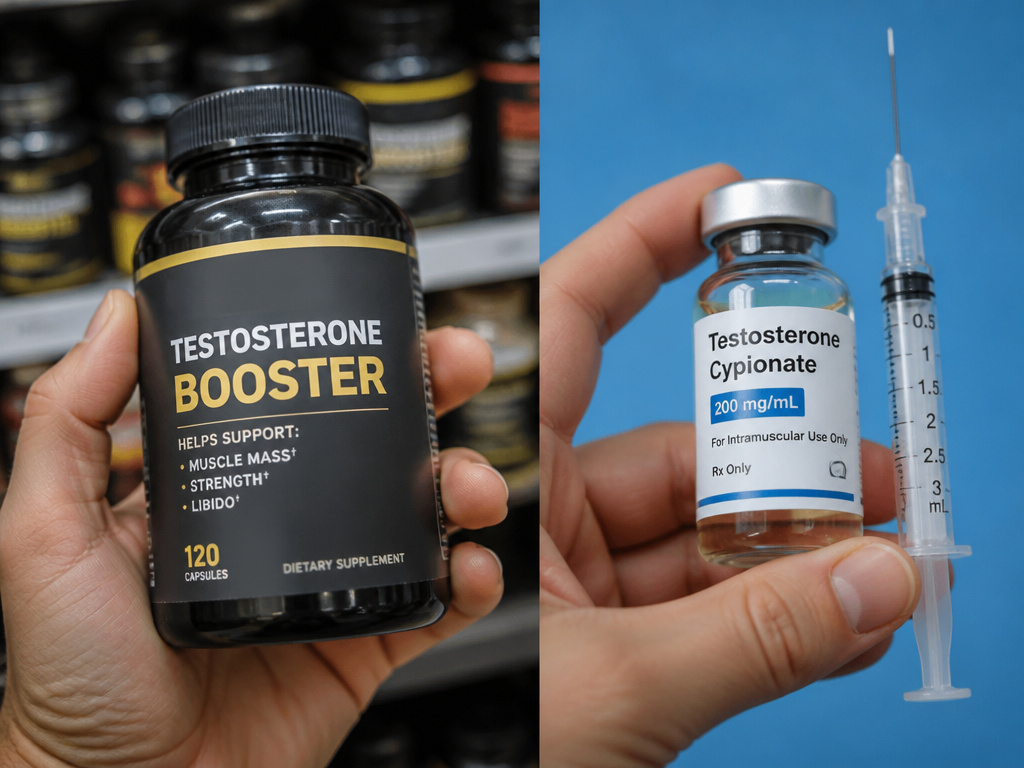
This is the most important distinction a young man needs to understand: the supplement aisle and the doctor’s office are worlds apart.
Over-the-Counter Boosters are dietary supplements. They contain vitamins, minerals, herbs, and amino acids (like D-Aspartic Acid, Fenugreek, Zinc). Their claims are not evaluated by the FDA. They cannot legally contain prescription testosterone. Their goal is often vague “support.”
Prescription Testosterone Therapy (TRT) is a controlled medication. It is bio-identical testosterone (in gels, injections, or pellets) prescribed by a doctor after a confirmed diagnosis of hypogonadism. Its goal, per the American Urological Association guideline, is to “drive levels to the normal physiologic range of 450-600 ng/dL.” It is monitored with regular blood tests.
I used to think a “testosterone booster” label meant the product was proven. Once I started checking the cited research myself, I found it often referenced a single ingredient at a completely different dose. The disconnect between marketing and science turned me into a default skeptic.
The difference between testosterone boosters and therapy is not just about potency; it’s about intent, oversight, and safety, as explored in this comparison of boosters vs. TRT. TRT is a treatment for a diagnosed medical condition. A booster is a consumer product for a perceived need. For a young man with legitimate, symptomatic low testosterone confirmed by bloodwork, the conversation should be about whether testosterone replacement therapy is appropriate, not which supplement to buy, as discussed in this guide to TRT for young men. That decision is complex, especially given an American College of Physicians evidence report that found the evidence base for testosterone therapy’s benefits and risks is weak for men aged 18-50, as most large trials enrolled older men.
When Should a Man in His 20s Actually Get Tested?
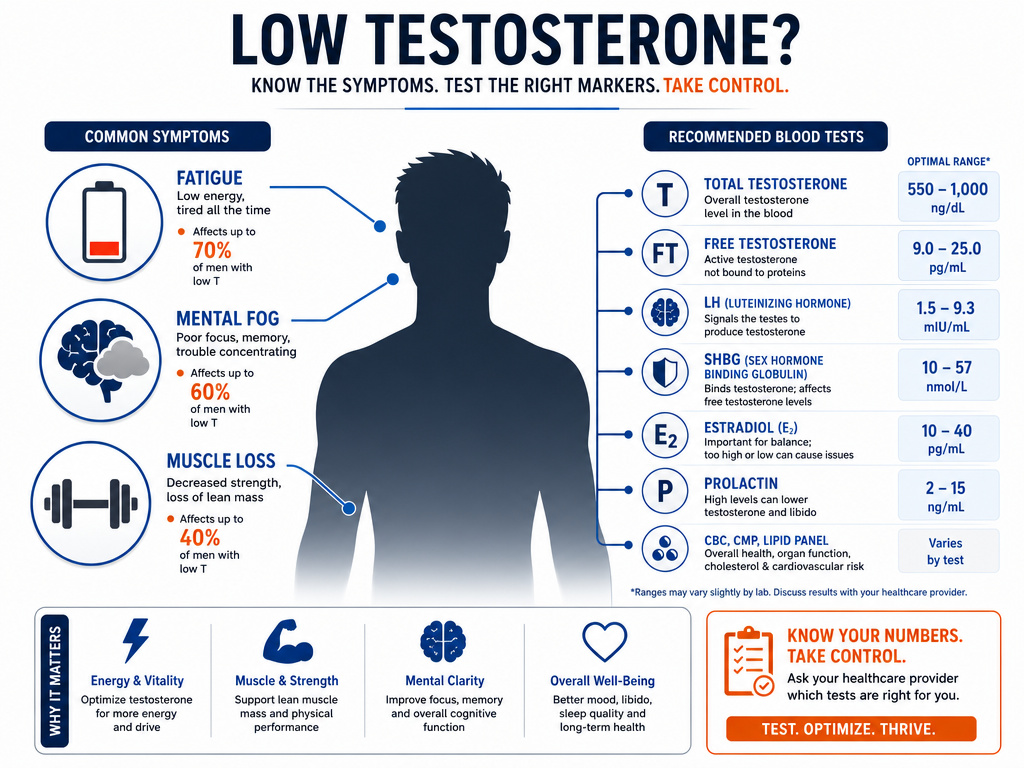
So when does fatigue or low drive cross the line from “life is busy” to “get a blood test”? It’s not about a single bad week. Look for a persistent cluster of symptoms that impact your quality of life over several months.
Consider testing if you have several of these, consistently:
- Persistently low libido or erectile dysfunction.
- Pronounced, unexplained fatigue that doesn’t improve with sleep.
- Loss of muscle mass and strength despite consistent training.
- Difficulty concentrating, memory fog, or depressed mood.
- Increased body fat, particularly around the abdomen.
The process should start with a visit to a doctor, a primary care physician, urologist, or endocrinologist. Discuss your symptoms openly. A work-up for low testosterone symptoms in your 20s involves more than just a total testosterone test, as outlined in this symptom guide. A good initial panel should include:
- Total Testosterone (morning draw, 7-10 AM)
- Free Testosterone
- LH (Luteinizing Hormone) and FSH (Follicle-Stimulating Hormone) (to pinpoint the cause)
- SHBG (Sex Hormone Binding Globulin)
- Prolactin
- TSH (Thyroid Stimulating Hormone)
- Vitamin D and a basic metabolic panel
This detailed look helps rule out other issues. A thyroid problem or a prolactinoma can mimic low-T symptoms. A high SHBG can make your total testosterone look okay while your free (active) testosterone is in the tank. This is why guessing is a waste. The PMC article on low testosterone in adolescents underscores that true hypogonadism in young men often has an underlying, treatable cause that needs to be identified.
Safer, More Effective Alternatives
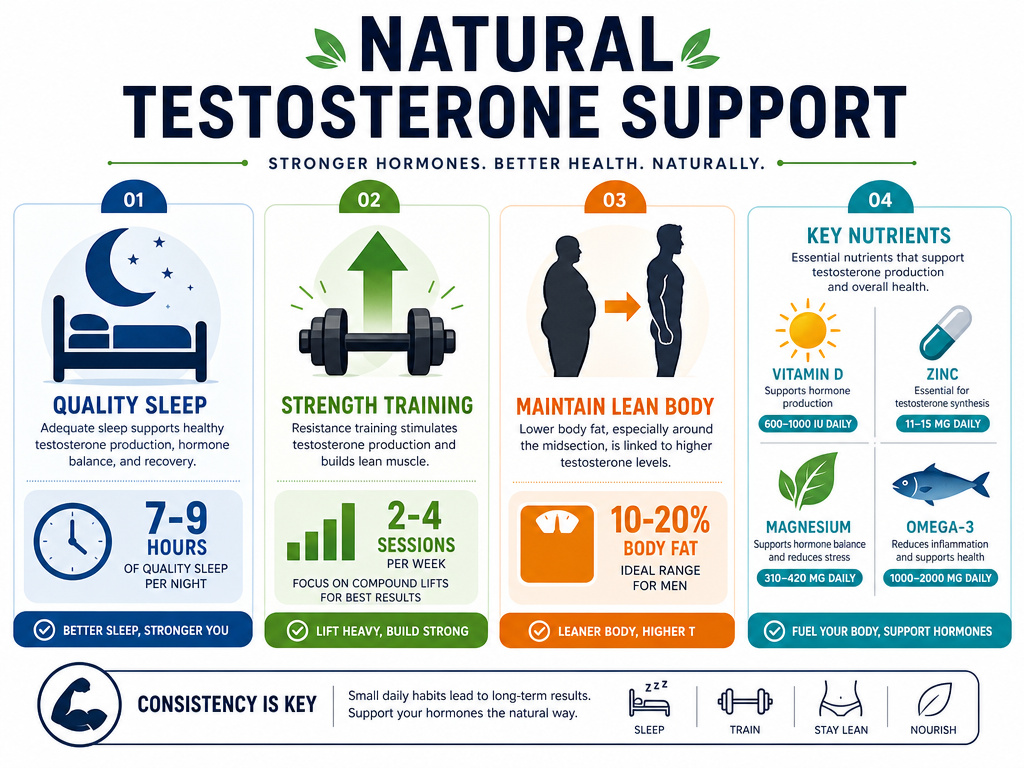
For the vast majority of men in their 20s wondering about boosters, the most powerful interventions don’t come in a bottle. They are levers of lifestyle you control directly. These methods support your body’s innate ability to produce hormones optimally, with zero risk of contamination or suppression.
- Prioritize Sleep (7-9 hours): This is essential. Sleep deprivation is a direct assault on testosterone. Sleep deprivation is a direct assault on testosterone, with studies showing it can significantly lower levels. Your body does its major hormonal repair and production during deep sleep.
- Strength Train, Don’t Just Cardio: Regular resistance training (3-4 times per week) with compound lifts like squats, deadlifts, and presses is a proven stimulus for testosterone production. The key is progressive overload, getting consistently stronger, not spending hours on the treadmill.
- Manage Your Body Weight: Excess body fat, especially visceral fat, increases the conversion of testosterone to estrogen via the aromatase enzyme. Losing fat is one of the most effective ways to raise free testosterone levels. It’s a mechanical fix with cascading benefits.
- Address Nutritional Deficiencies: This is where targeted supplements can play a legitimate, foundational role, not as “boosters,” but as corrections. The best supplements for men in their 20s are often the simple ones:
- Vitamin D: Extremely common deficiency; direct correlation with testosterone levels.
- Zinc: Crucial for testosterone synthesis; often depleted in active men.
- Magnesium: Involved in hundreds of enzymatic processes, supports sleep and recovery.
- Omega-3s: Reduce systemic inflammation, which can interfere with hormone production.
Focusing on these natural ways to raise testosterone for 3-6 months will do more for your energy, body composition, and overall health than any booster on the market, as detailed in this guide to natural methods. It’s the boring, consistent work that actually pays off.
Do testosterone boosters increase prostate cancer risk?
There is no direct evidence from the fact sheet linking over-the-counter testosterone boosters to an increased risk of prostate cancer. However, medical guidelines highlight that these products have minimal to no evidence for their efficacy and have been associated with severe adverse events from banned or illicit substances. The focus for men concerned about prostate health should be on proven medical advice rather than unregulated supplements. If you suspect you have low testosterone, a doctor can assess your levels against age-specific ranges and discuss safe, monitored options if treatment is warranted, which aims to restore levels to a normal physiologic range.
Frequently Asked Questions
Is 25 too early for TRT?
It can be, but it’s not about age, it’s about diagnosis. If a 25-year-old has classic symptoms and blood tests confirm hypogonadism (with low testosterone and elevated LH/FSH pointing to a primary testicular issue, for example), then TRT could be a medical necessity. However, doctors are rightly cautious because the long-term data on TRT in young men is sparse, and fertility preservation is a major concern. The conversation should involve a specialist.
Does not ejaculating for 7 days increase testosterone?
The short-term data on this is mixed and mostly shows insignificant changes. Some very small studies suggest a slight, transient rise around day 7, but it’s not a sustainable or meaningful strategy for boosting levels. It won’t counteract the effects of poor sleep, a bad diet, or a genuine hormonal disorder. Don’t rely on it.
How can I tell if I need testosterone?
You can’t, definitively, without a blood test. Symptoms are a guide, not a diagnosis. Persistent low energy, lost libido, and unexplained changes in body composition are signals to talk to a doctor. They are also signals of sleep apnea, depression, or thyroid issues. The only way to know is through the lab work outlined earlier.
What is the biggest downside to testosterone boosters?
For a young man, the two biggest are potential fertility damage and the risk of undisclosed ingredients. Shutting down your natural sperm production is a serious, sometimes long-term consequence. Also, because the industry is poorly regulated, you cannot be certain what you’re ingesting, risking exposure to steroids or other drugs that can cause health complications.
Before You Go
The question isn’t really “should men in their 20s take testosterone boosters?” The science and the guidelines answer that with a clear “no.” The real question is: “What’s actually causing my symptoms, and what’s the safest, most effective way to address it?”
The path forward is straightforward, but it requires patience. Start with the lab work. Let the numbers and a doctor’s interpretation guide you, not marketing or gym gossip. If your levels are truly low for your age, you’re now in a medical conversation about root causes and potential testosterone therapy for men under 30, not a consumer conversation about supplements.
If your levels are normal, the prescription is lifestyle. Invest your time, money, and effort into perfecting your sleep, nutrition, and training. That’s the protocol with a 100% safety profile and the strongest evidence base. Everything else is just noise, and often, a risky distraction.
