
Testosterone Booster Side Effects: FDA Warnings and Risks
This post contains affiliate links. As an Amazon Associate, we earn from qualifying purchases.
Testosterone booster side effects range from common issues like acne and mood swings to serious risks including increased blood pressure, polycythemia (elevated red blood cell count), and potential infertility. The most critical update is a 2025 FDA-mandated class-wide warning: all prescription testosterone products can raise blood pressure, a finding confirmed by postmarket studies. Over-the-counter supplements carry additional risks of liver strain and unverified ingredients, with no long-term safety data.
That blood pressure warning is not a guess. It came from mandatory ambulatory blood pressure monitoring (ABPM) studies the FDA required after two specific products showed a consistent signal. The agency’s action reframes the entire conversation from vague “cardiovascular risk” to a measurable, monitorable side effect with a clear timeline for when doctors should check.
What follows is a breakdown of every major side effect, separated into the proven risks of prescription therapy and the murkier, often unregulated dangers of over-the-counter boosters. You will see the specific numbers from the latest trials, understand who is most at risk, and learn the practical steps for monitoring if you or your doctor are considering any form of testosterone support.
Key Takeaways
- The FDA now mandates a blood pressure warning on all prescription testosterone products, based on 2025 data showing a class-wide increase.
- Clinical guidelines state therapy should be delayed in patients with a baseline hematocrit above 50%, and treatment should be interrupted if levels exceed 54%.
- 10% of men may not recover sperm counts for two years after stopping testosterone, making fertility a serious long-term consideration.
- No testosterone product is FDA-approved for “age-related” low T, and safety in this population is explicitly not established.
- Over-the-counter “boosters” lack standardized safety data; risks include liver toxicity from undisclosed ingredients and hormonal disruption from prohormones.
The 2025 FDA Labeling Change: What It Means
On February 28, 2025, the FDA issued class-wide labeling changes for every prescription testosterone product on the market. This was not a routine update. It was the culmination of a decade-long safety review, triggered by advisory committee meetings back in 2014 over reports of heart attacks and strokes.
The action was driven by two data sets: the massive TRAVERSE cardiovascular outcomes trial and a series of postmarket ambulatory blood pressure monitoring (ABPM) studies. The TRAVERSE trial’s conclusion was significant, it found no increase in the risk of major adverse cardiovascular events like heart attack or stroke in men with diagnosed hypogonadism using testosterone gel versus placebo. Because of this, the FDA ordered the removal of the old cardiovascular risk language from the “black box” warning section of labels.
But the ABPM studies told a different, more nuanced story. These studies, required for specific products like an oral formulation and a subcutaneous injection, consistently showed that testosterone use elevates blood pressure. This finding from the ABPM studies led the FDA to extend the new warning to the entire class of testosterone products.
This 2025 FDA action represents a pivotal shift. The broad, scary “cardiovascular risk” warning is gone, replaced by a specific, monitorable directive: testosterone can increase blood pressure, which increases cardiovascular risk over time. It turns a vague concern into a manageable clinical parameter.
The practical effect is clear in the updated label for Depo-Testosterone, which now states: “Monitor blood pressure periodically in men using testosterone products, especially in men with hypertension. Testosterone products are not recommended for use in patients with uncontrolled hypertension.” This monitoring step is required for anyone on prescribed therapy.
Prescription Testosterone Therapy: Documented Side Effects
When you have a legitimate, diagnosed medical condition causing low testosterone, replacement therapy (TRT) is a controlled medical treatment. Its side effects are well-documented in clinical literature and drug labels. They are not theoretical; they are predictable outcomes of altering a fundamental hormone, and they require active management.
Cardiovascular and Blood Pressure Risks
The cardiovascular picture is where sources present a clear disagreement that you must understand. The FDA’s 2025 position, citing the TRAVERSE trial, is that there was no increase in the risk of adverse cardiovascular outcomes in men using testosterone for hypogonadism. However, the Depo-Testosterone label itself cautions that “long term clinical safety trials have not been conducted to assess the cardiovascular outcomes of testosterone replacement therapy.” A 2021 perspective article also cites a potential risk of major adverse cardiac events for age-related hypogonadism.
The resolved middle ground is the blood pressure effect. The label for the topical gel Vogelxo provides the hard numbers: in the TRAVERSE trial, the gel group saw a mean increase in systolic blood pressure of 1.0 mm Hg over 36 months, compared to a 0.5 mm Hg decrease in the placebo group, a 1.5 mm Hg between-group difference. While that number seems small, the FDA’s stance is that any sustained increase contributes to long-term cardiovascular risk. This is why periodic monitoring is now a mandated part of therapy.
Hematologic: Polycythemia (Elevated Red Blood Cell Count)
This is one of the most common and potentially dangerous side effects. Testosterone stimulates the bone marrow to produce more red blood cells. If the hematocrit (the percentage of blood made up of red cells) climbs too high, the blood thickens, increasing the risk of clots, stroke, and heart attack.
Clinical guidelines are explicit. According to a review in PMC, therapy should be delayed in patients with a baseline hematocrit above 50%, and treatment should be interrupted if levels exceed 54%. This is not a minor lab fluctuation. It is a direct, dose-related effect that requires regular blood tests to catch before it becomes a problem.
Endocrine and Reproductive Effects
Testosterone therapy shuts down the body’s own production. The brain’s pituitary gland senses the external testosterone and stops signaling the testes to make their own. This leads to two major issues:
- Testicular Atrophy: The testes, no longer stimulated, shrink. This is often reversible upon stopping therapy, but not always.
- Infertility: Sperm production plummets. A stark statistic from the clinical literature notes that 10% of men failed to recover sperm in their ejaculate until two years after stopping therapy. For men wishing to preserve fertility, this is a critical discussion to have before starting TRT. Options like concurrent HCG therapy may be considered, but they add complexity.
Other hormonal side effects include gynecomastia (breast tissue growth), which the Depo-Testosterone label says “may develop and occasionally persists,” and exacerbation of male-pattern baldness and acne.
Other Organ System Concerns
- Prostate: While testosterone does not cause prostate cancer, it can fuel its growth. Therapy is contraindicated in men with active or suspected prostate cancer. PSA levels are monitored closely.
- Sleep Apnea: Testosterone can worsen obstructive sleep apnea or unmask an undiagnosed condition. New-onset snoring or daytime fatigue warrants a sleep study.
- Edema: Fluid retention can be a serious complication for men with pre-existing heart, kidney, or liver disease.
- Liver: Oral 17-alpha-alkylated androgens (like methyltestosterone, rarely used now) carry a risk of hepatotoxicity. Modern injectable and transdermal forms do not share this high risk.
Over-the-Counter “Testosterone Boosters”: The Unregulated Wild West
This is where the conversation splits. Prescription TRT is a regulated drug. A “testosterone booster” supplement is a dietary product, governed by far looser rules. The side effect profile here is less documented, often inferred, and complicated by poor quality control.
Where this goes sideways: Assuming a supplement’s “proprietary blend” contains the same purified, studied ingredient shown in a positive trial. The 2022 review in Sage Journals concluded that the highly purified extracts used in research are not the same as commercially available blends of unknown potency and purity.
The first risk is simply that they might not work. A PubMed systematic review on testosterone boosters found evidence for only a few specific extracts, like Tesnor™ and PrimaVie™, in narrow contexts. The vast majority of products on the shelf have no clinical trials backing their specific formulation.
The safety risks, however, are very real:
- Liver Damage: Herbal ingredients like high-dose kava, comfrey, or green tea extract, plus undisclosed prohormones, can be hepatotoxic. Unlike prescription drugs, these aren’t routinely screened for in pre-market safety studies.
- Hormonal Disruption: Some supplements contain actual steroid prohormones (like androstenedione), which convert to active hormones in the body and carry all the risks of anabolic steroids, including shutting down natural testosterone production. This is why understanding the distinction between prohormones and natural ingredients is critical.
- Drug Interactions: Ingredients like tribulus terrestris or fenugreek can interact with diabetes, blood pressure, or blood-thinning medications.
- Quality Control Issues: Contamination with heavy metals, pesticides, or even prescription drugs like sildenafil (Viagra) is a documented problem in the supplement industry.
My own notebook has an entry on this. I once took a popular “T-booster” that listed D-aspartic acid as its star ingredient. I followed the dose for three months, tracking my energy and libido. Nothing changed. Later, I dug into the research and found the early, promising human study hadn’t been replicated in trained men; some later trials even showed a testosterone dip. I learned that a supplement label is a marketing document first. Checking for research on ingredients and transparent dosing is the only defense.
Who Is Most at Risk? Age, Health Status, and Pre-Existing Conditions
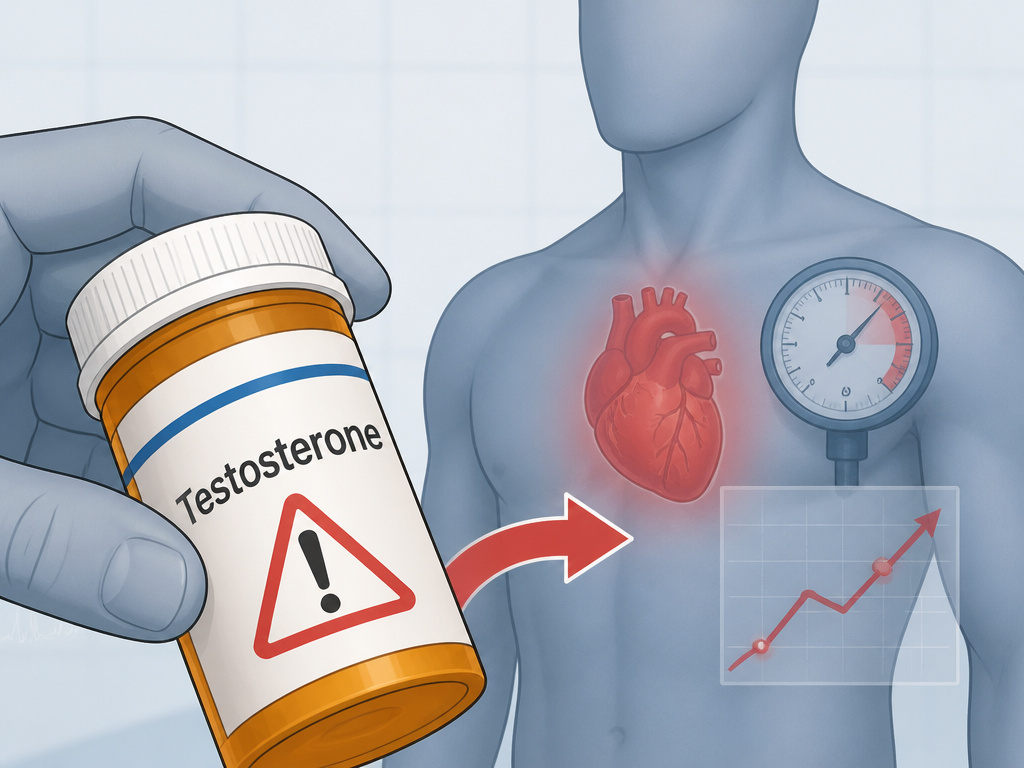
Side effects are not distributed evenly. Your age and baseline health dramatically alter your risk profile, a fact highlighted by past clinical trials.
The most famous cautionary tale is the Testosterone in Older Men (TOM) trial, which was terminated early in 2010 because the testosterone gel group experienced a significantly higher rate of cardiovascular events. This wasn’t in healthy older men. The trial specifically enrolled community-dwelling men aged 65+ with limitations in mobility and a high prevalence of chronic disease like hypertension, diabetes, and obesity. For this frail, multi-morbid population, the risks clearly outweighed the benefits.
This is directly relevant to the most common question: what about low T due to aging? The FDA testosterone product labeling changes explicitly retain “Limitation of Use” language for age-related hypogonadism. The Vogelxo label states plainly: “It is not known if Vogelxo is safe or effective to treat men who have low testosterone due to aging.” A PMC article on therapy side effects reinforces that no testosterone product is FDA-approved for “age-related hypogonadism.”
| High-Risk Group | Primary Concerns | Essential Precautions |
|---|---|---|
| Men Over 65 with Chronic Disease | Major adverse cardiac events, stroke, fluid overload. | TRT generally not recommended without compelling reason and cardiology clearance. |
| Men with Uncontrolled Hypertension | Exacerbation of high blood pressure, increased CV risk. | Blood pressure must be controlled prior to and during therapy. TRT not recommended if uncontrolled. |
| Men with Elevated Hematocrit (>50%) | Risk of polycythemia, blood clots. | Delay therapy until level is managed; monitor every 3 months. |
| Men Wishing to Preserve Fertility | Suppression of sperm production, potential long-term infertility. | Discuss options like HCG co-therapy or sperm banking before starting. |
| Men with Sleep Apnea | Worsening of airway obstruction, hypoxia. | A sleep study may be warranted; use caution and monitor symptoms. |
For younger, otherwise healthy men with classical hypogonadism (due to pituitary or testicular damage), the risk-benefit calculus is different. The side effects are still possible but are more manageable through vigilant monitoring. This is why a blanket statement about “testosterone side effects” is useless. Context is everything.
Managing and Mitigating Side Effects

Side effects are not a reason to universally avoid therapy; they are a reason to manage it correctly. Responsible treatment is built on a foundation of monitoring and specific action plans.
The protocol is straightforward but non-negotiable:
- Baseline Labs Before Anything: A full hormone panel (total T, free T, LH, FSH), lipid panel, CBC (for hematocrit), PSA (for men over 40 or with family history), and metabolic panel. This establishes your starting point.
- The 3-6 Month Check-In: After initiating therapy, labs are repeated at 3 and 6 months to see how your body is responding. This is when you catch a rising hematocrit or PSA early.
- The Annual Surveillance: Once stable, annual labs are the standard to ensure long-term safety.
What does management look like for specific issues?
- High Hematocrit (>54%): The first step is often to reduce the testosterone dose. If that doesn’t work, therapeutic phlebotomy (donating blood) may be necessary to lower the red cell count directly.
- Elevated Blood Pressure: This may require starting or adjusting antihypertensive medication. The key is not to ignore it because “it’s just a few points.”
- Acne or Gynecomastia: Topical treatments for acne can help. For persistent gynecomastia, a medication like anastrozole may be used, or surgical removal might be considered.
- Infertility Concerns: If sperm production is a priority, adding HCG injections can keep the testicular signaling active. Planning a cycling protocol for TRT itself is complex and medical, not something to self-prescribe.
The core principle is that testosterone therapy is a partnership with your doctor, distinct from managing testosterone booster side effects on your own. The evidence for testosterone boosters is murky, but the protocol for managing prescription side effects is not. It is defined, measurable, and proactive.
Frequently Asked Questions
What are the first signs that a testosterone booster or therapy is causing problems?
The earliest signs are often subtle and systemic. You might notice new, persistent headaches, which can signal rising blood pressure. Increased redness of the face or feeling unusually flushed are common with polycythemia. A sudden resurgence of acne on your back and shoulders, or unexplained water retention (swelling in ankles), are direct hormonal signals. Mood changes, increased irritability or anxiety, can also be early indicators of a dose that’s too high or fluctuating. Don’t wait for a major event. Report these to your doctor for a lab check.
Is it bad to take testosterone boosters every day?
For prescription TRT, daily application (gels) or a scheduled injection cycle is the protocol. The “bad” part is doing so without the monitoring schedule described above. For over-the-counter supplements, taking them daily is the norm, but the risk is sustained exposure to unvetted ingredients. The longer you take an unregulated blend, the greater the cumulative risk of liver strain or hormonal disruption. There’s no medical oversight to say when or if you should stop. This is why many experts suggest cycling protocols even for supplements, to give your body a break from substances with unknown long-term effects.
What should I avoid while taking testosterone?
Avoid anything that compounds the known risks. Alcohol in excess puts additional strain on the liver, which is already processing the hormone. High-sodium diets can exacerbate fluid retention and blood pressure increases. Be extremely cautious with other supplements that affect hormones or blood thickness, like DHEA, high-dose fish oil (without a doctor’s guidance), or herbal blood thinners like ginkgo. Crucially, avoid the mindset that “more is better.” Do not stack additional “T-booster” supplements on top of prescription therapy; you are just amplifying side effect risks without proven benefit.
Can women experience side effects from testosterone boosters?
Yes, and the effects can be profound and irreversible. Women have much lower natural testosterone levels. Introducing external androgens, even from a supplement marketed for “female vitality,” can cause virilization: deepening of the voice, facial hair growth, clitoral enlargement, and menstrual disruption. These changes can be permanent. Testosterone is also contraindicated in pregnancy and can cause serious harm to a fetus. The risk of secondary exposure is also real; women and children can absorb testosterone from skin contact with a man using a topical gel. The clear advice from the article on female use is that women should not use male-formulated testosterone products unless under strict, specialized medical supervision for a diagnosed condition.
Before You Go
The most important side effect is the one you can prevent with information, whether from prescription therapy or the testosterone booster side effects question. The landscape changed in 2025: the risk is now specifically defined as increased blood pressure, not a vague cardiac scare. That means you can monitor it.
If you are considering any testosterone product, let this be your filter. For prescription therapy, your path is clear: insist on the baseline and follow-up labs. The numbers, hematocrit, PSA, blood pressure, are your objective report card. If your doctor won’t order them, that’s a red flag. For over-the-counter supplements, your skepticism should be default. The lack of long-term safety data is not an oversight; it’s a feature of the regulatory framework.
Start with a blood test, not a bottle. Often, what feels like “low T” is a fixable deficiency in vitamin D, zinc, or magnesium, or a consequence of poor sleep and high stress. Treating those first is safer, cheaper, and frequently more effective than reaching for a hormone-altering product. Let the evidence lead, not the label.
