
Should You Cycle Testosterone Boosters? Key Takeaways
This post contains affiliate links. As an Amazon Associate, we earn from qualifying purchases.
Cycling testosterone boosters means taking them for a set period followed by a break, a practice borrowed from anabolic steroid use. For over-the-counter supplements, there’s no clinical evidence that cycling improves efficacy or safety, and the strategy depends entirely on the ingredient. For prescription testosterone replacement therapy (TRT), a 2011 pilot study found a monthly cycled regimen (one month on, one month off) built similar lean muscle mass as continuous therapy but used half the total dose.
The word “cycling” itself is the first problem. It means three different things depending on who you ask. A bodybuilder’s 12-week steroid blast, a doctor’s structured 1-month on/off TRT trial, and a supplement company’s suggestion to take their pill for 8 weeks then stop are not the same plan.
What follows breaks down the only clinical data that exists on testosterone cycling, explains why most supplement cycling advice is guesswork, and gives you a framework to decide if a break makes sense for your stack.
Key Takeaways
- The only clinical study on testosterone cycling used 100 mg testosterone enanthate weekly for one month, then placebo the next, in older men. It worked for building lean mass but not for cutting fat.
- Most supplement labels provide zero guidance on cycling because they lack the dose-specific, long-term human trials needed to define a safe on/off schedule.
- Developing a tolerance to adaptogens like ashwagandha is a real reason to cycle them, usually signaled by diminished effects after 8-12 weeks of continuous use.
- Over-the-counter “PCT” stacks are not post-cycle therapy; real post-cycle therapy involves prescription drugs like clomiphene to restart natural hormone production.
- Before cycling anything, get a baseline blood test. Guessing based on feelings is expensive and reveals nothing about what’s actually happening.
The 1-Month On/Off Medical Protocol
A 2011 pilot study is the only source we have for a medically defined testosterone cycle. Researchers gave older men weekly injections of 100 mg testosterone enanthate for one month, followed by a month of placebo injections, repeating this pattern for five months. This “monthly cycled” group was compared to men on continuous therapy and those on a placebo.
The 2011 pilot study found the monthly cycled regimen used half the total testosterone dose of the continuous therapy arm. Lean body mass increased in both groups after the first month, but returned to near baseline levels in the cycled group around month 2 before climbing again with the next testosterone cycle.
The cycled protocol built muscle but had a limitation. The decline in fat mass was significant only in the continuous therapy group. Your body seems to need constant exposure to pull energy from fat stores efficiently. The cycled protocol increased muscle protein synthesis similarly to continuous therapy.
This study answers a specific question: can we get a similar anabolic effect with less total drug? For building lean mass, the answer was yes. It does not answer whether this is better, safer, or necessary for someone using over-the-counter supplements. It’s a proof-of-concept that intermittent dosing can work when the substance is potent, standardized, and dosed precisely.
TL;DR: A medical testosterone cycle is a timed, dose-specific protocol. A supplement cycle is usually a guess.
Do Testosterone Boosters Actually Work Well Enough to Cycle?
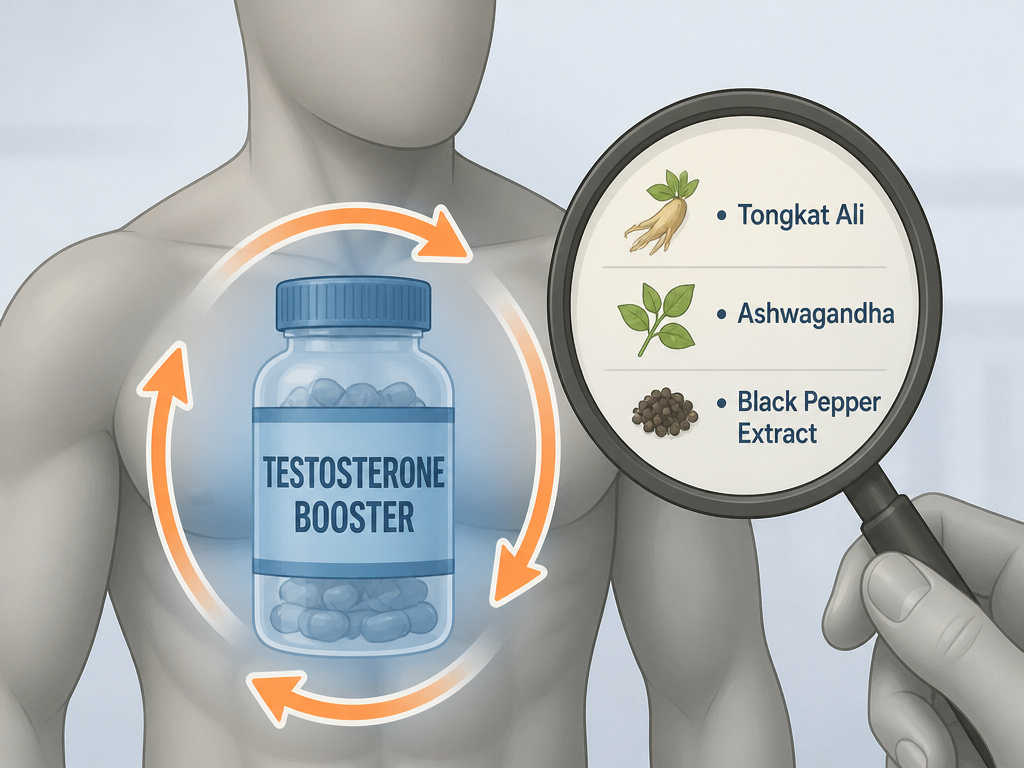
This is the foundational question. If a supplement has a weak or unproven effect, structuring an on/off schedule for it is like planning rest periods for a placebo.
The evidence here is messy. A 2023 PubMed systematic review on testosterone boosters sifted through 52 studies on 27 different natural compounds. It found a handful, like Eurycoma longifolia (Tongkat Ali) and Withania somnifera (ashwagandha), with some positive signals in specific groups, like men with late-onset hypogonadism or healthy men under stress. A 2023 systematic review found a small number of specific natural compounds with possible efficacy in specific populations, while the Canadian Urological Association guideline states reviews have found minimal to no evidence demonstrating their efficacy.
This direct conflict in the literature means you cannot say “they work” or “they don’t” as a blanket rule when you compare a should you cycle testosterone boosters protocol. You have to look at the specific ingredient, the dose used in the study, and the population it was tested on.
| Ingredient | Evidence Level | Note on Cycling |
|---|---|---|
| Tongkat Ali | Moderate for stress-related low T | Potential for hormonal feedback disruption with long-term use; cycling may be prudent. |
| Ashwagandha | Moderate for reducing cortisol, slight T increase in stressed populations | Tolerance can develop; cycling is a common practice for adaptogens like ashwagandha, though the optimal schedule is not defined by clinical research. |
| Fenugreek | Low; often marketed for libido, weak evidence for testosterone. | No known cycling protocol from research. |
| Zinc | High only if you are deficient. | A mineral deficiency; correct it, then maintain, don’t cycle. |
| D-Aspartic Acid | Mixed; short-term spikes possible, no long-term benefit shown. | Cycling often suggested due to quick receptor downregulation. |
The big takeaway is that the effectiveness of most boosters is modest and situational. You cycle a powerful drug to manage side effects and receptor sensitivity. You might cycle a mild adaptogen because your body gets used to it. The should you cycle testosterone boosters reason dictates the schedule.
Why Bodybuilders Cycle (And Why It Doesn’t Apply to Your Booster)
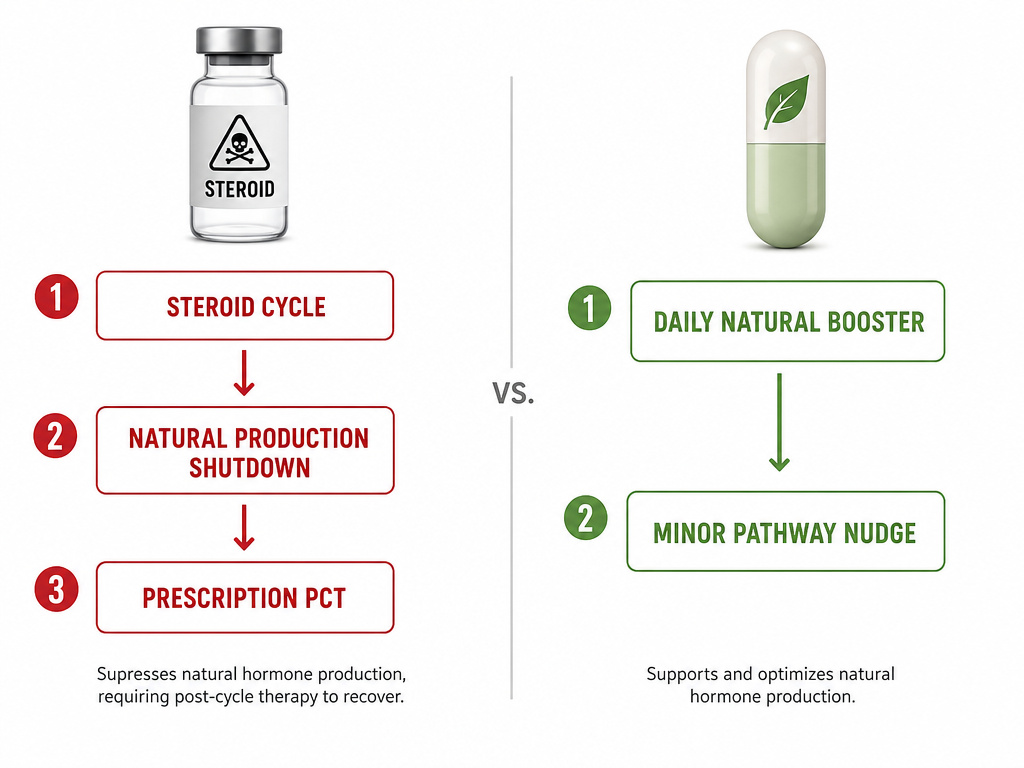
The entire concept of cycling comes from the world of anabolic-androgenic steroid (AAS) use. A bodybuilder runs a “cycle” of supraphysiological doses of anabolic steroids, a practice long employed by athletes to build muscle strength and mass. This shuts down their natural hormone production. They then enter a “Post Cycle Therapy” (PCT) phase using drugs like clomiphene or tamoxifen to restart their pituitary gland.
This is a world apart from taking a daily capsule of ashwagandha.
Where this goes sideways: Assuming an OTC supplement requires the same cycling logic as a potent steroid. The mechanisms, risks, and goals are completely different. Taking a break from Tongkat Ali is not “PCT.”
The prohormones vs natural boosters distinction is critical here. Prohormones are precursors that convert to active hormones in the body and can suppress natural production, they do require a steroid-like cycle and real PCT. A natural booster that might nudge a hormonal pathway does not carry the same risk of shutdown, so the cycling rationale changes from “preventing permanent damage” to “maybe maintaining sensitivity.”
I’ve looked at dozens of PCT supplement labels. Most are just multivitamins with a scary name. They don’t contain the selective estrogen receptor modulators (SERMs) that actually restart the hypothalamic-pituitary-gonadal axis. Real post-cycle therapy supplements in the clinical sense are prescription medications, not bottles of zinc and tribulus.
When You Should Consider Cycling a Supplement
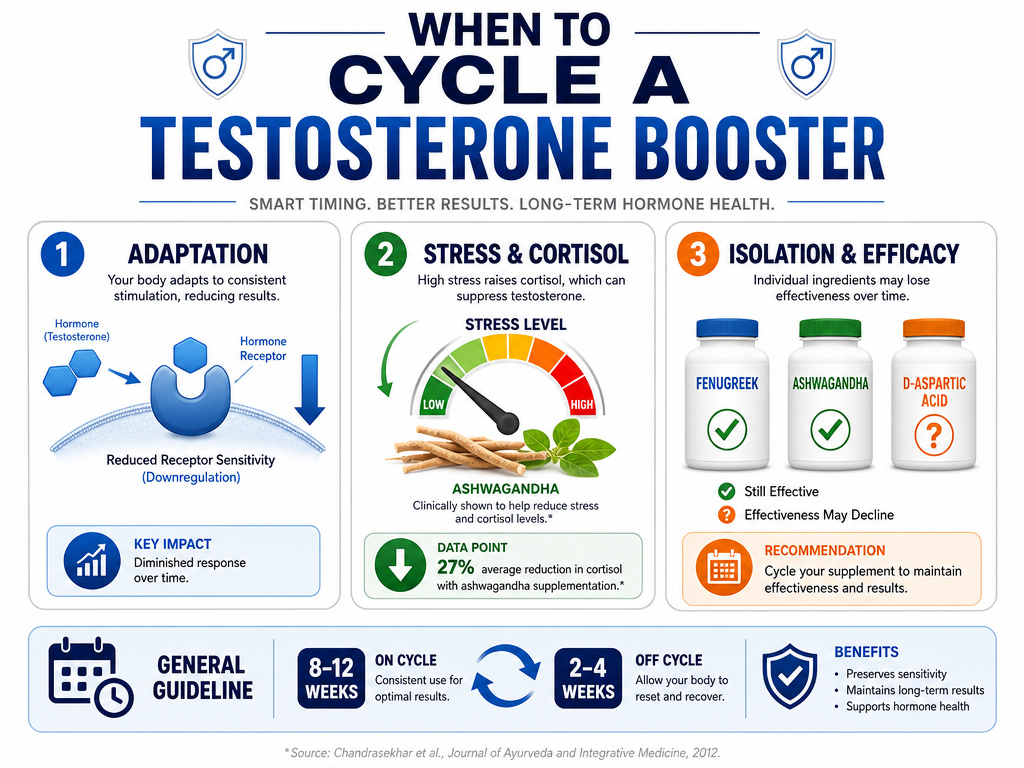
You don’t cycle because a blog told you to. You cycle because you observe a specific problem that a break could solve. Here are the three valid reasons.
1. You Suspect Receptor or Hormonal Feedback Adaptation.
This is most relevant for ingredients that directly interact with hormone receptors, like D-Aspartic Acid. The theory, supported more by anecdote than robust science, is that constant stimulation desensitizes the system. If you notice strong effects in the first few weeks that fade by week 8, a 4-week break might be a logical self-experiment. Track your symptoms, not just the bottle.
2. You’re Taking an Adaptogen and Feel It’s “Stopped Working.”
Adaptogens like ashwagandha help your body manage stress. The feeling of it “stopping” is common. It might be true tolerance, or it might be that your underlying stress load has increased beyond the supplement’s support. Cycling is a standard folk protocol for adaptogens to try and reset responsiveness.
3. To Isolate Effects in a Stack.
This is the most practical reason. If you start three new supplements and feel great, which one is responsible? If you then develop a headache, which one is the culprit? You can’t tell. Cycling one ingredient out at a time, giving each change at least two weeks, is the only way to build a personal map of what actually works for your body. My notebook from years of self-testing is full of arrows and question marks because I changed too many things at once.
The Major Risks of Getting It Wrong
Cycling isn’t a neutral activity. It introduces new risks, primarily around misinformation and misdiagnosis.
The False PCT Trap. This is the biggest one. After a prohormone or even a long stint of a strong natural booster, a man feels fatigued and low-libido, classic low-T symptoms. He buys an over-the-counter “testosterone recovery” stack hoping it will restart his engines. It doesn’t, because his pituitary is suppressed and needs a SERM, not more herbs. He wastes months feeling terrible, thinking he’s doing the right thing, while his natural production remains offline.
Masking an Underlying Condition. Cycling on and off a booster can obscure a real health trend. If your testosterone is slowly declining due to sleep apnea, obesity, or a thyroid issue, the occasional “boost” from a supplement creates noisy data. Your blood tests show wild swings, and the real downward drift is harder for you or your doctor to see. This is why a baseline test before you ever take a single pill is essential.
Wasting Money on Proprietary Blends. This is a personal gripe. If a label doesn’t disclose the dose per ingredient, you cannot research an effective cycle. You have no idea if you’re taking 50 mg or 500 mg of an extract. How can you plan a break from a mystery? This practice should be a deal-breaker. Stick with brands that use transparent labels, so you can at least compare your dose to the ones used in studies.
The side effects of the supplements themselves are often mild, but the risk of misunderstanding your own physiology is high.
How to Design a Smart Cycle (If You Still Want To)
If you’ve weighed the reasons and decided to try cycling, here’s a methodical approach. This isn’t copied from a forum; it’s a framework for generating your own data.
Step 1: Establish a Baseline and a Goal.
Before you take anything, get a blood test. Measure total testosterone, free testosterone, SHBG, and at least TSH and Vitamin D. Know your starting point. Then, define a single goal: better sleep quality, improved gym recovery, higher libido. Write it down.
Step 2: Choose One Supplement with a Transparent Label.
Pick one thing. Not a stack. Find a product that clearly states the dose and extract type of its main active ingredient. Start taking it.
Step 3: Track your symptoms consistently for a set period.
Use a simple notes app. Rate your goal symptom daily on a 1-5 scale. Note sleep, energy, and any side effects. Do not change anything else in your diet, training, or sleep during this period.
Step 4: Take a break from the supplement.
Stop the supplement. Continue tracking every day. Does your symptom score plummet? Does it stay elevated? This tells you if the supplement was having an effect or if your improvement was from something else.
Step 5: Re-evaluate.
After the break, look at your data. If the benefits vanished and returned when you restarted, you have evidence the supplement works for you. You can now consider a maintenance schedule involving cycles. If nothing changed, you saved money and learned that ingredient isn’t your lever.
This process turns cycling from superstition into a personal experiment. It’s slow. It requires patience. But it gives you answers instead of more questions.
What are testosterone boosters and what do they do?
Testosterone boosters are products, often dietary supplements, marketed to increase the body’s production of testosterone. They are distinct from prescription testosterone replacement therapy. The function claimed is to support muscle growth, strength, and libido. While some specific natural compounds have been studied for possible efficacy in certain groups, major medical reviews have found minimal to no definitive evidence that these over-the-counter products reliably impact endogenous testosterone levels in healthy men. Their use, particularly in a cycling pattern, has long been employed by athletes seeking performance benefits, though this practice is not medically supervised for supplements.
Can testosterone boosters cause liver damage?
Liver damage is a potential risk associated with some substances used to boost testosterone, particularly certain synthetic anabolic steroids. However, the risk profile varies greatly between prescription medications, illicit steroids, and over-the-counter supplements. The available clinical data on medically supervised testosterone cycling does not specifically address liver toxicity for the injectable form used. For dietary supplements, the risk depends entirely on the specific ingredients and their purity. Without standardized regulation, some products may contain undisclosed compounds that stress the liver. It is a serious consideration, and anyone concerned should seek professional medical advice before use.
Frequently Asked Questions
Should testosterone boosters be cycled?
There is no universal rule. It depends on the ingredient. Strong adaptogens (ashwagandha) or direct precursors (D-AA) are often cycled to prevent tolerance. Basic nutrients (zinc, vitamin D) should not be cycled if you are deficient. Always base the decision on the ingredient’s mechanism and your own response, not generic advice.
Does not ejaculating for 7 days increase testosterone?
Small 2003 study observed a peak in testosterone levels on the seventh day of abstinence, followed by a decline. This is a short-term fluctuation within the normal range, not a sustainable strategy for raising baseline testosterone levels. It is not relevant to the decision of cycling supplements.
Is there a downside to taking testosterone boosters?
The main downsides are cost and the opportunity cost of not addressing the root cause of low energy. Many men spend hundreds on boosters when their issue is poor sleep, high stress, or low vitamin D. There is also the risk of minor side effects like digestive upset or headaches from fillers and additives.
Is 200mg of testosterone every 2 weeks enough?
This is a question for prescription TRT. The American Urological Association clinical guideline recommends the minimal dose to reach a physiologic range (typically 450-600 ng/dL). 200mg every two weeks is a common starting protocol, but levels can peak and trough dramatically. Most men do better with smaller, more frequent doses (like 100mg weekly) to maintain stable levels.
Before You Go
The most honest answer to “should you cycle testosterone boosters” is that we don’t have enough good data to say. The medical community is still debating if the ingredients even work consistently. So, any cycling protocol is an educated guess.
This puts the responsibility on you. If you choose to experiment, do it like a scientist. One variable at a time. Track everything. Get blood work before and after. The goal isn’t to follow a protocol you read online; it’s to discover the protocol that actually works for your unique biology. That might mean 8 weeks on, 4 weeks off. It might mean taking something daily for a year. It might mean realizing you don’t need the supplement at all.
Start with the single most powerful booster you have access to: a full night’s sleep, managed stress, and a nutrient-dense diet. Get those right, and the question of whether to cycle a bottle of herbs often answers itself.
