
What Are Xenoestrogens? Sources, Risks, and Reduction
This post contains affiliate links. As an Amazon Associate, we earn from qualifying purchases.
Xenoestrogens are synthetic or natural chemical compounds that imitate the body’s natural estrogen, disrupting endocrine function. They are a subset of endocrine-disrupting chemicals (EDCs) and include industrial compounds like BPA and phthalates, pesticides, and natural plant compounds called phytoestrogens. Exposure is linked to reproductive disorders, altered development, and may influence cancer risk, according to research from The Endocrine Society and peer-reviewed studies.
This imitation game happens at a molecular level. These foreign compounds can bind to estrogen receptors, sending false signals that alter everything from cellular growth to the timing of puberty. The disruption often involves subtle, persistent interference rather than overwhelming the system. To understand this, one might ask: what are xenoestrogens? Sources differ on when effects are most pronounced: some research suggests they are most likely to exert tissue-specific actions when estrogen concentrations are low, while other evidence implies significant effects can occur when estrogen levels are high.
What follows is a breakdown of where these chemicals hide, the science behind their effects, including the ongoing debate about low-dose risks, and a practical, tiered approach to reducing your exposure without resorting to alarmism or expensive “detox” products.
Key Takeaways
- Xenoestrogens are endocrine-disrupting chemicals that mimic estrogen, coming from both synthetic sources (plastics, pesticides) and natural sources (soy, flax).
- Health concerns are most significant during critical developmental windows like pregnancy and puberty, with potential links to reproductive disorders and altered cancer risk.
- Reduce exposure practically by swapping plastic food containers for glass, choosing fragrance-free personal care products, and filtering drinking water.
- The dose-response relationship is complex and debated: The Endocrine Society notes EDCs may cause effects at very low levels with non-traditional dose-response curves, while traditional toxicological models often assume a monotonic relationship where higher doses cause greater effects.
- Distinguish between phytoestrogens (plant-based, often weaker) and synthetic xenoestrogens (industrial, often more potent and persistent) when assessing risk.
What Exactly Is a Xenoestrogen?
The term breaks down simply: “xeno” means foreign, “estrogen” is the hormone. So, a xenoestrogen is a foreign substance that acts like estrogen in the body. The Endocrine Society’s scientific statement defines an endocrine disruptor as an agent that interferes with the synthesis, secretion, transport, binding, action, or elimination of natural hormones. Xenoestrogens are a prime example.
They work primarily by molecular mimicry. Their shape is close enough to that of natural estradiol (the primary human estrogen) that they can bind to estrogen receptors. This can trigger a response in the cell, block the natural hormone from binding, or alter how the receptor functions. It’s a case of mistaken identity with biological consequences.
Common mistake: Assuming all estrogen-like effects are harmful. The body’s own estrogen is essential. The problem arises when external chemicals hijack the signaling system at the wrong time or in the wrong tissue.
The Wikipedia entry on xenoestrogens notes these compounds have been introduced into the environment on a large scale only in the last 70 years, a blink of an eye in evolutionary terms. Our biology hasn’t adapted to filter them out.
The Two Main Types of Xenoestrogens
Not all xenoestrogens come from a factory. They fall into two broad categories: synthetic and natural. This distinction matters because their potency, persistence in the body, and the context of exposure differ dramatically.
Synthetic xenoestrogens are human-made. They are the focus of most public health concern because they are often persistent, bioaccumulative, and have no biological role. Key classes include:
- Industrial Chemicals: Bisphenol A (BPA), phthalates, and polychlorinated biphenyls (PCBs).
- Pharmaceuticals: Diethylstilbestrol (DES), a synthetic estrogen prescribed until 1971.
- Pesticides & Herbicides: DDT (and its metabolite DDE), atrazine, and vinclozolin.
Natural xenoestrogens are produced by plants or fungi.
- Phytoestrogens: Compounds like genistein and daidzein in soybeans, or lignans in flaxseeds. They are often called “dietary estrogens.”
- Mycoestrogens: Estrogenic substances produced by fungi, such as zearalenone, which are also considered mycotoxins.
The overview of xenoestrogen identification and action states that even weakly active compounds can interfere with hormonal balance through persistence or high concentration. This is crucial: a low-potency chemical you’re exposed to daily can be as disruptive as a high-potency one you encounter once.
How Xenoestrogens Disrupt Your Hormones (The Why-Layer)
Understanding the mechanism removes the mystery. It’s not magic; it’s molecular interference. The PMC article on dioxins and nanoparticles explains that a xenoestrogen is a compound that binds to nuclear estrogen receptors (ERα or ERβ) or membrane-bound receptors.
When a xenoestrogen binds, it can:
- Mimic Estrogen: Activate the receptor, telling the cell to grow, divide, or produce proteins as if natural estrogen were present.
- Block Estrogen: Occupy the receptor without activating it, preventing your natural estrogen from doing its job (an antagonist effect).
- Alter Hormone Metabolism: Interfere with the enzymes that create or break down hormones in your body.
Where this goes sideways: The timing of exposure. A dose that has little effect on an adult can permanently alter the development of a fetus or a child undergoing puberty. The endocrine system is a blueprint-reader during these windows; giving it the wrong chemical instruction changes the final structure.
One documented example from the research: DES inhibited estrogen production by ovarian cells in vitro, and natural estrogens were shown to inhibit the ability of FSH to induce aromatase activity by 70%. This shows how these compounds can directly sabotage the hormone-making machinery itself.
Common Sources and Routes of Exposure
You don’t have to work in a chemical plant to be exposed. The general xenoestrogen overview page points to plastics, packaged food, drink trays, and containers, especially when heated. Exposure is ubiquitous but manageable once you know where to look.
| Exposure Route | Common Sources | Specific Xenoestrogens |
|---|---|---|
| Diet | Canned foods, plastic-wrapped produce, non-organic meats/dairy, soy-based foods. | BPA (can linings), phthalates (plasticizers), pesticide residues, phytoestrogens. |
| Personal Care | Fragrances, lotions, shampoos, cosmetics, nail polish. | Phthalates (often hidden under “fragrance”), parabens (preservatives). |
| Home Environment | Vinyl flooring, shower curtains, dust, air fresheners, cleaning products. | Phthalates (softening PVC), synthetic musks in fragrances. |
| Water | Municipal tap water, water from plastic bottles. | Pesticide runoff, industrial waste, BPA and phthalates leaching from plastics. |
The goal isn’t to live in a bubble, but to answer the what are xenoestrogens sources question and identify your highest-exposure categories. For most people, diet and personal care are the easiest places to start making changes that count. If you’re concerned about phthalates in plastics or BPA‘s hormonal effects, those are two of the most studied and actionable synthetic sources to tackle first.
The Dose-Response Debate: Why “A Little” Might Not Be Safe

This is where the science gets contentious, and it’s a gap many simpler guides gloss over. Traditional toxicology operates on a principle: the dose makes the poison. Higher exposure equals greater risk. For many endocrine-disrupting chemicals, this model may be wrong.
The Nature Reviews Endocrinology consensus statement on the key characteristics of endocrine disruptors helps frame the hazard. Some research, including perspectives associated with The Endocrine Society, suggests that EDCs can cause effects at very low levels of exposure and may exhibit non-monotonic dose-response curves.
| Dose-Response Model | How It Works | Implications for Xenoestrogens |
|---|---|---|
| Traditional (Monotonic) | Effect increases steadily with dose. | Regulators set a “safe” threshold dose below which no effect is expected. |
| Non-Monotonic (e.g., Inverted-U) | Greatest effect at low or moderate doses, with effect diminishing at high doses. | A very low dose could be more disruptive than a higher one, making “safe thresholds” unreliable. |
Why might this happen? Hormone systems are designed to respond to extremely low concentrations, think parts per trillion. A small, persistent trickle of a xenoestrogen might perfectly mimic a natural signaling event, while a flood of the chemical overwhelms and shuts down the system. This debate, central to the what are xenoestrogens risk assessment, is why the precautionary principle guides much of the advice on avoiding endocrine disruptors, if we can’t define a truly safe level, reducing exposure across the board is the prudent path.
Health Implications: What Does the Research Suggest?

The links between xenoestrogens and health disorders are observed in wildlife, animal models, and human epidemiological studies. Causation in humans is complex to prove, but the associations are strong enough to warrant serious attention. The PubMed abstract on xenoestrogen action focuses on their mechanisms, which underlie these potential health effects.
Reproductive & Developmental Effects:
- Historical Lesson: Between 1940 and 1971, an estimated 2 to 4.8 million individuals were exposed in utero to DES. The consequence? Prenatal exposure was linked to clear cell adenocarcinoma of the cervix and reproductive tract disorders in offspring. It’s a tragic, unequivocal example of a potent synthetic xenoestrogen causing harm.
- Modern Concerns: Research cited by The Endocrine Society suggests correlations between EDC exposure and trends like declining sperm counts, increased testicular cancer, and malformations of the male genital tract.
- Altered Development: Exposure during critical windows (fetal, neonatal, pubertal) can alter the development of hormone-sensitive tissues. Animal studies show that exposure in utero to the xenoestrogen BPA increases breast cancer risk.
Cancer Risk:
A hypothesis, as stated in the Endocrine Society statement, is that the rise in breast cancer incidence over the last 50 years may be partly due to widespread exposure to estrogen-mimicking chemicals. The theory is that constant low-level exposure adds to a woman’s lifetime estrogen burden, potentially extending periods of breast tissue proliferation and increasing opportunity for cellular errors.
Ecological Impact:
The evidence in wildlife is often more direct. Feminization of male fish, skewed sex ratios in aquatic populations, and fertility declines in birds and mammals have been documented in contaminated environments. These are canaries in the coal mine.
The part nobody mentions: The additive or synergistic effect. You’re never exposed to just one endocrine-disrupting chemical. The real-world risk likely comes from the combined, cumulative load of BPA, phthalates, parabens, pesticides, and others, a cocktail almost never tested for safety.
A Practical, Tiered Approach to Reducing Exposure
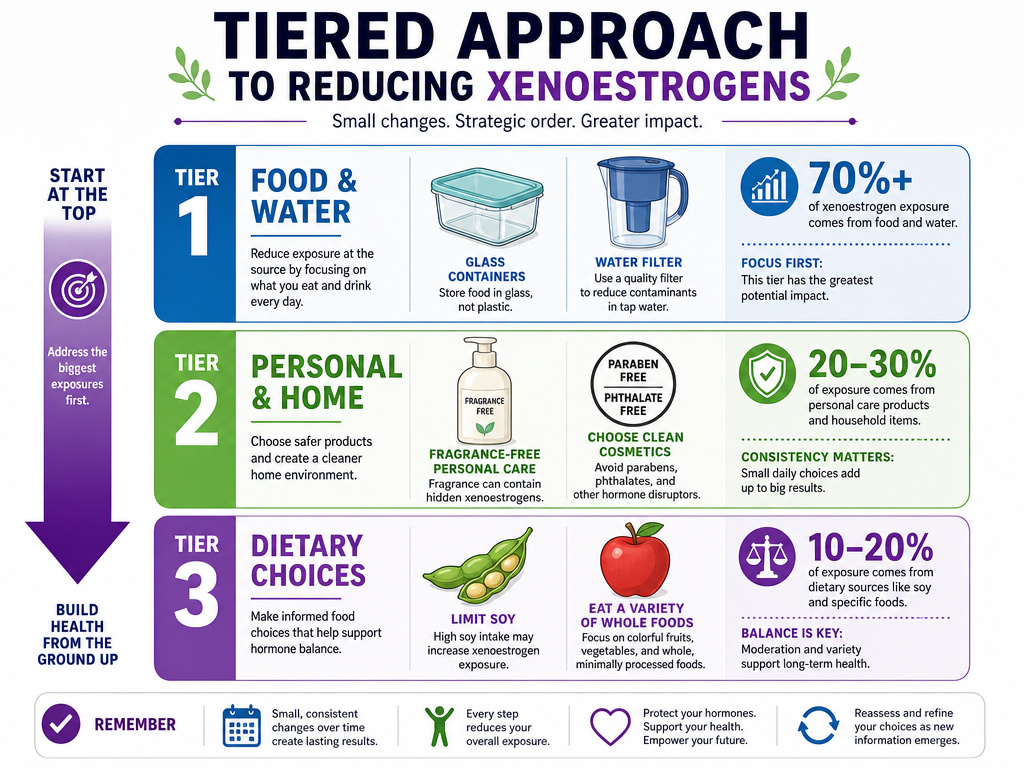
You can’t eliminate exposure, but you can significantly reduce your body’s burden. Think of this as a hierarchy of controls: start with the big, easy wins before worrying about the minutiae. This is where practical ways to avoid EDCs become real.
Tier 1: The Food & Water Foundation (Highest Impact)
- Ditch Plastic for Food Storage. Swap plastic containers, especially for storing fatty foods or reheating, for glass or stainless steel. This cuts direct exposure to BPA and phthalates that leach from plastics.
- Filter Your Water. Use a water filter certified to reduce common contaminants, which may include some endocrine-disrupting chemicals. This addresses pesticide runoff and other contaminants.
- Ventilate and Dust. Microplastics and chemical-laden dust are a major indoor exposure route. Use a damp cloth to dust regularly and run a kitchen vent hood when cooking.
Tier 2: Personal Care & Home Overhaul
- Go Fragrance-Free. “Fragrance” or “parfum” on a label is a trade-secret cocktail that often contains phthalates. Choose unscented lotions, detergents, and soaps. Be wary of products containing synthetic fragrance as a source of potential xenoestrogens.
- Read Cosmetics Labels. Avoid products with “parabens” (methylparaben, propylparaben) in the ingredient list. Databases that screen cosmetic ingredients can be a useful tool here.
- Question “Natural” Scents. Some essential oils like lavender and tea tree oil have demonstrated estrogenic activity. Use them sparingly, if at all, especially on children.
Tier 3: Informed Dietary Choices
- Don’t Fear Soy, Be Mindful of It. The phytoestrogens in whole, fermented soy foods (tempeh, miso) are generally considered to have a much weaker, sometimes even protective effect compared to synthetic xenoestrogens. The risk from processed soy isolates in protein bars is less clear. Context matters.
- Wash Produce and Consider Organic. For produce known to have higher pesticide residues, buying organic can reduce your load of pesticides, some of which may have endocrine-disrupting properties. For thick-skinned produce, use thorough washing as a compromise.
Start with one change from Tier 1. Get used to it. Then add another. This “change one thing at a time” approach is sustainable and helps you notice what works for you without becoming overwhelmed.
Effects on men and male fertility
Xenoestrogens are considered serious environmental hazards with hormone disruptive effects. Exposure to these estrogen-mimicking chemicals has been linked to observed increases in testicular cancer and malformations of the male genital tract over the last half-century. Scientific studies also correlate exposure with declines in human sperm counts and an overall diminution in fertility. In wildlife, similar exposures have led to the feminization and demasculinization of male animals. These compounds interfere with the normal functions of the endocrine system, which is responsible for regulating reproductive health and development.
Impact on specific conditions (e.g., breast cancer, endometriosis, PMS)
Exposure to estrogens throughout a woman’s life, including during fetal development, is a risk factor for breast cancer. The significant increase in breast cancer incidence over the last 50 years may be partly due to exposure to estrogen-mimicking chemicals released into the environment. Epidemiological studies suggest exposure to xenoestrogens like DES during fetal development, DDT around puberty, and mixtures around menopause can increase breast cancer risk. Animal studies show in utero exposure to the xenoestrogen BPA also increases this risk. These substances can mimic natural estrogens and alter cellular functions in hormone-sensitive tissues.
Testing for xenoestrogen exposure or related hormone panels
Recommendations for prevention are difficult because exposure to one chemical rarely reflects a person’s full exposure history or ongoing risks across different life stages. The key to minimizing health issues is preventing disorders in the first place. Since xenoestrogens are ubiquitous in foods and the environment and can persist in the body, focusing on practical exposure reduction is a common approach. This involves identifying and limiting contact with common sources like certain plastics, pesticides, and industrial compounds, rather than relying solely on specific biomarker tests which may not capture the complexity of mixed, low-dose, and cumulative exposures.
Frequently Asked Questions
What are examples of xenoestrogens?
Common synthetic examples include bisphenol A (BPA) found in can linings and receipts, phthalates in flexible plastics and fragrances, and parabens in cosmetics. Natural examples are phytoestrogens like genistein in soy and lignans in flaxseeds.
Are phytoestrogens as bad as synthetic xenoestrogens?
Generally, no. Their effect is typically much weaker, and they are metabolized quickly. In some contexts, like post-menopause, they might even offer mild benefits. The greater concern lies with persistent, bioaccumulative synthetic chemicals like BPA or certain pesticides.
How can I flush out xenoestrogens?
Your liver and kidneys are your natural detox system. Support them by staying hydrated, eating adequate fiber (to help excrete metabolites via bile), consuming cruciferous vegetables (broccoli, kale) which support liver detox pathways, and, most importantly, reducing ongoing exposure. Expensive “detox” supplements are unnecessary if you address the source.
Should I get tested for xenoestrogen exposure?
Specialized tests that measure urinary metabolites of BPA, phthalates, and parabens exist, but they are typically used in clinical research. For most individuals, the money is better spent on implementing practical exposure reduction strategies, like swapping out plastic containers and choosing cleaner personal care products.
The Bottom Line
Xenoestrogens are a fact of modern life and a reason for informed, pragmatic action, not panic. The science is clear on the mechanism of disruption and the potential risks, particularly during sensitive life stages. It is also clear on the ongoing scientific debate about low-dose effects.
Your most powerful move is to focus on your highest-exposure routes. For nearly everyone, that means addressing diet and personal care first. Swap the plastic water bottle and food container for glass. Choose the fragrance-free soap. These are small, low-cost actions that directly reduce your body’s burden of the most well-studied endocrine-disrupting chemicals.
Test this approach. Track how you feel after a month of using glass instead of plastic for lunches. Let the evidence from your own experience lead, not fear. The goal is a significant, sustainable reduction that supports your long-term hormonal health, not perfection.
