
Why Testosterone Makes Skin Oily: The Hormonal Process
This post contains affiliate links. As an Amazon Associate, we earn from qualifying purchases.
Testosterone increases skin oiliness by binding to androgen receptors on sebaceous glands, signaling them to produce more sebum. The hormone is often first converted locally by the enzyme 5α-reductase type I into the more potent 5α-dihydrotestosterone (DHT). However, individual gland sensitivity varies dramatically, some people see a 15-fold increase in oil production with the same hormone exposure, while others see none.
That difference in gland sensitivity is the whole game. It explains why two people on the same testosterone therapy protocol can have wildly different skin experiences, and it’s a key reason why testosterone makes skin oily. The oil isn’t just a side effect of the hormone in your blood; it’s the result of your unique skin cells interpreting that signal.
What follows: the step-by-step pipeline from hormone to shine, the surprising factors that dial the effect up or down, and a practical routine built for hormonal skin, not against it.
Key Takeaways
- The androgen receptor pathway is essential, individuals with androgen insensitivity produce almost no sebum, proving the link.
- Gland sensitivity varies more than hormone levels. In one study, identical testosterone application caused a 15-fold oil increase in some subjects and zero in others.
- Linoleic acid often acts as a required co-activator in the sebum production chain, which is why diet and topical oils matter.
- Growth hormone and IGF-1 provide a major non-androgenic pathway to oily skin, especially relevant during puberty and with certain diets.
- Over-cleansing creates a rebound. Stripping oil signals glands to produce more, starting a cycle that worsens shine and acne.
The Androgen-to-Sebum Pipeline
You don’t just have testosterone in your blood. You have a miniature hormone processing plant in your skin. Sebaceous glands express 5α-reductase type I, an enzyme that converts circulating testosterone into 5α-dihydrotestosterone (DHT), a far more potent androgen. DHT then binds to androgen receptors on the sebocyte, the oil-producing cell.
The local conversion of testosterone to DHT within the pilosebaceous unit amplifies the hormonal signal before it reaches the cell nucleus. This intracrine system means skin oiliness does not always correlate directly with serum testosterone levels.
But this is the central issue. Those sebocytes also express 17β-hydroxysteroid dehydrogenase (17β-HSD2), an enzyme that can inactivate testosterone. Your skin is constantly balancing activation and deactivation. This local metabolism is why broad blood tests often miss the picture for skin-specific issues.
The binding triggers a genetic program that accelerates sebocyte proliferation and ramps up lipid synthesis. The cell fills with sebum, a mix of triglycerides, wax esters, and squalene, until it bursts, releasing the oil onto your skin’s surface. That’s the shine, which is the core answer to why testosterone makes skin oily. That’s also the plugged follicle waiting to become a pimple if the sebum is too thick or the shedding of skin cells around it is too slow.
Bottom line: It’s not just testosterone. It’s your skin’s unique balance of activating and deactivating enzymes that decides the final oil output.
Why Some Glands Go Into Overdrive
If the pipeline were straightforward, everyone with higher testosterone would have oilier skin. They don’t. The documented variability is extreme.
A classic study applied a standardized 2% testosterone cream to the foreheads of prepubertal boys for six weeks and measured their Sebum Excretion Rate (SER). Three subjects showed a 15-fold increase. Three others showed no change at all. Identical external hormone dose, opposite skin outcomes.
This is the concept of end-organ hyper-response. Your sebaceous glands have their own sensitivity setting, largely dictated by genetics. More androgen receptors, more efficient 5α-reductase activity, or fewer inactivating enzymes can make a gland hyper-responsive. This is a core model for why acne develops in some people with normal hormone levels and not others, which is central to the why testosterone makes skin oily puzzle. It’s not your hormones; it’s how your glands hear them.
Where this goes sideways: Assuming oily skin always means high testosterone. It can just mean your glands are overreacting to normal levels. Chasing lower hormones with supplements when the problem is local sensitivity is a misdirected effort.
The most definitive proof of this pathway’s importance comes from the opposite end. Individuals born with androgen receptor gene mutations or complete androgen insensitivity syndrome have a marked absence of sebum. No functional receptor, no signal, no oil. This genetic evidence confirms the androgen receptor as the essential control point.
The Co-Activator Conundrum
Lab science adds another layer. Some in vitro studies using cultured human sebocytes (like the SZ95 cell line) show that androgens (testosterone and DHT) at physiological concentrations often need a partner to significantly boost lipid production, while other models with reintroduced androgen receptors respond to androgens alone. That partner is frequently linoleic acid.
Linoleic acid stimulates Peroxisome Proliferator-Activated Receptors (PPARs), a group of nuclear receptors that work alongside androgen receptors to turn on fat-making genes. Think of it as a two-key system: the androgen key opens the door, but the PPAR key is needed to fully open it and start the sebum machinery.
| Factor | Role in Sebum Production | What This Means Practically |
|---|---|---|
| Testosterone / DHT | Primary signal via androgen receptor (AR) | The essential trigger. Blocking this signal (with certain medications) reduces oil. |
| 5α-Reductase Type I | Amplifies signal by creating more potent DHT | Topical inhibitors (like some acne creams) target this enzyme locally. |
| Linoleic Acid | Co-activator via PPAR pathways | Diets very low in this essential fatty acid may alter sebum composition, making it more comedogenic. |
| Sebocyte Androgen Receptor Density | Determines gland sensitivity | This is genetically set; explains family history of oily skin/acne. |
Your skin’s nutrient environment matters.
The Other Hormones in the Room
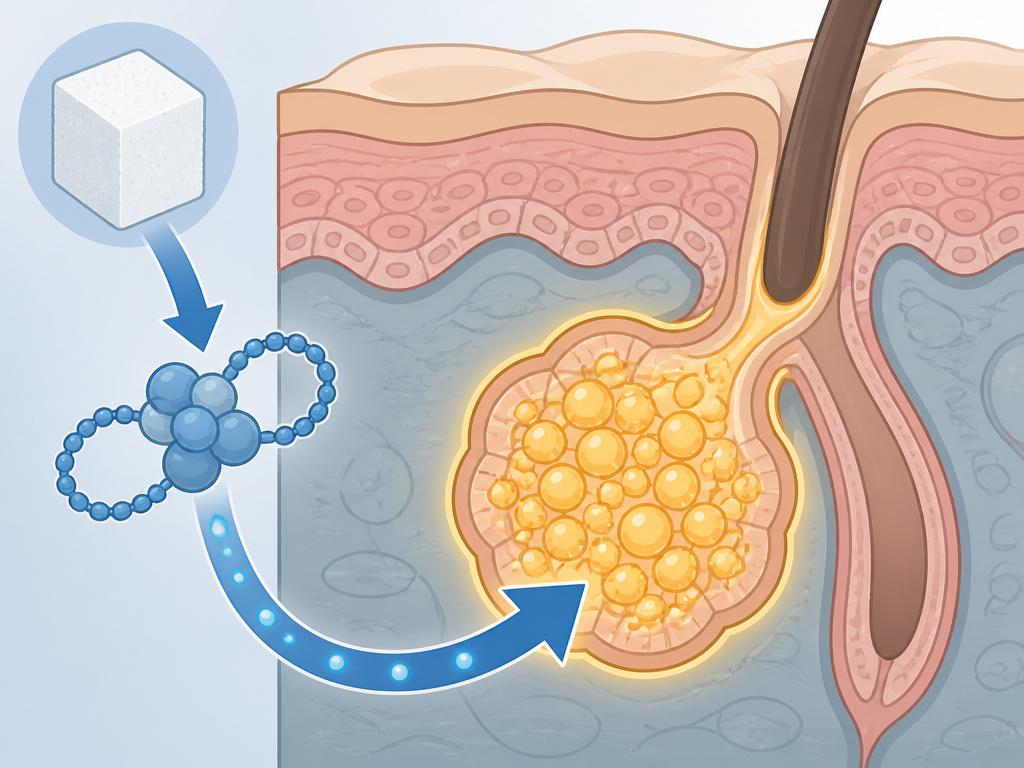
Testosterone gets the headline, but it’s not the only backstage hormone directing oil production. Growth hormone (GH) and insulin-like growth factor-1 (IGF-1) are major players.
IGF-1 acts through the PI-3-kinase/Akt/SREBP-1 pathway to directly promote sebocyte activity and lipid synthesis. This pathway is a primary reason why oily skin and acne peak during puberty, it’s not just the rise in androgens, but also the parallel surge in GH and IGF-1. It also explains the well-documented link between high-glycemic diets and worsened acne. Spiking blood sugar elevates insulin, which elevates IGF-1, which tells your sebaceous glands to get to work.
This is a crucial non-androgenic pathway. Someone could have perfectly normal testosterone but struggle with oiliness because of elevated IGF-1 from diet, lifestyle, or their own growth phase. It’s why managing acne on TRT sometimes involves looking beyond the testosterone dose itself.
Other influencers include:
- Stress hormones: Corticotropin-releasing hormone (CRH) can act as an autocrine hormone on sebocytes, promoting lipogenesis.
- Insulin: As mentioned, high insulin drives IGF-1 and can directly stimulate sebocyte growth.
When I track changes in my own skin, I now look at sleep and stress with the same scrutiny as any supplement. A week of poor sleep or high stress creates a shine on my forehead by midday that no amount of topical product fixes. The hormone cascade from that stress is the likely trigger.
Is Your Oiliness Temporary or Here to Stay?
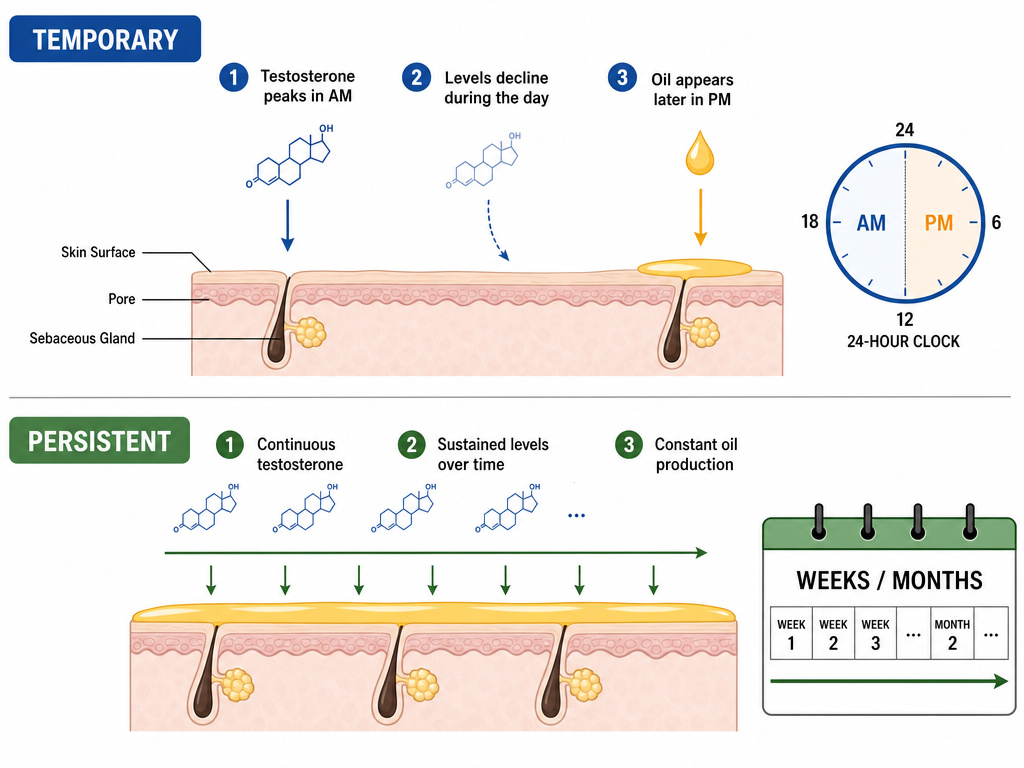
This distinction matters for management. Temporary oiliness follows a natural hormonal cycle. For men, there’s a diurnal rhythm, testosterone is highest in the morning, which can mean oilier skin later in the day. For women, the menstrual cycle drives pre-menstrual flares as progesterone drops and the relative androgen effect increases.
Persistent oiliness is the hallmark of an altered hormonal baseline. This is what people on testosterone replacement therapy (TRT) or gender-affirming hormone therapy experience. It’s also common in conditions like polycystic ovary syndrome (PCOS). The oiliness isn’t cycling; it’s a new, sustained state.
The timeline for persistent oiliness is fairly predictable. When starting exogenous testosterone, skin oiliness often increases within a few weeks. This mirrors the time it takes for the hormone to saturate tissues and for sebocyte turnover to complete a cycle. It may stabilize after a few months, or it may remain elevated as long as the therapy continues.
This is different from the signs of high testosterone from endogenous production, which develop over years. A sudden, sustained change in oiliness warrants a look at what’s changed, a new medication, a supplement, or a shift in health status.
Building a Routine for Hormonal Skin
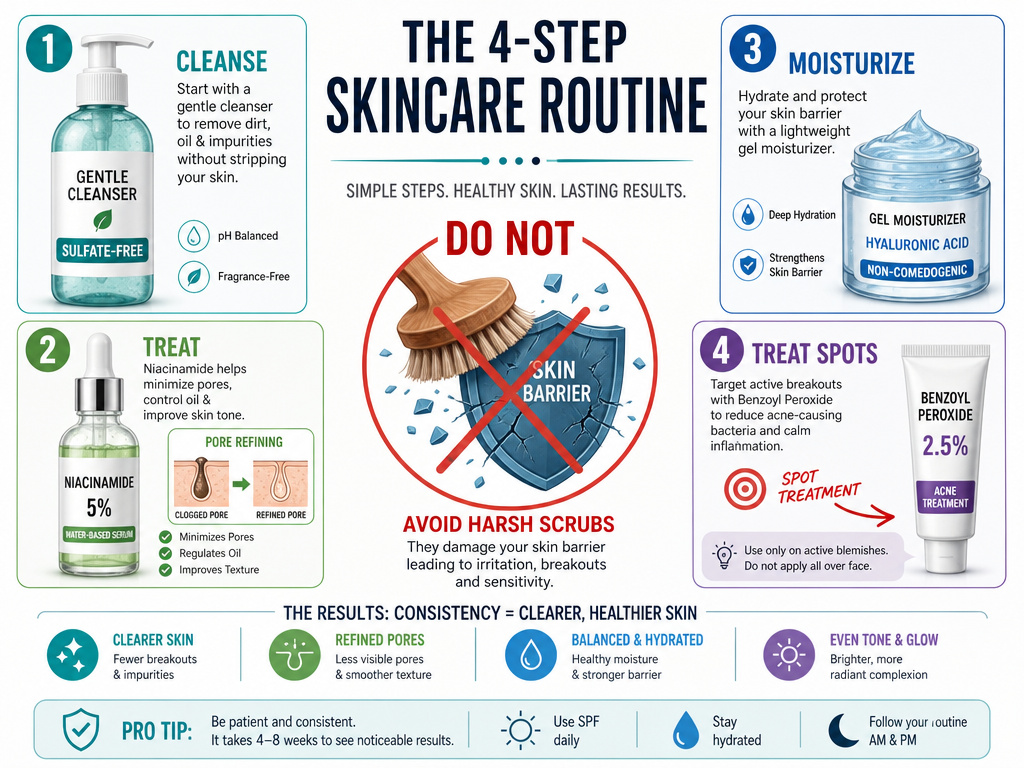
Managing hormonally-driven oil is about strategy, not aggression. The goal is to manage shine and prevent acne without triggering a rebound.
-
Cleanse with a gentle, sulfate-free gel or cream cleanser. Do this twice daily. The product should leave your skin feeling clean but not tight or squeaky. That tight feeling means you’ve stripped the barrier.
- Skip this, and: Your barrier weakens, leading to dehydration, inflammation, and ironically, a signal for your glands to produce more oil to compensate.
-
Apply a toner with niacinamide (5%) or mild salicylic acid (0.5-2%). Niacinamide helps regulate sebum production and strengthens the skin barrier. Salicylic acid is a beta-hydroxy acid that cuts through oil to exfoliate inside the pore.
-
Moisturize with a light, non-comedogenic gel or fluid. Even oily skin needs hydration. Look for ingredients like hyaluronic acid or squalane. A lack of hydration can, again, signal for more oil production.
-
Use a targeted treatment for breakouts. A benzoyl peroxide spot treatment (2.5-5%) or a prescription retinoid like tretinoin at night. Retinoids normalize sebocyte differentiation and are a long-term solution.
Common mistake: Over-washing and using harsh astringents. This strips the skin’s acid mantle, damages the barrier, and creates a vicious cycle of dehydration and rebound oiliness that’s worse than the original problem.
For the body, where skin is thicker but pores can still clog, use a salicylic acid or benzoyl peroxide body wash in the shower a few times a week. Let it sit on the skin (especially the back and chest) for 60-90 seconds before rinsing. Follow with a lightweight, non-greasy moisturizer.
When to Escalate and How
If a solid, consistent skincare routine for 8-12 weeks isn’t controlling breakouts, it’s time to consider medical options. This is where working with a dermatologist pays off.
Topical Prescriptions:
- Topical Retinoids (Tretinoin, Tazarotene, Adapalene): The gold standard. They increase cell turnover to prevent pores from clogging and have a normalizing effect on sebocyte activity over time.
- Topical Anti-androgens (like Clascoterone): A newer class that blocks androgen receptors directly in the skin. It’s effective with minimal systemic side effects.
Oral Medications:
- Oral Contraceptives (for women): Certain combined pills suppress ovarian androgen production and are FDA-approved for acne.
- Spironolactone: An anti-androgen medication that blocks receptors systemically. Used primarily for women.
- Isotretinoin (Accutane): The nuclear option for severe, resistant acne. It dramatically shrinks sebaceous glands and reduces sebum production. It’s highly effective but comes with significant side effects and monitoring requirements.
The choice depends on severity, location, hormone levels, and whether you’re on therapies like TRT. A dermatologist can navigate the potential side effects of testosterone boosters or TRT and tailor a plan that addresses the oil without undermining your hormonal goals.
How testosterone therapy affects skin oiliness
Starting testosterone therapy, whether for low-T treatment or as part of gender-affirming care, directly introduces more of the hormone that drives sebum production. Your skin’s sebaceous glands respond to this new hormonal signal. Research shows a wide range of individual responses. In one study applying testosterone cream, some subjects saw a massive increase in oil production, while others were non-responders. This variation happens because your skin has its own local hormone processing. It expresses enzymes that can both activate testosterone into a more potent form and others that can inactivate it. The final effect on your skin’s oiliness depends on this local balance within the glands themselves.
Why skin gets oily during puberty, your period, and menopause
Major life stages like puberty, the menstrual cycle, and menopause involve significant shifts in your hormone landscape, which directly impact your sebaceous glands. Puberty brings a surge in androgens like testosterone, signaling your oil glands to ramp up production. During the menstrual cycle, the relative balance between estrogen and testosterone shifts, often leading to increased oiliness in the days before your period. Menopause involves a drop in estrogen, which can make the effects of existing testosterone more pronounced on the skin. These fluctuations explain why skin oiliness isn’t constant but changes throughout your life and even month-to-month.
Does testosterone have any benefits for skin health?
While often discussed for its role in oil production, testosterone may contribute to other aspects of skin health. The hormone’s influence on collagen and the skin’s support structure can affect elasticity. The sebum it helps produce also forms part of the skin’s natural lipid barrier, which is crucial for retaining hydration and protecting against environmental stressors. This means the oil itself plays a functional role in skin barrier integrity. The activity of sebaceous glands is also influenced by other factors like growth hormone and insulin-like growth factor-1, which work through complex pathways to promote overall sebocyte function and skin homeostasis.
Frequently Asked Questions
How do you stop oily skin from testosterone?
You manage it, you rarely “stop” it. Implement a consistent, gentle skincare routine focused on balancing (not stripping) oil. For persistent cases from TRT, consult a dermatologist about topical retinoids or anti-androgens like clascoterone. Adjusting your testosterone dose or delivery method (e.g., frequency of injections to minimize peaks) may also help.
Does taking testosterone make your face oily?
Yes, for most people. Exogenous testosterone increases the hormonal signal to sebaceous glands. Oiliness often begins within 4-8 weeks of starting therapy. The degree varies massively based on individual gland sensitivity, dose, and skincare habits.
Does oily skin mean higher testosterone?
Not necessarily. Oily skin can mean your sebaceous glands are hyper-sensitive to normal testosterone levels. It can also be driven by other hormones like IGF-1, or by a damaged skin barrier from over-washing. While it’s a common sign, it’s not a reliable diagnostic tool for high testosterone.
What are the first signs of testosterone working?
In the context of hormone therapy, increased skin oiliness and acne are often among the earliest noticeable physical signs. Others include increased libido, improved energy, and possibly night sweats or mood changes as the body adjusts.
The Bottom Line
Testosterone makes skin oily through a direct, receptor-driven mechanism, but your gland’s sensitivity decides the volume. That sensitivity is your personal ceiling.
If you’re dealing with new or worsening oiliness, start with the gentlest version of a consistent skincare routine and give it three months. Track what you see. If the problem is persistent and linked to a therapy like TRT, understand that managing it might be part of the long-term package, a dermatologist is your best ally for navigating testosterone and acne with prescription options.
Finally, remember the other pathways. Before attributing everything to testosterone, consider your diet’s impact on IGF-1 and your stress levels. Sometimes, the fix for hormonal skin isn’t less hormone, but better sleep, lower sugar, and more patience with your skin barrier. The goal isn’t a matte finish at all costs, but a balanced, healthy skin that functions well under its hormonal instructions.
