
Signs of High Testosterone in Men: What to Look For
This post contains affiliate links. As an Amazon Associate, we earn from qualifying purchases.
Signs of high testosterone in men include acne, increased body hair, aggressive behaviors, a high sex drive, and potential health risks like prostate enlargement. MedlinePlus defines the normal range for men 17-50 as 249–836 ng/dL. Harvard Health states that having too much naturally-occurring testosterone is not a common problem among men, with high levels often linked to steroid use or medical conditions.
The line between “high” and “normal” can be complex, depending on whether the testosterone is natural or synthetic, and whether total or free testosterone is elevated. A number on a lab report tells you very little without the symptoms, or the lack of them, sitting next to it.
What follows is a breakdown of the signs, separated by what’s likely from your own biology versus what comes from a bottle. The physical signs, behavioral changes, actual health risks, and the essential step to take before attributing anything to your hormones will be examined.
Key Takeaways
- The most common cause of high testosterone symptoms in men is anabolic steroid or supplement use, not natural overproduction.
- Key physical signs include acne, excessive body hair growth, and male pattern baldness driven by high levels of DHT (dihydrotestosterone).
- Artificially high testosterone carries documented risks like low sperm count, prostate enlargement, and potential liver strain.
- A high total testosterone level may not cause symptoms if the amount of biologically active free testosterone is not elevated.
- Other factors like poor sleep or stress can cause symptoms that overlap with hormone-related issues.
What Are the Physical Signs of High Testosterone?
You don’t need a lab test to suspect high testosterone. Your skin and hair often report the news first, showing the signs of high testosterone in men.
Acne is a classic signal, especially along the jawline, chest, and back. It’s not the occasional pimple. It’s persistent, cystic acne that feels deep under the skin. This happens because testosterone increases sebum production, your skin’s natural oil. More oil plus dead skin cells equals clogged pores and inflammation. The link is so direct that we have a detailed guide on how testosterone causes acne.
Excessive body hair is another hallmark. Testosterone stimulates hair follicles, leading to thicker, darker hair on the chest, back, shoulders, and abdomen. It’s the kind of growth that feels rapid and noticeable.
Then there’s hair loss, but only on your head. This seems contradictory, but it’s about a metabolite called DHT (dihydrotestosterone). High testosterone can mean high DHT, which shrinks hair follicles on the scalp. Genetics decide if your follicles are sensitive to it. This is why the connection between testosterone and hair loss is often misunderstood.
Common mistake: Assuming a high total testosterone level automatically means you’ll see these physical signs. If your SHBG (sex hormone binding globulin) is also high, it binds the testosterone, leaving less free, active hormone to cause symptoms. A 2021 PubMed study noted that men with high total T and high SHBG had higher prostate volume but weren’t characterized by complaints of acne.
Other physical cues are more systemic. Unexplained weight gain, particularly around the abdomen, and swelling in the legs and feet can occur. You might also notice an increase in muscle mass without a change in training, a common reason men turn to anabolic steroids, which is a direct path to steroid abuse symptoms.
Behavioral and Emotional Red Flags
Testosterone doesn’t just change your body. It tinkers with your brain’s wiring, often in ways that feel out of character, which are key signs of high testosterone in men.
Aggression and irritability are the most cited changes. It’s not necessarily violent outbursts. It can be a shortened fuse, impatience in traffic, or a propensity for risk-taking you’d normally avoid. The Harvard Health testosterone explainer notes that problems with artificially high levels include mood swings and aggressive behavior.
Your sleep might fracture. Insomnia or disturbed sleep is a frequent report. You lie awake with a racing mind, or you wake up frequently. This creates a vicious cycle, as poor sleep then worsens mood and decision-making.
Then there’s libido. A very high sex drive sounds positive, but it can become intrusive and distracting, affecting relationships and daily focus. It’s a drive disconnected from context.
Health Risks and Medical Complications
This is where the conversation shifts from symptoms to stakes. Artificially high testosterone, whether from therapy or steroids, carries a different risk profile than a naturally high level.
The prostate is a primary concern. Testosterone can stimulate the prostate gland to enlarge, a condition called benign prostatic hyperplasia (BPH). This can make urination difficult or frequent. More critically, testosterone may fuel the growth of existing prostate cancer cells. A 2022 analysis found that free testosterone may have links with aggressive prostate cancer. However, the Harvard Health guide states that testosterone therapy does not appear to increase the risk of prostate cancer, but it can stimulate its growth, a crucial distinction.
Artificially high testosterone levels can carry risks such as high blood pressure, increased red blood cell count, and liver problems. The MedlinePlus medical encyclopedia entry notes that increased levels can be due to conditions like congenital adrenal hyperplasia or testicular cancer, which themselves require medical attention.
| Risk Category | Specific Complication | Likely Cause |
|---|---|---|
| Reproductive | Low sperm count, infertility | Artificially high T disrupts natural hormone feedback |
| Prostate | Enlargement (BPH), potential cancer growth stimulation | Testosterone and DHT stimulation of prostate tissue |
| Cardiovascular | High blood pressure, increased red blood cell count | Artificially elevated T affecting kidney and bone marrow function |
| Hepatic | Liver strain, cholestatic jaundice (rare) | Synthetic testosterone metabolism |
TL;DR: The biggest risks, infertility, prostate issues, heart strain, are overwhelmingly linked to artificially elevated testosterone from supplements, therapy, or steroids, not your natural baseline.
What Causes High Testosterone Levels?
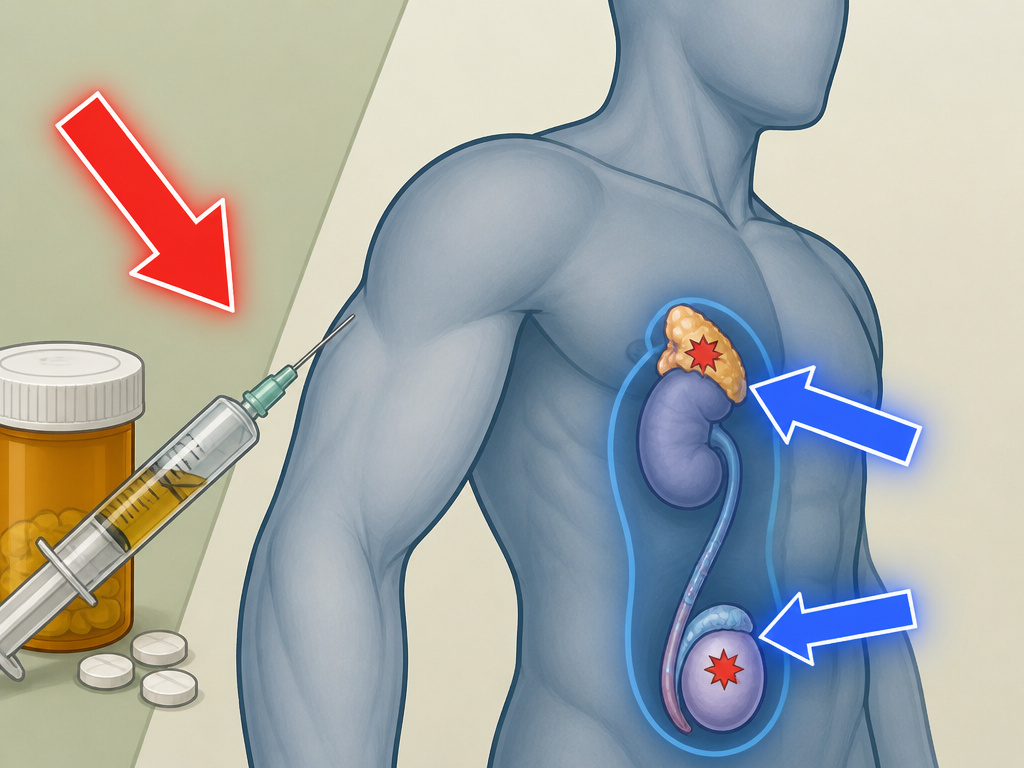
Pinpointing the cause is the first step toward any solution. The reasons split into two clear buckets: external and internal.
The most common external cause is the use of anabolic-androgenic steroids (AAS) or testosterone-boosting supplements. Athletes and bodybuilders use them to increase muscle mass and performance. This floods the system with synthetic hormone, shutting down the body’s own production and leading to a state of artificial excess. The symptoms of this are what fill most online lists.
Inside the body, causes are rarer but significant. They include:
- Testicular or adrenal tumors: These can produce testosterone independently.
- Congenital adrenal hyperplasia (CAH): A genetic disorder causing overproduction of androgens.
- Androgen resistance: A rare condition where the body doesn’t respond to testosterone, so the pituitary gland signals for more and more to be made.
It’s critical to differentiate. The clinical guidelines for diagnosis recommend that if a testosterone level is twice the upper limit of normal (around 1672 ng/dL using common ranges), a DHEAS assay should be performed to check for an adrenal tumor.
Where this goes sideways: Assuming symptoms like aggression or acne automatically mean your body is overproducing testosterone. In reality, chasing these symptoms with over-the-counter “boosters” is a far more likely path to artificially high, and problematic, levels.
Diagnosis: How Do You Know For Sure?
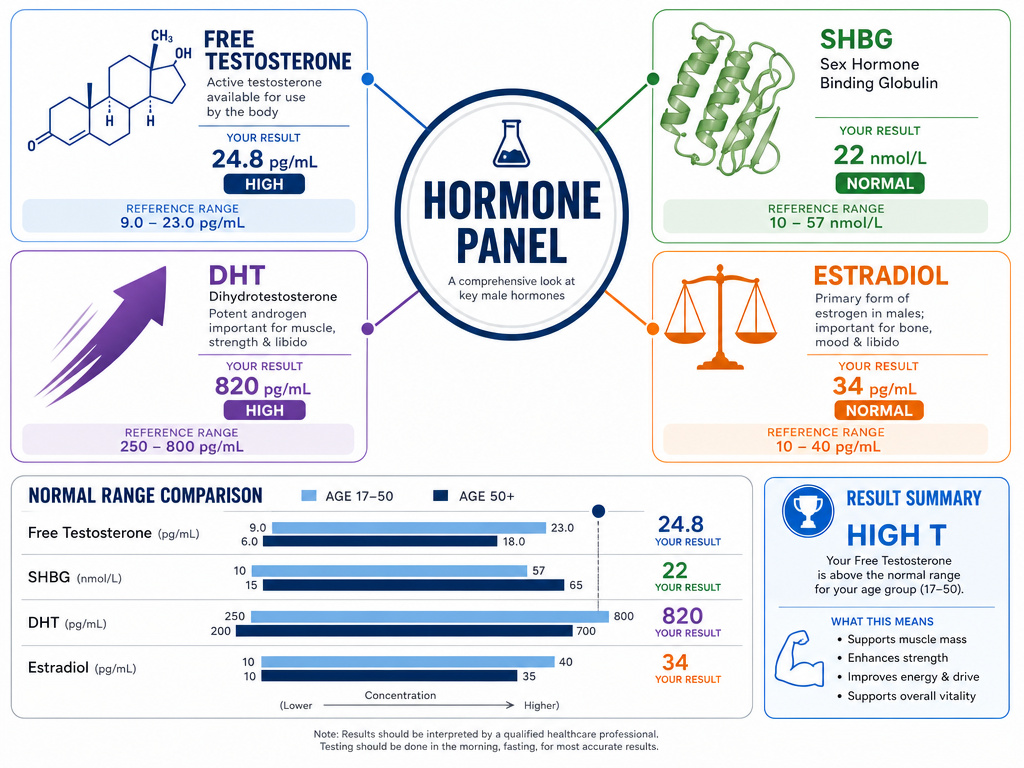
You suspect the signs. The only way to know is to test, but you have to test the right things.
Begin with a full hormone panel. A standard total testosterone test is just the entry point. You must also measure:
- Free Testosterone: The fraction not bound to SHBG, which is biologically active.
- SHBG: This protein binds testosterone. High SHBG can yield a high total T but normal free T.
- DHT: The potent metabolite linked to acne and hair loss.
- Estradiol: Aromatization of testosterone into estrogen can occur, and symptoms of high estrogen like gynecomastia can confuse the picture.
Refer to established normal testosterone ranges for context. MedlinePlus provides age-stratified ranges: 249–836 ng/dL for men 17-50, and 193–740 ng/dL for men over 50.
Here’s the critical caveat: a single number can lie. In some cases, a high total testosterone reading can be a false positive due to assay interference, even in the absence of symptoms. This is why symptoms + labs + clinical judgment are the triad.
Test it, don’t guess. Get a full hormone panel and take it to a doctor who understands endocrine nuance. Self-diagnosis based on symptoms alone can be misleading.
The High Testosterone vs. Low Testosterone Confusion
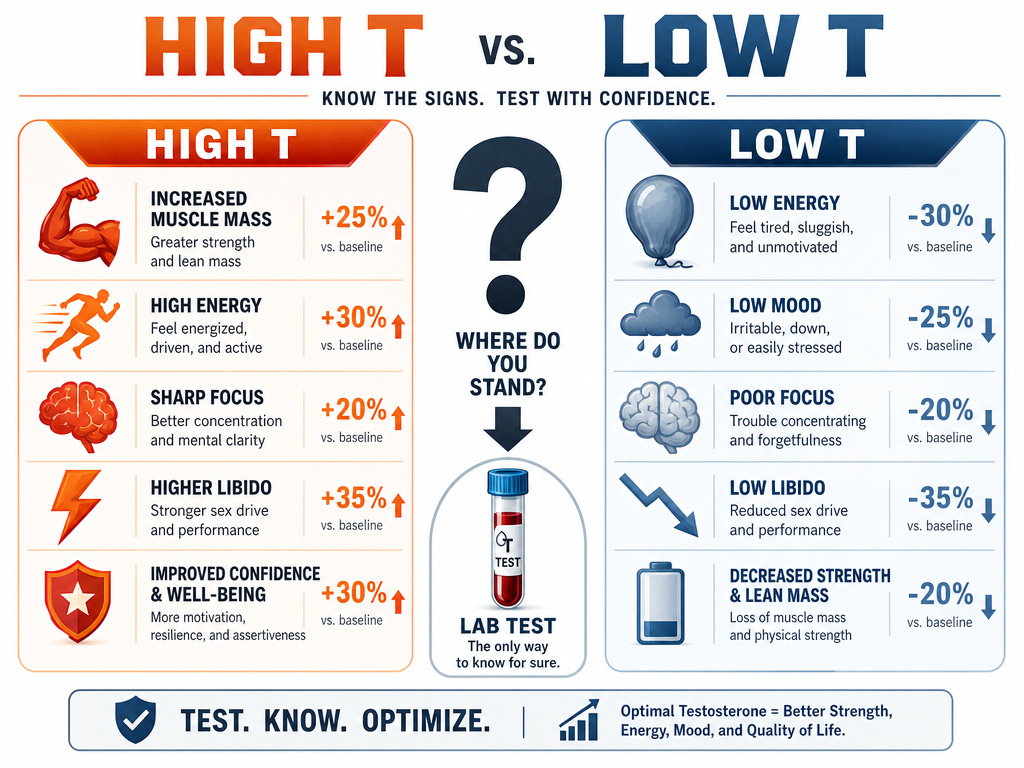
The body’s signals are often ambiguous. Many “high T” symptoms have perfect mirror images in the “low T” checklist, leading to misdiagnosis.
| Symptom | In High Testosterone | In Low Testosterone |
|---|---|---|
| Mood | Irritability, aggression, mood swings | Depression, lack of motivation, irritability |
| Sleep | Insomnia, disturbed sleep | Fatigue, low energy, excessive sleepiness |
| Sexual Function | Very high, intrusive libido | Low libido, erectile dysfunction |
| Body Composition | Increased muscle mass, possible weight gain | Loss of muscle mass, increased body fat |
See the overlap? Irritability and sleep issues appear on both sides. This is why a lab test is essential. Treating assumed low testosterone with therapy when levels are actually normal-high can exacerbate problems.
Furthermore, the relationship between testosterone and mood isn’t linear. It’s often depicted as an upside-down U. Both too low and too high can destabilize mood. For a deeper dive, our article on how testosterone influences mood breaks down the neuroscience.
When to See a Doctor
Don’t play endocrinologist at home. Certain scenarios demand a professional evaluation.
See a doctor if:
- You are experiencing multiple physical symptoms (severe acne, rapid body hair growth) alongside behavioral changes.
- You are using or have used anabolic steroids, SARMs, or potent testosterone boosters.
- You have a family history of endocrine tumors, CAH, or early prostate cancer.
- Your libido is so high it’s disruptive, or you have signs of BPH like urinary hesitancy.
The doctor’s job is to connect your symptoms to a cause. They’ll order the right labs, possibly including imaging to rule out tumors, and interpret them in light of the latest research, like the PubMed study on hyperandrogenism that profiles different hormonal patterns.
How High Testosterone Shows Up in Women
Frequently Asked Questions
Can you tell when a man has high testosterone?
Visible signs like severe acne or excessive body hair can be indicators, but a diagnosis requires laboratory testing.
At what age is testosterone highest?
Testosterone levels peak during late adolescence and early adulthood. After 30, levels begin a very gradual decline of about 1% to 2% per year. The “high” levels mentioned here are compared to the normal range for a man’s age, not always the highest point of his younger years.
Does not ejaculating for 7 days increase testosterone?
The evidence for this is weak and short-term. The evidence for a significant, sustained increase in testosterone from not ejaculating is weak. This practice is unlikely to produce clinically significant or sustained elevations in testosterone, and it certainly won’t cause the symptom profile of pathological high testosterone.
What does a guy with high testosterone look like?
There’s no single look. He might be muscular with severe acne and a lot of body hair. Or, he might look average but struggle with irritability and insomnia. Conversely, a man with the classic “high T” physique might have normal hormone levels and just train effectively. Physical appearance is a poor proxy for internal hormone status.
Before You Go
The biggest takeaway is that naturally occurring, symptomatic high testosterone is uncommon. If you’re ticking off symptom boxes, the most probable culprit is something you’re taking, not something your body is overproducing on its own.
Start with a full hormone panel, total T, free T, SHBG, DHT, and estradiol. Understand where you actually sit against the typical testosterone ranges. If your levels are elevated and you’re not using any external products, that’s your cue to see a doctor for a deeper investigation into causes like tumors or CAH.
