
Does Tribulus Terrestris Increase Testosterone?
This post contains affiliate links. As an Amazon Associate, we earn from qualifying purchases.
Tribulus terrestris may increase testosterone, but only in men who start with low levels. In men with normal testosterone, the evidence consistently shows no significant change. The 2024 systematic review found a 750 mg daily dose of a specific Bulgarian extract increased testosterone by 58–71 ng/dL (27–33%) in men with baseline levels under 350 ng/dL. For healthy men, studies like the 2005 randomized trial found no effect on testosterone, androstenedione, or LH.
That baseline number is the whole game. Most people taking this herb fall into the “normal” category, which is why online forums are full of conflicting reports. One person feels a libido boost and swears it works; another sees no change in the gym and calls it bunk. Both can be right, because they’re measuring different things in different bodies.
What follows: a breakdown of the two conflicting bodies of evidence, the one protocol that showed a testosterone increase, the real mechanism behind libido claims, and a practical checklist for deciding if this supplement is worth a trial for you.
Key Takeaways
- Tribulus terrestris only raised testosterone in men with a baseline under 350 ng/dL, per a 2024 review. If your levels are normal, expect no hormonal change.
- The 750 mg daily dose for 3 months from the positive studies used a specific extract (Trib Gold, 45% saponins). Most store-bought supplements don’t match this spec.
- Libido improvements are separate from testosterone. Animal studies show Tribulus relaxes penile tissue via nitric oxide, which can improve erectile function without changing blood hormone levels.
- 80% of studies showing no effect were done on subjects with normal testosterone, according to the same review. Your starting point dictates the result.
- Check for β-carboline alkaloids (40–80 mg/kg) listed in the EMA report. Low-quality extracts may have higher levels of these potentially undesirable compounds.
The Critical Variable: Your Baseline Testosterone Level
The research splits cleanly in two. On one side, men with measured low testosterone see a modest increase. On the other, men with normal levels see nothing. This isn’t a minor detail, it’s the core reason for a decade of contradictory headlines.
The 2024 systematic review made this distinction unavoidable. It concluded that 80% of studies showing no effect on androgens were conducted in subjects with normal baseline testosterone. The authors stated effects may only be observable in individuals with pre-existing hypogonadism or partial androgen deficiency. This matches the raw data: the two studies that reported increases used men with baseline levels below 350 ng/dL.
Where this goes sideways: Assuming a supplement works the same for everyone. Taking Tribulus when your testosterone is already 600 ng/dL is like adding more water to a full glass, it just overflows. You won’t see a higher number, but you might notice other effects, which we’ll get to.
Here is what the successful protocol actually looked like, according to the review:
| Factor | Protocol from Positive Studies | Why It Matters |
|---|---|---|
| Product | Trib Gold (origin Bulgaria) | A specific extract, not a generic “Tribulus terrestris.” |
| Daily Dose | 750 mg (3 capsules of 250 mg) | Lower doses used in other studies showed no effect. |
| Key Compound | Minimum 45% saponins | Saponin content, particularly protodioscin, is thought to be the active fraction. |
| Duration | 3 months | Changes were measured at the end of this period, not before. |
| Baseline Testosterone | < 350 ng/dL | The defining characteristic of the participants who responded. |
If your supplement bottle doesn’t list a saponin percentage, you’re flying blind. The European Medicines Agency (EMA) report notes that effects in animal studies followed administration of ‘a fruit extract with a high protodioscin level.’ The chemical profile matters.
Short version: Your starting testosterone level is the single best predictor of whether this herb will change it. Guessing that level is a waste of money.
What the Human Trials Actually Show (The Good, The Bad, The Confusing)
We need to distinguish the useful information from the distractions. The most cited human study is a 2005 randomized controlled trial. Healthy young men took 10 or 20 mg per kg of body weight daily for four weeks. The result? No significant change in serum testosterone, androstenedione, or luteinizing hormone (LH). This is the bedrock evidence for the “it doesn’t work” camp when considering the does tribulus terrestris increase testosterone question, and for men with normal hormones, it’s correct.
But the 2024 review pulls in other data. It analyzed two studies with men who had low testosterone. One was a pilot study, the other had a low quality score. The methodology was weak, but the outcome was consistent: a 58–71 ng/dL increase (~27–33%) after three months. That’s a meaningful jump for someone starting in the low 300s, potentially moving them into a more comfortable range.
A 2022 review in Androgens: Clinical Research and Therapeutics took a harder line, stating, “We were unable to identify any studies investigating the effects or mechanisms of action of this supplement,” and called the evidence from the positive study unreliable due to lack of between-group comparison.
This is the scientific disagreement you won’t see on a product label. One group of researchers sees a signal in a specific population; another group dismisses the underlying studies as too flawed to count. As a consumer, you’re left in the middle.
The systematic review on Tribulus effects in athletes echoes the confusion, noting contradictory findings: 2 of 5 examined studies reported significant increases, one reported a significant decrease, and others showed only trends. The takeaway isn’t that the science is useless, it’s that the outcome of the does tribulus terrestris increase testosterone inquiry is fragile and depends heavily on who is being studied.
The reality is this. If you’re looking for a reliable, research-backed way to elevate testosterone from the mid-range to the high-normal range, the evidence for Tribulus is shaky at best. There are other evidence-backed ingredients with more consistent data. But if you’re dealing with clinically low levels and want to explore a herbal option alongside other lifestyle changes, this is the specific protocol that has shown a result.
Libido vs. Testosterone: Why You Might “Feel” a Difference
This is where most of the marketing sleight-of-hand happens. People report improved libido and assume their testosterone must be up. The animal research suggests a different, and arguably more direct, mechanism.
The EMA report details organ bath studies where Tribulus extract caused concentration-dependent relaxation of the corpus cavernosum, the erectile tissue. In rats given the extract for one month, intracavernosal pressure was higher than in the control group, and a significant increase in cAMP (a cellular messenger crucial for erections) was observed.
The part nobody mentions: The European Medicines Agency (EMA) reports that Tribulus terrestris was not able to stimulate endocrine-sensitive tissues such as the prostate and seminal vesicle in Wistar rats, indicating a lack of androgenic and estrogenic activity in vivo. However, the 2024 systematic review suggests effects may only be observable in individuals with pre-existing hypogonadism or partial androgen deficiency. It can act locally on penile tissue without systemically raising testosterone.
Think of it like this: testosterone is the command to build a road (libido). Tribulus, in this context, might be the pavement crew that smooths out the last mile of that road (erectile function). You can have the command without the crew, or maybe the crew can patch up an old road on its own. This explains why someone with normal testosterone could experience improved sexual function from Tribulus, while their bloodwork remains unchanged.
This is a crucial distinction in the does tribulus terrestris increase testosterone debate if you’re considering supplements for libido. Your goal dictates your choice. If you have low desire and confirmed low testosterone, addressing the hormone is primary. If desire is fine but performance is an issue, a local tissue effect might be what you need. Conflating the two leads to wasted time and money.
A Practical Protocol: How to Test It Yourself (Safely)
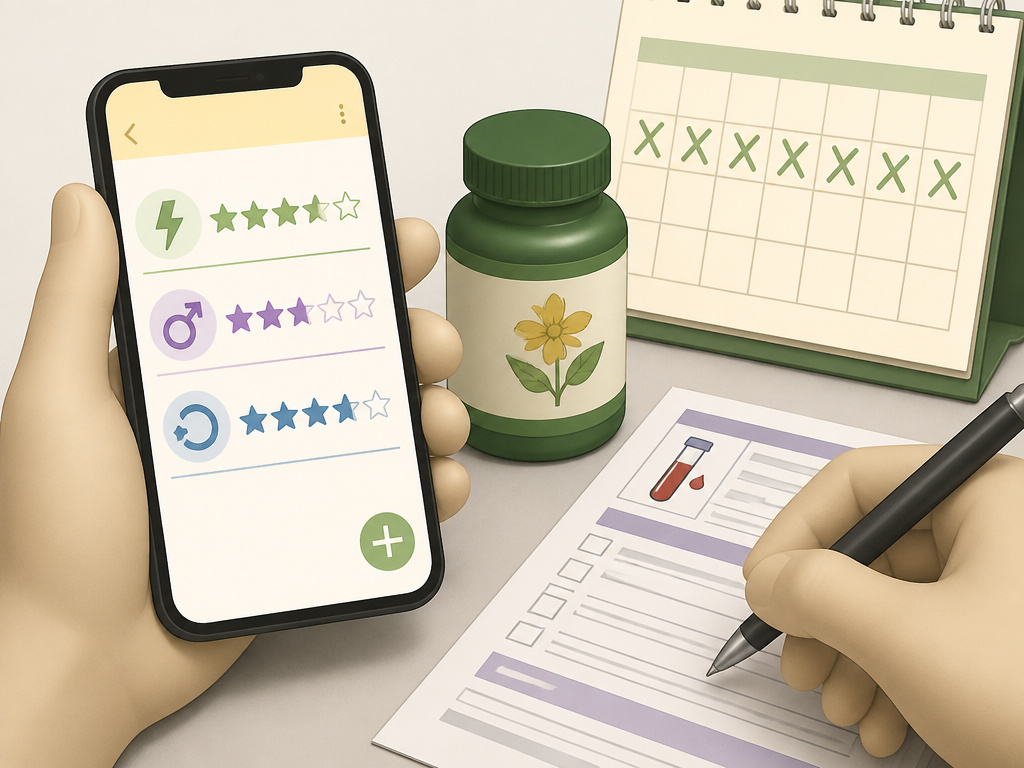
Throwing a random supplement at a vague problem is how you end up with a cabinet full of half-used bottles. If you’re going to try Tribulus terrestris, do it like a tinkerer, measure, observe, and adjust.
Before you start:
- Get a baseline. Order a blood test that includes Total Testosterone, ideally with LH and SHBG. Knowing your starting point is essential. Without it, you’re guessing.
- Pick your spec. Choose a product that states its saponin or protodioscin content and provides 750 mg daily of a standardized extract. Generic root powder is a gamble.
- Check for interactions. The EMA report lists the plant contains β-carboline alkaloids (40-80 mg/kg dry matter). If you are on medications metabolized by the liver or have a history of sensitivity, consult a doctor.
The 90-Day Test:
- Weeks 1-4: Start at the full research dose if your chosen product matches the spec. Take it consistently, preferably with a fat-containing meal.
- Track subjectively: Use a simple notes app. Rate your energy, libido, and workout recovery on a 1-5 scale every few days. Look for patterns, not day-to-day noise.
- Week 12: Retest your bloodwork. This is the only way to know if your testosterone changed. Compare your subjective notes to the objective number.
I learned this the hard way with other supplements. You feel a placebo boost in week one, assume it’s working, and keep buying it for months. Only a before-and-after blood test cuts through the noise. If your testosterone didn’t budge but your libido improved, you’ve learned something valuable about your body’s response, it’s likely the local tissue effect, not a hormonal one.
This methodical approach beats wondering whether testosterone boosters work for you. It gives you a personal answer.
Safety, Side Effects, and What to Look for on a Label
Tribulus terrestris is generally considered safe for short-term use, but “generally” does a lot of work. The side effect profile is mild for most, some report stomach upset or headaches. The more significant issues relate to quality and drug interactions.
The EMA assessment is the key authority document here. It provides two critical data points for safety:
- Contaminant Profile: The plant naturally contains β-carboline alkaloids (40-80 mg/kg dry matter), such as harmane and norharmane. Reputable manufacturers test for and minimize these compounds.
- Hormonal Safety: In studies, the herb did not stimulate the prostate or seminal vesicles in rats, which is a positive sign for those concerned about prostate health. However, the long-term human data is simply absent.
Common mistake: Buying the cheapest option. Low-cost extracts may use stems and leaves with higher alkaloid content instead of the fruit, which is typically richer in the desired saponins. You might be getting more side effect profile and less active compound.
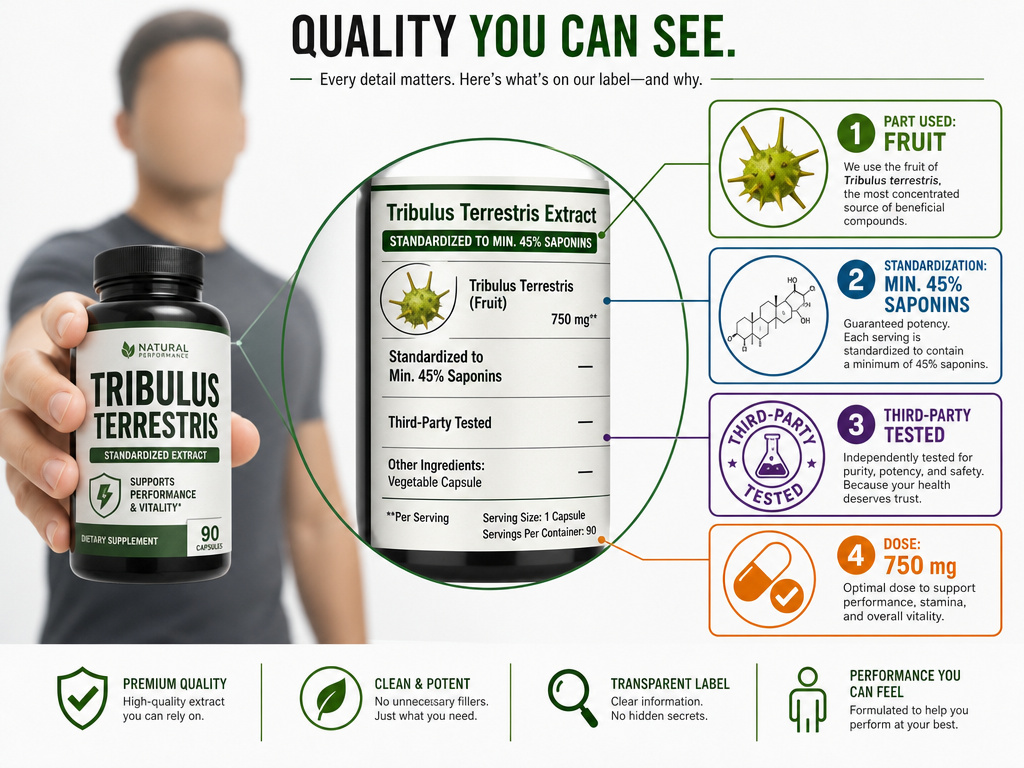
When evaluating any best tribulus supplements, your label checklist should include:
- Part Used: “Fruit” or “aerial parts” is better than an unspecified “extract.”
- Standardization: A listed percentage for saponins or protodioscin (e.g., “min. 45% saponins”).
- Third-Party Testing: A seal indicating testing for heavy metals, microbes, and alkaloids.
- Dose per Serving: It should allow you to hit the 750 mg daily dose without taking a handful of pills.
The potential for testosterone booster side effects often increases with poor-quality sourcing and mega-dosing. Sticking to the researched dose and a clean product minimizes this risk.
Tribulus Terrestris vs. Other Testosterone Supplements
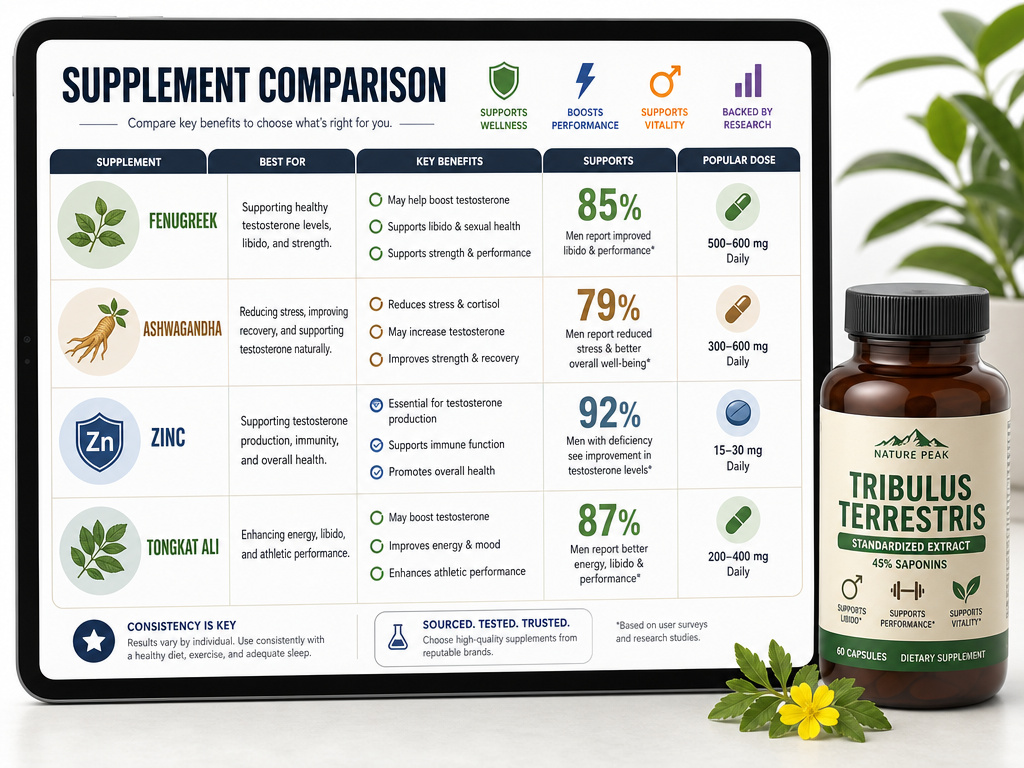
Where does this herb fit in the crowded shelf of testosterone support? It’s not a first-choice bullet, but it might be a specific tool.
| Supplement | Primary Evidence For | Best For | Tribulus Comparison |
|---|---|---|---|
| Fenugreek | Libido, possibly free testosterone via SHBG modulation. | Men with normal/high SHBG who want to boost free testosterone and libido. | The fenugreek vs tribulus debate often misses this point: Fenugreek may work through a different pathway (SHBG) and has more consistent libido data. |
| Ashwagandha | Stress reduction (cortisol), which can indirectly support testosterone. | Men with high-stress lifestyles and stress-related low T or performance anxiety. | Ashwagandha’s mechanism is upstream (HPA axis). Tribulus’s proposed libido mechanism is downstream (local tissue). They could be complementary. |
| Zinc | Correcting a deficiency. A deficient man will see a large T increase; a replete man will see zero. | Men with a confirmed zinc deficiency (common in athletes, vegetarians). | This is a nutrient fix, not an herbal boost. Correcting a deficiency is always step one before adding herbs like Tribulus. |
| Tongkat Ali | Possibly increasing free testosterone, significant evidence for libido and mood. | Men with age-related decline, low libido, and mood support needs. | Tongkat Ali has stronger human trial data for libido and mood, and some studies show free T increases. It often ranks higher than Tribulus on lists of effective testosterone supplements. |
The young men testosterone study that found no effect is a classic comparison point. It tested healthy, young, likely zinc-replete athletes. In that population, a basic mineral like zinc or an adaptogen like ashwagandha for recovery stress would be a more logical first choice than Tribulus for a testosterone boost.
Does Tribulus Terrestris Improve Athletic Performance?
Research on Tribulus terrestris for enhancing exercise performance in healthy individuals is not promising. A systematic review noted that 80% of studies showing no effect on androgens were conducted in subjects with normal baseline testosterone. Since the primary proposed mechanism for performance enhancement is through boosting testosterone, and this effect appears limited to men with pre-existing low levels, athletes with normal hormone function are unlikely to experience direct ergogenic benefits. The evidence does not support its use as a reliable performance booster for the general athletic population.
Can Tribulus Terrestris Help with Blood Sugar or Diabetes?
The provided research does not contain specific information on the effects of Tribulus terrestris on blood sugar or diabetes management. When considering any supplement for such a purpose, it is critical to rely on evidence from human clinical trials designed to measure those specific outcomes. Without access to such data here, no claims can be made. Always consult with a healthcare provider before using any supplement to manage a metabolic condition like diabetes, as it could interact with medications or other aspects of your treatment plan.
Does Tribulus Terrestris Help Build Muscle or Change Body Composition?
Any potential impact on muscle mass is likely tied to the supplement’s inconsistent effect on testosterone. A systematic review indicates effects may only be observable in individuals with pre-existing hypogonadism. For men in this group, a protocol using a specific extract increased total testosterone. In men with normal testosterone levels, studies typically show no change. Therefore, expectations for muscle growth should be tempered and are highly dependent on an individual’s starting hormone status. It is not a reliable anabolic agent for those with normal endocrine function.
Frequently Asked Questions
Why do bodybuilders take Tribulus?
Bodybuilders historically took it hoping for a direct testosterone increase to aid muscle growth. The modern understanding suggests any benefit is more likely from improved training recovery or a libido-driven placebo effect on motivation, not from a significant anabolic hormone spike.
Does Tribulus actually increase testosterone?
It can, but only under specific conditions: a high-quality, standardized extract (like Trib Gold), a dose of 750 mg daily, a duration of 3 months, and most importantly, a starting testosterone level below 350 ng/dL. For men with normal levels, it does not.
How long does it take for Tribulus to work?
For a potential testosterone increase, the research protocol was 3 months. For subjective effects like libido or erectile quality, some report noticing changes within 2-4 weeks. This timeline mismatch further proves the two effects work through different mechanisms.
What is the most powerful herb for testosterone?
“Powerful” depends on the mechanism and the person. For correcting deficiency, zinc is powerful. For stress-related low T, ashwagandha is powerful. For increasing free testosterone in aging men, Tongkat Ali has some of the best evidence. Tribulus terrestris is not generally considered the most powerful for a direct T boost, but it has a unique niche for local sexual function.
Can Tribulus cause side effects?
Most side effects are mild (GI discomfort, headache). The more serious considerations are for men on medications like blood thinners (due to potential interactions) and the risk of consuming high-alkaloid extracts. The PubMed fact or fiction review concludes that while serious side effects are rare, the long-term safety profile is not fully established.
Before You Go
If you take one thing from this, let it be the number 350. That ng/dL threshold from the 2024 review is the clearest divider in this whole confusing topic. Below it, a specific Tribulus protocol is a plausible experiment. Above it, the money is better spent elsewhere, on a blood test to investigate other causes, on proven best testosterone supplements like vitamin D or Tongkat Ali, or on the lifestyle basics of sleep, stress, and strength training.
The libido effect is real for some, but it’s not a testosterone effect. That’s an important distinction if you’re trying to solve a puzzle with your health. Throwing Tribulus at low energy and expecting a hormonal fix is a miss. Using it with eyes open for its potential local benefits, while managing expectations for your bloodwork, is how you tinker responsibly.
Change one thing at a time. If you test it, use the 90-day protocol with before-and-after labs. Otherwise, you’re just buying hope in a bottle, and the supplement aisle sells plenty of that already.
